

The Artemis II made history again, carrying humans farther from Earth than ever before, surpassing the record of 400,171 kilometers set by Apollo 13 in 1970.
See also: Artemis II: Impressive photos taken with iPhone 17 Pro Max
The record was broken on April 6 at 1:57 p.m. EDT, as the Orion capsule “Integrity” began its orbit around the far side of the Moon. NASA said the mission will reach a maximum distance of 250,000 miles (406,777 kilometers) from Earth during the six-hour lunar flyby, surpassing the previous human spaceflight record by about 4,100 miles (6,600 kilometers).

Shortly after breaking the record, the crew's orbit around the Moon took on an emotional significance as they spotted a crater between the visible and the invisible sides of the Moon. They asked mission control to name it after the late wife of Artemis II commander Reid Wiseman, Carroll.
Mission specialist Jeremy Hansen said they spotted a feature "in a really striking spot" on the Moon, "right on the visible side" of the dark side. The astronauts also spotted another crater, which they suggested be named after their capsule, "Integrity."
See also: Artemis II: NASA's historic mission to the Moon begins
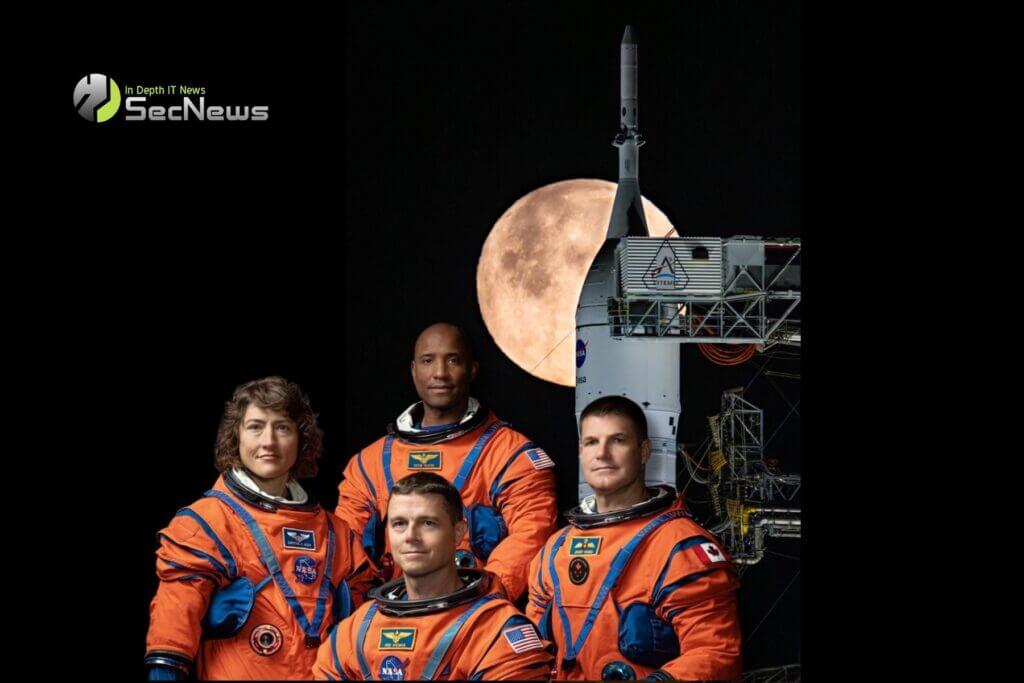
The Orion spacecraft will travel at about 3,100 mph (5,052 km/h) as it passes the Moon. During the approach, the four Artemis II astronauts — Weisman, Hansen, Christina Koch and Victor Glover — will photograph about 30 scientific targets on the Moon's surface. Among them are the massive Orientale, an impact crater about 620 miles (1,000 km) wide that stretches between the far and near sides of the Moon, and Hertzsprung, an older crater on the far side.
The Artemis II mission will offer a "higher" view of the Moon compared to the Apollo missions, giving a different angle of view of its surface, according to NASA's live broadcast. These observations are intended to give scientists new, close-up images of lunar geology from multiple angles during the transit.
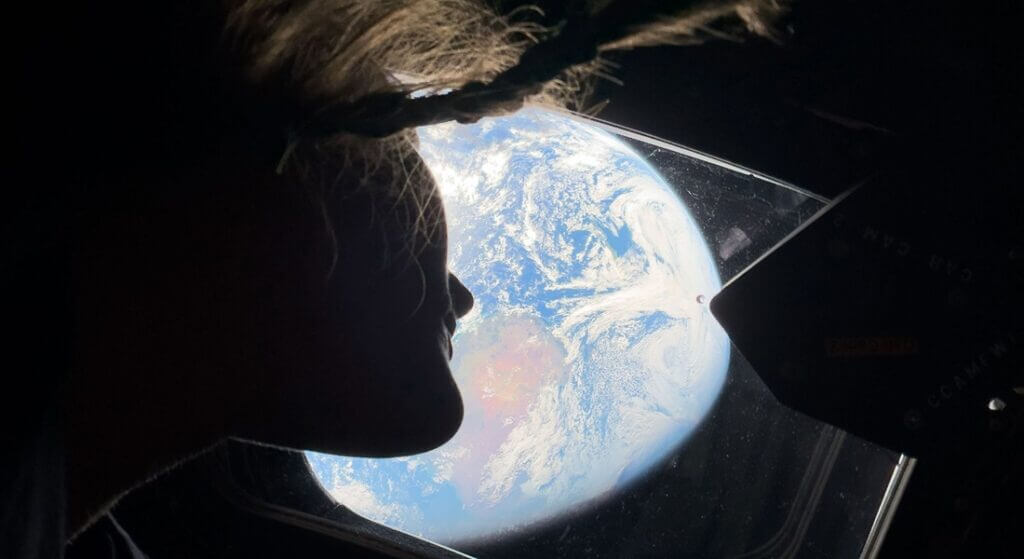
The approach is expected to yield some of the most spectacular images of the mission. From Orion, crew members will watch “Earthset,” as the Earth sets behind the Moon, and later “Earthrise,” as our planet reappears above the lunar horizon. The first “Earthrise” image was captured by the Apollo 8 mission in 1968.
See also: NASA: 6 records that Artemis II astronauts will break
The mission's timing will also allow astronauts to watch a solar eclipse, as the Moon will pass in front of the Sun.
