

Google has announced a new, historic agreement with Constellation Energy to upgrade six nuclear power plants in the U.S. to power energy-hungry data centers supporting the development of artificial intelligence. The Google-Constellation nuclear power deal is a 20-year Power Purchase Agreement that guarantees revenue for upgrades to existing nuclear facilities and represents an investment of more than $4.3 billion . It is one of the largest corporate nuclear power deals ever announced by a technology company.
See also: AI Data Centers: California Tightens Rules
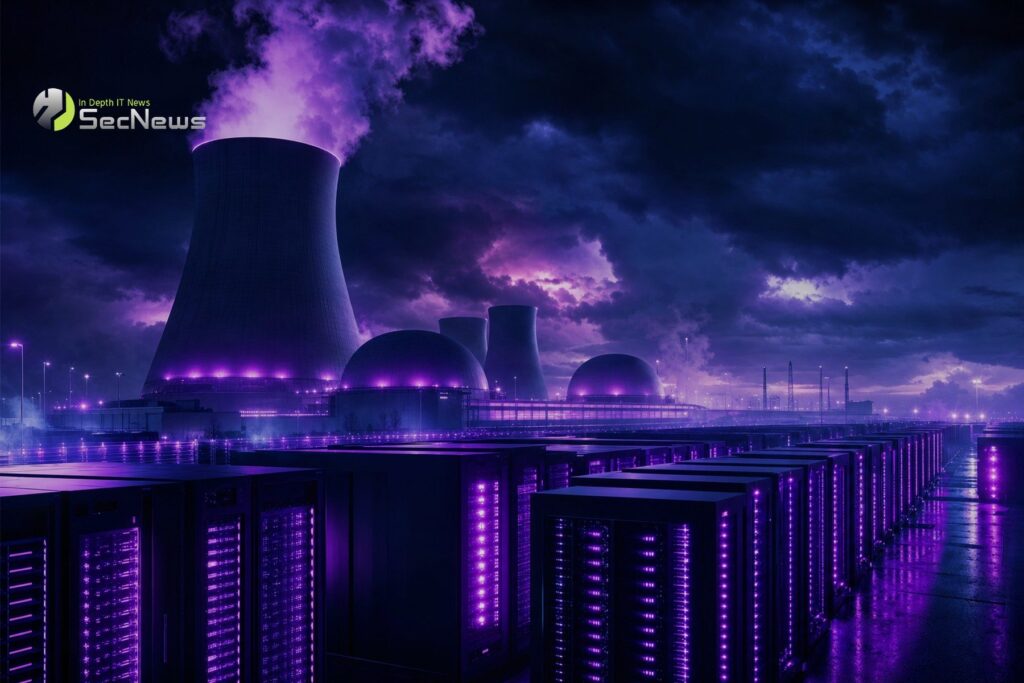
Under the terms of the agreement, the two parties expect the new components at each facility to result in a total of 890 megawatts (MW) of additional nuclear power over the next five years — equivalent to the production of one large new nuclear reactor or about three small modular reactors (SMRs). The program involves the modernization of 11 reactors at six facilities in the states of Illinois, Pennsylvania and New Jersey, all connected to the PJM Interconnection — the largest electricity grid in the United States, spanning 13 states and the District of Columbia.
The choice of location is no coincidence. PJM includes the nation’s largest data center cluster in Loudoun County , Virginia, also known as “ Data Center Alley .” Electricity demand from AI data centers has skyrocketed in recent years, creating severe strain on the grid and concerns about supply reliability.
Google's nuclear power deal in the context of the AI energy crisis
Google ’s electricity consumption increased by 37% in the last sustainability reporting period, while carbon emissions increased by 18% . These figures highlight the tension between the rapid expansion of artificial intelligence and commitments to reduce emissions. Training and running large AI models requires dense clusters of GPUs and specialized accelerators that run continuously, making data centers extremely difficult to service solely from intermittent energy sources such as wind and solar.
Nuclear power is an attractive option for technology companies precisely because it provides continuous electricity with very low operating carbon emissions. Unlike wind and solar, nuclear generation is not dependent on weather conditions and does not require equivalent amounts of storage for 24-hour generation. Constellation generates about 70% of its total electricity from nuclear and 8% from renewable sources, according to the company’s latest sustainability report.
PJM has faced growing concerns about meeting the growing demand from AI data centers . An independent market watchdog filed a complaint last year with the Federal Energy Regulatory Commission (FERC) , alleging that PJM planned to allow large data centers to connect to a grid it could not reliably serve, risking blackouts. Electricity prices have skyrocketed in states connected to PJM, including New Jersey , where prices have risen 54% in five years.
See also: Intel and AMD "lock" multi-year agreements with Chinese data centers

Technical details of the Google-Constellation nuclear power deal
The upgrade program includes modernization of turbines, steam generators, digital control systems and other efficiency improvements. These improvements are intended to increase the electricity generated by existing reactors without the construction of new reactor vessels. The additional capacity of 890 MW is expected to be available by 2032.Technically, the project is an upgrade and modernization program, not a conventional construction of a new nuclear power plant.
A reactor upgrade increases the plant’s allowable electrical output by improving the efficiency or capabilities of equipment such as turbines, generators, steam systems and control systems. Digital control modernization can also replace older analog systems, although it requires careful cybersecurity segmentation , validation and regulatory review. Notably, Google will also use Gemini Enterprise software at the Constellation facility to support site selection, outage management and infrastructure protection — an application that highlights the growing role of artificial intelligence in energy operations.
In addition to the nuclear power deal, Google also signed a separate, larger 15-year power purchase agreement with Constellation to guarantee ongoing revenue for other existing power plants that Constellation operates within PJM, regardless of fuel type. This second agreement, worth 2,700 MW, is significantly larger than the nuclear power purchase agreement. In total, Google gains access to approximately 3,590 MW of electricity from Constellation within PJM.
The deal is expected to retain about 4,400 existing jobs and create about 7,200 construction jobs during implementation, according to company estimates. Expanding existing nuclear facilities is generally faster than developing a new nuclear site, as existing facilities already have grid connections, cooling systems, operating licenses and a trained workforce.
See also: Google is preparing to remove free access to Gemini Flash and Pro

Google ’s move is part of a broader competition among big tech companies — Microsoft , Amazon and Meta — to secure reliable, low-emissions electricity for their AI infrastructure. Data centers are driving a surge in new natural gas infrastructure projects in the U.S., pushing many tech companies away from their sustainability goals. The deal with Constellation represents an effort by Google to combine AI expansion with low-carbon emissions, though critics point out that the contract does not eliminate emissions associated with the construction, backup power, transportation or broader supply chain of data centers. The deal is one of the largest corporate bets on nuclear power ever announced by a tech company.
