

Online reviews have become one of the most important tools for online shoppers. Before buying a phone, laptop, appliance, or even a daily product, consumers often look at the ratings and comments of other users. The problem is that not all reviews are authentic . Fake or misleading reviews can be used to artificially create a positive image around a product or seller , while negative reviews can be used to hurt competing products . This means that a high rating alone is not enough to consider a product a safe choice.
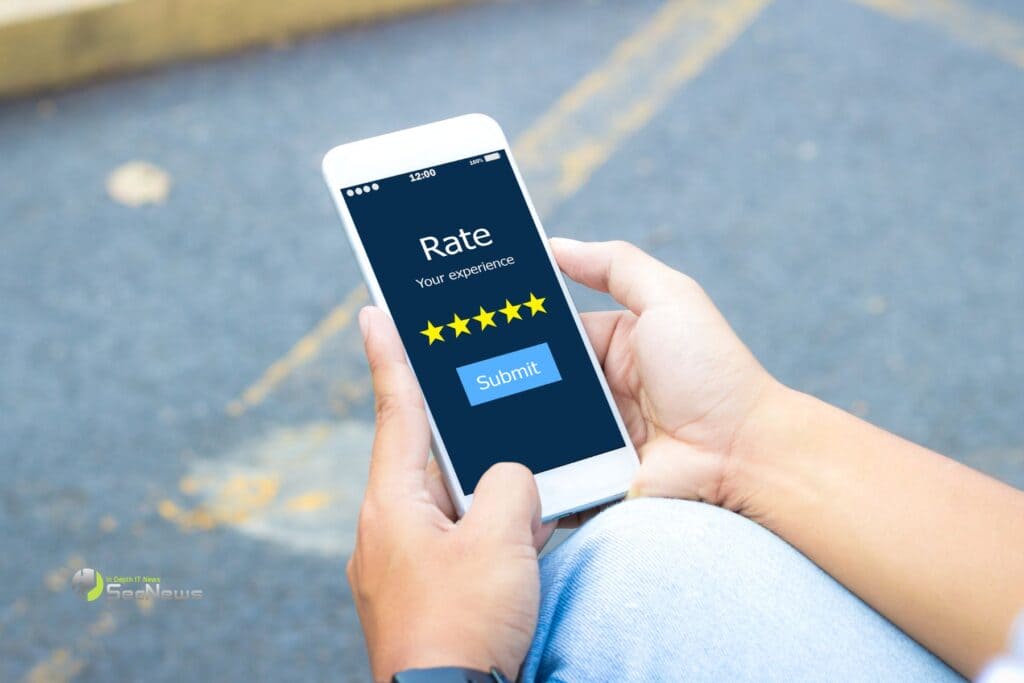
However, there are some signs that can help you distinguish a real user experience from a potentially fabricated review.
Beware of fake reviews – Don't just look at the stars
The first mistake is to look at the overall rating for a few seconds and decide immediately. A product with 4.9 out of 5 stars may seem great, but this indicator does not reveal the whole picture.
Look at the distribution of reviews. If a product has almost exclusively five-star reviews and very few two, three, or four-star reviews, it’s worth taking a closer look at the content. A normal user base usually includes a variety of opinions, even when a product is really good.
See also: Online shopping: How to identify fake stores?
Beware of overly similar reviews
One of the most telling signs of potentially fake reviews is repetitive language. If multiple reviews use almost the same phrases, describe the same benefits, or follow an identical structure, you need to be wary.
Phrases like “great product,” “very good quality,” and “highly recommend” don’t in themselves prove a review is fake. But when they appear over and over again without specific details, their value as a real experience diminishes.
Overly general reviews don't help
A useful review usually contains specific information. For example, a real buyer might mention how long a device's battery lasts, whether the product is easy to use, or whether the build quality matches the description.
In contrast, a series of very short reviews like “perfect,” “fantastic,” or “very good” offer little evidence. They don’t necessarily mean they’re fake, but they shouldn’t be used as strong evidence of a product’s quality.
Check when they were written
The time distribution of reviews can also reveal interesting patterns. If a product gains hundreds of similar positive reviews in a very short period of time, it's worth investigating the situation further.
Particularly suspicious might be a sudden burst of reviews followed by a long period with almost no new reviews. Of course, the date alone does not prove manipulation. There may be legitimate explanations, such as a big promotion or a sudden increase in sales.
Read the negative reviews first
It may seem counterintuitive, but negative reviews are often more helpful than enthusiastic ones. Look for recurring issues and see if different users report the same weakness.
If, for example, many buyers report poor battery life, connection issues, or poor after-sales service, this is information worth considering. Also, read the seller's responses, as they can show how they actually handle complaints.
See also: Online shopping: How to shop online safely?

Don't ignore "verified" markets, but don't consider them infallible
The indication that a review comes from a verified purchase is useful, as it shows that the platform has associated the review with a purchase. However, it does not mean that every word of the review is objective or that the product is necessarily good.
The buyer may have different needs, different expectations, or even a different way of using the product. That's why it's important to read the content and not just the label.
Search for reviews outside the store too
For more expensive purchases, it's worth going a step further. Look for independent reviews, tests, and comparisons from different sources.
A product that appears great on a sales page but shows significant weaknesses in independent testing needs more research. Comparing different sources reduces the likelihood of basing your decision on a single, potentially misleading, image.
Artificial intelligence makes control even more difficult
The proliferation of artificial intelligence tools creates an additional problem. Generating large amounts of naturally-worded text is now much easier, so the fact that a review is well-written or free of obvious spelling errors is no proof of authenticity.
Instead of trying to identify solely whether a text “looks like AI,” look at the overall pattern: dates, repeated expressions, details, user profiles, and agreement of ratings with independent sources.
See also: Deepfake scams: When you can't even trust the voice you hear
Don't let reviews decide for you
Reviews are a useful tool, but not the only way to evaluate a product. A high rating is not a guarantee, and a negative review does not necessarily mean a product is bad.

Before you buy, combine reviews with technical features, price, warranty, return policy, and independent testing. Pay special attention to detailed reviews and recurring problems reported by different users.
Ultimately, the best way to protect yourself from fake reviews isn't to try to prove every rating is real. It's to not let one rating or a few enthusiastic comments alone determine your purchase. A few minutes of extra research can reveal a much more realistic picture before you hit the order button.
