

Apple and LG are collaborating to create a new line of smart home devices, in a move that is expected to change the data in the smart home space.
According to The Verge, Bloomberg revealed that the partnership involves a series of products that will carry the LG, but will be fully integrated into Apple and the company's expected smart home hub . The announcement marks a strategic shift for Apple, which is seeking to expand its presence in the smart home space without taking on the responsibility of manufacturing every product category itself.
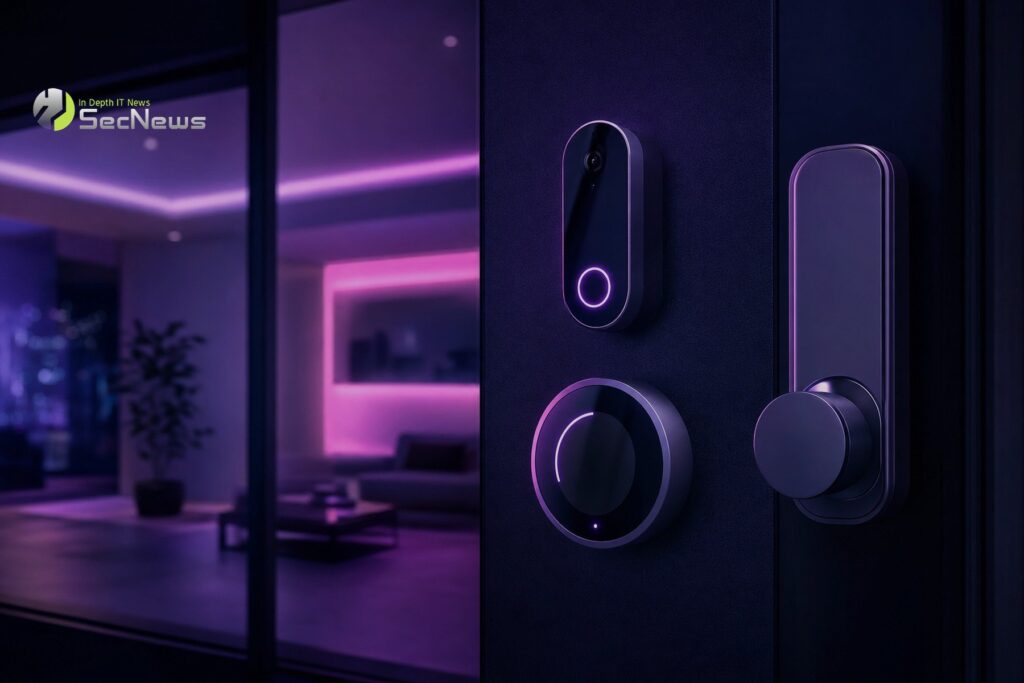
The new product line includes a wired video doorbell , a smart deadbolt lock , a smart thermostat , a temperature sensor , an indoor camera , an outdoor camera and a floodlight camera . Many of these devices are expected to support the Thread and Matter, which are the new industry standards for smart device interoperability. The smart lock will also feature ultra-wideband (UWB), which will allow the door to be automatically unlocked when the user approaches.
The partnership structure is described as a “second-party development arrangement”: Apple provides the ecosystem, software and product direction, while LG takes on the manufacturing, branding, sales and support of the devices. This means that users will buy LG products, but the user experience will be deeply integrated into the Apple ecosystem, with full support from HomeKit and the new home hub.
See also: Apple Stores receive 'Do Not Open' boxes ahead of Smart Home product launches
Apple's history in the smart home and the importance of the partnership with LG
Apple entered the smart home space in 2014 with HomeKit, a framework that allowed users to control compatible devices — lights, locks, thermostats, cameras — through Apple devices. HomeKit was noted for its emphasis on privacy, encryption, and integration with Siri. However, its adoption was limited by several factors: Apple did not sell a full range of home hardware, HomeKit certification requirements were demanding for accessory makers, and competitors like Amazon and Google offered much more extensive portfolios of first-party devices.
Apple later responded by supporting Matter, a cross-platform smart home standard that improves interoperability between Apple, Amazon, Google, Samsung , and other ecosystems. Matter works on top of networking technologies like Wi-Fi, Ethernet , and Thread — a low-power mesh protocol ideal for sensors, locks, and battery-powered devices. The reported partnership with LG addresses a long-standing gap: Apple can now offer a coordinated set of home devices without having to design and build each category itself.
Apple is reportedly planning to unveil its new smart home hub — a 6-inch display that can be mounted on a wall or table, powered by Siri AI — on October 13. A refreshed HomePod mini and a new Apple TV are also expected to be unveiled at the same time . LG's products, however, are expected to be released several months later, giving Apple time to solidify its software platform first.
Smart home from Apple and LG: Competition and technical details
The Apple - LG partnership will bring the two companies into direct competition with strong smart home ecosystems. Amazon with Ring and Alexa has a large installed base in video doorbells and security cameras. Google with Nest competes in cameras, doorbells, thermostats and speakers. Samsung with SmartThings emphasizes compatibility with home devices, while companies like Ecobee , August , Yale and Aqara compete in thermostats, locks and sensors. In the camera space, brands like Eufy , Arlo , Wyze and Blink already have a significant presence.
See also: Apple's Smart Home Hub: Everything we know so far
From a technical perspective, the architecture of the new devices is critical. Cameras and doorbells require continuous or event-driven video processing, secure authentication, encrypted data transfer, and reliable notification delivery. Locks require strong local security, secure firmware updates, intrusion detection, logging, and reliable operation even during internet outages. Thermostats need accurate temperature measurement, compatibility with HVAC systems, and fail-safe controls. Thread devices depend on a Thread border router , likely provided by the new Apple hub , HomePod mini , or Apple TV .
Compatibility with Matter would theoretically allow a device to be controlled by multiple ecosystems, but advanced features would likely depend on the manufacturer's software.
Advantages, risks and the future of Apple's smart home ecosystem
The partnership structure offers several advantages. LG already has manufacturing capabilities in displays, cameras and consumer electronics, allowing for faster category expansion. Apple avoids having to build a full support infrastructure for locks, thermostats and security cameras. Users can buy compatible devices without waiting for Apple to develop each product in-house. LG, for its part, gains access to Apple’s premium customer base while strengthening its smart home strategy.
But there are also risks. Users may be confused about who — Apple or LG — controls support, privacy policy, firmware updates, warranty, or cloud subscriptions. The success of the partnership will depend on whether the products offer deep integration with the Apple , rather than just basic compatibility Matter. In addition, a smart lock has higher security requirements than a speaker or a light bulb — a software bug, compromised access, or a failed update can affect physical security and personal protection.
See also: Apple Home: New AI capabilities in cameras, but at a high cost
Overall, the Apple - LG partnership represents a significant effort by Apple to build a comprehensive smart home ecosystem around a broader hardware portfolio, rather than relying solely on the HomePod , Apple TV , and third-party accessories. If this strategy works, Apple could increase the value of its iPhone , Apple Watch , and HomePod installed base while bolstering its services business through storage, automation, and potential smart home subscription offerings.
