

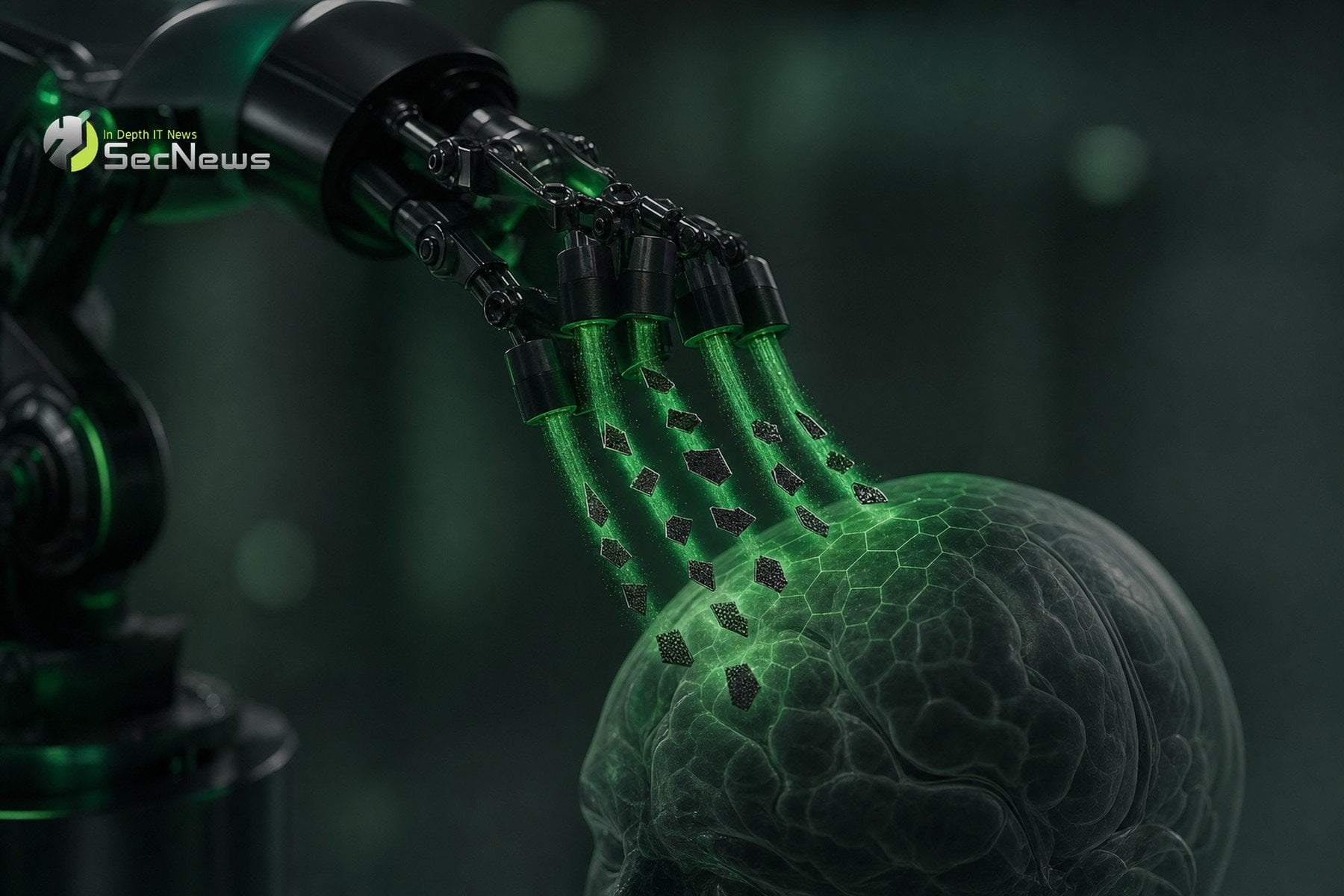
A European research team has developed a robot that uses magnets to guide ultra-thin graphene electrodes into the brain, opening up new horizons in medical technology and the treatment of neurological disorders. INBRAIN Neuroelectronicsis leading the clinical work and announced the results of this innovative approach at the end of the EU-funded MINIGRAPH.
See also: AI robots with machine guns protect Kiev from Russian drones
The MINIGRAPH project initially focuses on Parkinson's disease, a neurodegenerative disorder that affects millions of people worldwide. Traditional treatment involves deep brain stimulation, where implanted electrodes deliver electrical pulses to relieve symptoms. However, the new approach aims to create implants that not only record brain activity but also respond autonomously to the signals, offering a personalized treatment for each patient.
The technology is based on remote magnetic navigation, a system developed by Nanoflex Robotics and ETH Zurich. A magnetic carrier delivers the thin graphene probes, while the robot guides them precisely under X-ray imaging. This method allows for precise placement of the electrodes, either on the surface of the brain or in deeper areas, following straight or curved paths.
INBRAIN said the process has been tested both in the lab and in large animal models, with encouraging results. The use of graphene implants could speed up the process of implanting brain-computer interfaces, making it faster and more repeatable. Graphene, a material made of a one-atom-thick sheet of carbon, offers significant advantages over traditional metal electrodes, such as increased stability and biocompatibility.
Accelerated aging tests conducted by the team produced data supporting more than 10 years of predicted stability for the graphene implants. In addition, toxicity and biocompatibility studies confirmed the material's safety for use in the human brain. These properties make graphene implants a promising option for long-term use in medical applications.
See also: Robots serve coffee and ice cream in France – The bar of the future

The consortium involved in the project also built compact electronics that can decode signals from hundreds of points in the brain. By combining the sensors, electronics and software into a prototype implant, the team successfully tested it in a translational animal model. This integrated approach allows for accurate and efficient recording and analysis of brain activity.
Jose A. Garrido, co-founder and chief scientific officer of INBRAIN, emphasized the importance of developing accurate and repeatable implantation methods for the wider availability of BCI (Brain-Computer Interface) technologies to patients. Progress in this field depends not only on the manufacture of advanced devices, but also on the ability to implant them safely and accurately.
The MINIGRAPH project was funded by the European Innovation Council through the Horizon Europe programme, with a contribution of €3.93 million for 45 months from October 2022. Switzerland funded the ETH Zurich part, while the Institute for Nanoscience and Nanotechnology of Catalonia (ICN2) coordinated the team. Imec, the Fraunhofer-Gesellschaft, Leiden University Medical Center and Palacký University Olomouc also participated.
The trials so far have been conducted in the lab and on animals, while INBRAIN has already completed patient enrollment in a separate first-in-human study of graphene interfaces for brain decoding and mapping. In the United States, Paradromics has already implanted a brain chip in its first patient, while China has approved the first commercial brain implant.
See also: XPeng begins production of humanoid robot IRON
At the same time, Science Corp is promoting a retinal implant in Europe, showing that the technology of graphene implants and other advanced materials is in a phase of rapid development and application.
