

The Greek government is preparing a major intervention in the way minors interact with technology , aiming to limit the use of social media by children under the age of 15. Prime Minister Kyriakos Mitsotakis announced this intention through a video on social media, emphasizing that it is a “difficult but necessary” decision.
Implementation schedule and European dimension
The relevant regulation is expected to be submitted in the summer of 2026 and to come into effect on January 1, 2027.According to the Prime Minister, Greece aspires to be one of the first countries to take such a measure, paving the way for corresponding initiatives at the European level. The aim is to put pressure on the European Union to consider a unified framework for the protection of minors in the digital environment.
See also: Australia: Meta, TikTok, Snapchat and YouTube fail to comply with social media ban for children
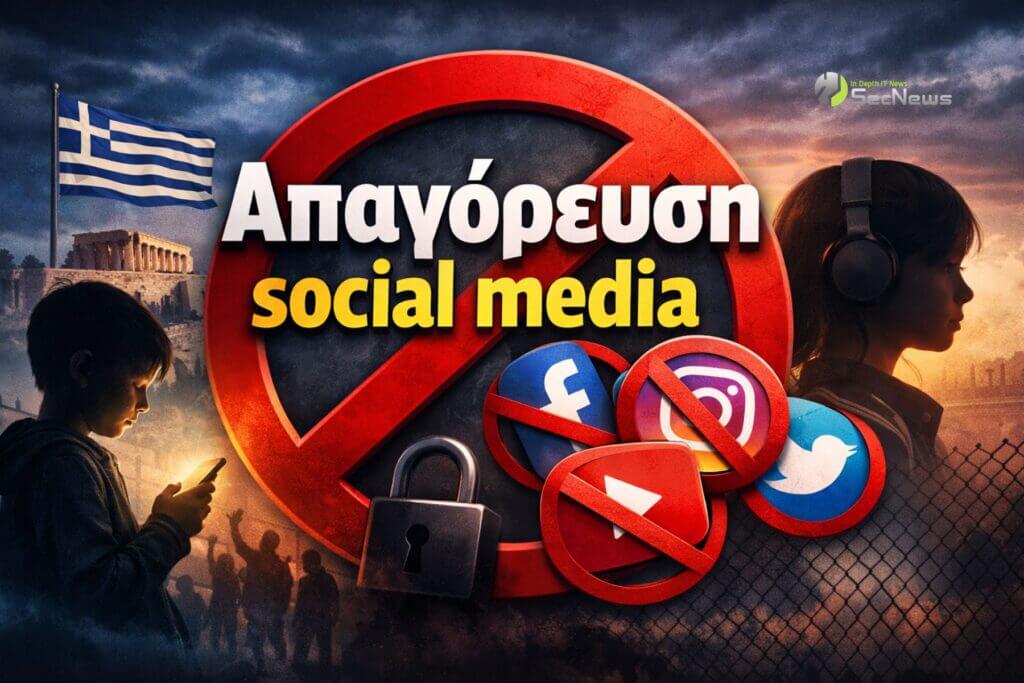
The initiative is based on growing concerns about the impact of social media on the mental health of children and adolescents. As the Prime Minister said, conversations with parents reveal that many children are experiencing sleep problems, increased anxiety and excessive dependence on their mobile phones. At the same time, minors themselves say that they feel pressure from constant comparison, comments and the need to be constantly online.
Scientific studies confirm that prolonged exposure to screens affects mental balance and concentration, while it can increase anxiety and low self-esteem. The government, using this data, is attempting to set limits on a daily life that has become intensely digitalized.
The role of platforms and the business model
The debate also focused on the way social media platforms themselves operate. The prime minister referred to the “addictive design” of some apps, which relies on users spending extended periods of time on screens. The business model of many technology companies relies on users’ attention, which intensifies addiction, especially among younger people.
The proposed regulation does not aim to remove children from technology altogether, but rather to promote its more balanced use . Technology, as noted, can function as a tool for knowledge, creation and inspiration, as long as it is used in moderation.
See also: Austria: Plans to ban social media for children under 14
Reactions and implementation challenges
The announcement is expected to provoke reactions, especially from minors themselves, but also from parents who may be concerned about the implementation. Issues such as age verification, technical implementation and cooperation with international platforms are critical challenges.
At the same time, experts point out that no legislative intervention can replace the role of the family. Parental guidance and education of children in the correct use of technology remain key factors.

The next day for digital childhood
The move is part of a broader global trend of re-evaluating children's relationship with the internet. Several countries are already considering or implementing restrictions on the use of social media by minors, while platforms are being urged to strengthen parental control and protection tools.
For Greece, the success of the measure will depend on the balance between restrictions and freedom, as well as on the effective cooperation of the state, family and technology companies. If the project works, it may become a model for Europe, shaping a new framework for safe digital adulthood.
See also: Pinterest CEO: Under 16s shouldn't have social media
The Prime Minister's full message:
«Six-Seven… Now that I have your attention, hello guys. This video will not be #top or #viral, but there is a serious reason why I want to tell you something here. I want to speak to you honestly. In recent years, I have been talking to many parents and they all tell me the same thing: That their child does not sleep well, gets stressed easily, is constantly on his/her cell phone. But I talk to many, many of you! Many children tell me that they are tired of the comparison, of the comments, of the pressure to be there all the time.
The science is clear: When a child spends hours in front of a screen, the mind does not rest. That is why we decided to move forward with something difficult, but necessary. To ban access to social media for children under 15 years of age. The regulation will come in the summer of 2026 and will come into effect on January 1, 2027. Greece will be among the first countries to take such an initiative. And I am sure, however, that it will not be the last. Our goal is to push the EU in this direction.
Now I'm sure many of you younger people will be angry with me. If I were your age, I might feel the same way. But our role, and mine, is not to always be pleasant. But even if you disagree today, I just want you to think about it and talk about it with your friends. If something makes us feel more stressed, worse, less good than we really are, then maybe it's worth putting a brake on.
Our goal is not to distance you from technology, which can be a source of inspiration, a source of knowledge, a source of creativity. However, the addictive design of some applications, the profit model that is based on your attention, on how much time you spend in front of the mobile screen and deprives you of your own innocence and freedom, must stop somewhere. And I want to say something to parents: No law can replace your own presence. This policy is simply a tool to help you. I sincerely believe that in a few years we will all see it as something positive and self-evident.».
