

Startup REK (Robot Entertainment Kombat) has found itself at the center of a legal battle after the California State Athletic Commission (CSAC) sent it a cease-and-desist, demanding that it immediately stop organizing competitions between humans and robots. The REK case highlights a striking gap in the law: what happens when the entertainment of sports competitions meets the commercialization of humanoid robots? It’s a clash between regulators, viral entertainment, and the rapidly growing robotics industry.
See also: Ford Mustang Mach-E GT California Special combines the old with the new
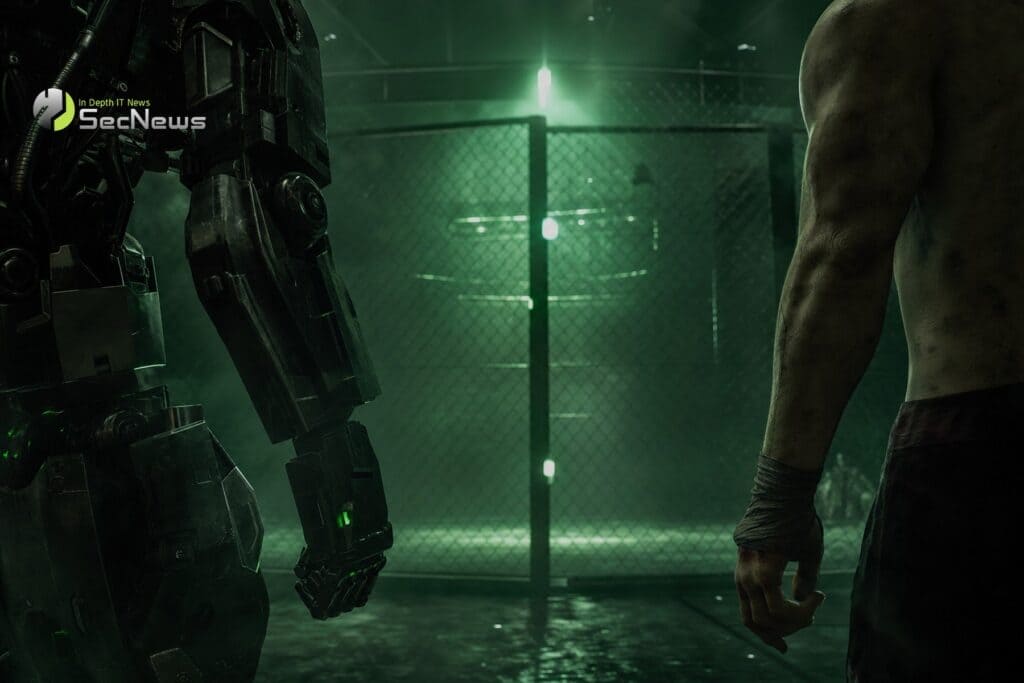
On September 18, 2026, REK held a spectacular cage fighting exhibition in San Francisco, featuring 29-year-old content creator Frankie LaPenna facing off against humanoid robots. According to reports, LaPenna faced off against three humanoid machines during the event. The robots did not operate autonomously — they were remotely controlled by human pilots via a virtual reality (VR) system, which raises interesting questions about who the opponent in the fight really is.
REK describes itself on its website as a “ humanoid robotic fighting league ,” and its main robot appears to be based on an EngineAI platform , known as the T800 or “ Rekbot ,” with a Terminator- inspired head that stands about six feet tall . The company’s promotional language emphasizes “real pilots” and “real punches,” separating the events from conventional robotics demonstrations or simulated battles.
REK and California's intervention: What CSAC says
The CSAC issued the cease-and-desist letter on September 23, 2026, with Executive Director Andy Foster listed as the official in charge. The notice stated that REK must cease organizing, promoting, or advertising boxing or mixed martial arts (MMA) involving humans without prior approval from the commission and a license under California Business and Professions Code section 18640.The commission reportedly warned that holding such an event without a license could constitute a misdemeanor.
REK CEO Cix Livposted the letter on X (formerly Twitter) on September 30, captioning it “We made it boys” — a response that suggests the company views the regulatory attention as useful publicity and perhaps confirmation that robot racing has moved from a technological showcase to a recognizable spectacle. REK’s next scheduled event, taking place on Friday, will feature two robot robots with weapons battling each other — with no human presence in the battle arena, which would appear to fall outside the CSAC’s ban.
The central regulatory issue is not whether the opponent is human. It is whether a human is participating in a physical combative exhibition that falls under the commission’s jurisdiction. The case also highlights a regulatory gap: existing sports competition rules were designed around human boxers, MMA fighters, referees, medical personnel, and weight or safety classifications. A remote-controlled humanoid introduces different questions: Who is legally the competitor — the robot, the pilot, or the company? Who is liable if the robot malfunctions? What safety standards apply to actuators, batteries, and emergency systems?
See also: Blue Shield of California: Millions of members' data leaked

REK: Business model and market for humanoid robots
REK is not just a viral stunt company. It reportedly sells, rents, and customizes Chinese humanoid robots, offers event reruns, and advertises private fights with starting prices of $10,000. This suggests that the fights aren’t just publicity stunts — they’re part of an emerging commercial package that combines robotics demonstrations, influencer entertainment, event production, and experiential marketing.
The event came at a time of massive push to commercialize humanoid robots in logistics, manufacturing, retail, and general-purpose work. Companies like Tesla, Figure AI, Agility Robotics, Unitree , and EngineAI are developing or commercializing bipolar platforms. REK is creating a distinct entertainment niche that can generate viral videos, tickets, sponsorships, robot rental revenue, and data for testing remote control and crash recovery.
However, the proximity of the event to boxing or MMA also creates the company’s main legal liability. A robot that is safe in a factory or exhibition may not be safe when it hits, wrestles, or falls near a human. Fighting creates extreme loads and failure modes that regular demonstrations do not address. Technical concerns include: high mass and rigid components, fast-moving limbs, unpredictable balance failures, communication latency or signal loss, pilot errors, and difficulty stopping the machine during a fall.
REK and the future of robot competition regulations
The REK case raises questions that will concern regulators around the world as humanoid robots become more capable and visually convincing. The public also needs clearer disclosure about what they are watching: a remote-controlled machine is not an autonomous intelligence — the match is partly between a human athlete and another human operating through a robotic body. Promotional language that presents the robot as an independent fighter can obscure this fact.
Similar categories like BattleBots — where purpose-built, remote-controlled machines fight in arenas — generally don’t put a human in the fight zone. REK’s difference is the combination of a physically present human opponent, a full-sized humanoid machine, and an entertainment brand. That creates its main liability: the more the event resembles boxing or MMA, the more likely regulators are to enforce the rules of sports competitions.
See also: California Cryobank: Data breach affects customers
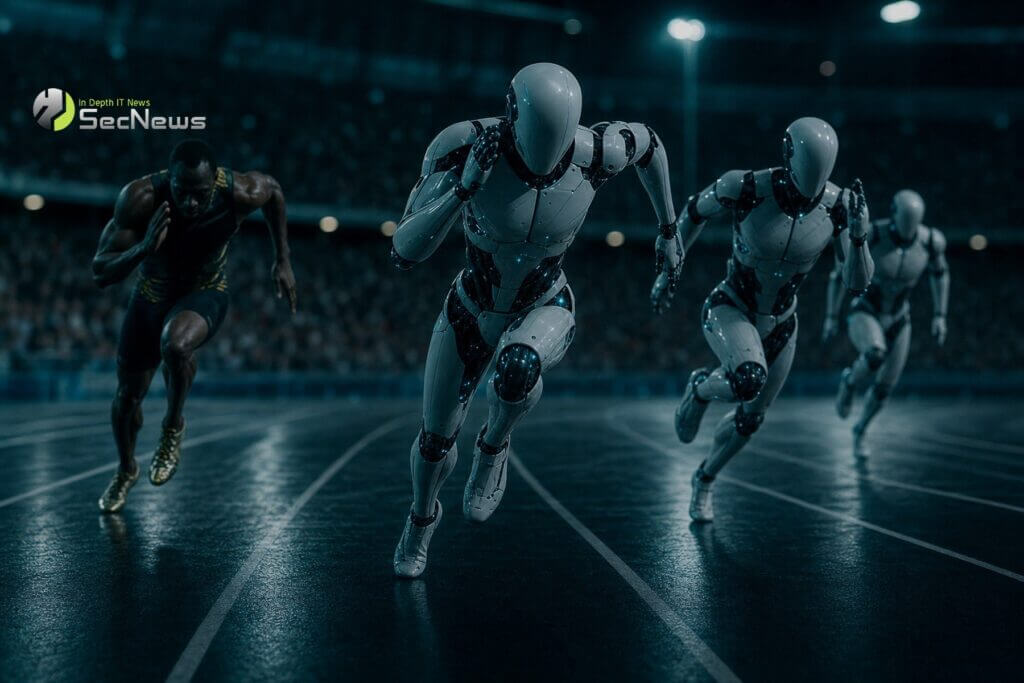
In short, the REK case is a harbinger of the regulatory challenges that the commercialization of humanoid robots will bring. The CSAC has made its position clear on human events, but the legal framework for robot competitions remains open. REK, for its part, seems to view the regulatory attention as confirmation of its commercial viability — and its next move, with all-robot competitions, shows that the company is quickly adapting to the new regulatory landscape.
