

A weak spot in Earth's protective magnetic field is growing and exposing satellites and astronauts in orbit to more solar radiation, according to measurements conducted for over a decade by three orbiting observatories.
See also: ESCAPADE: Two satellites will reveal how Mars lost its atmosphere
Observations from the European Space Agency have found that Earth's already weak magnetic field over the South Atlantic Ocean – a region known as the South Atlantic Anomaly (SAA) – is getting worse and has grown by an area half the size of mainland Europe since 2014. At the same time, a region over Canada where the field is particularly strong has shrunk, while another region of strong field in Siberia has grown, the measurements show.
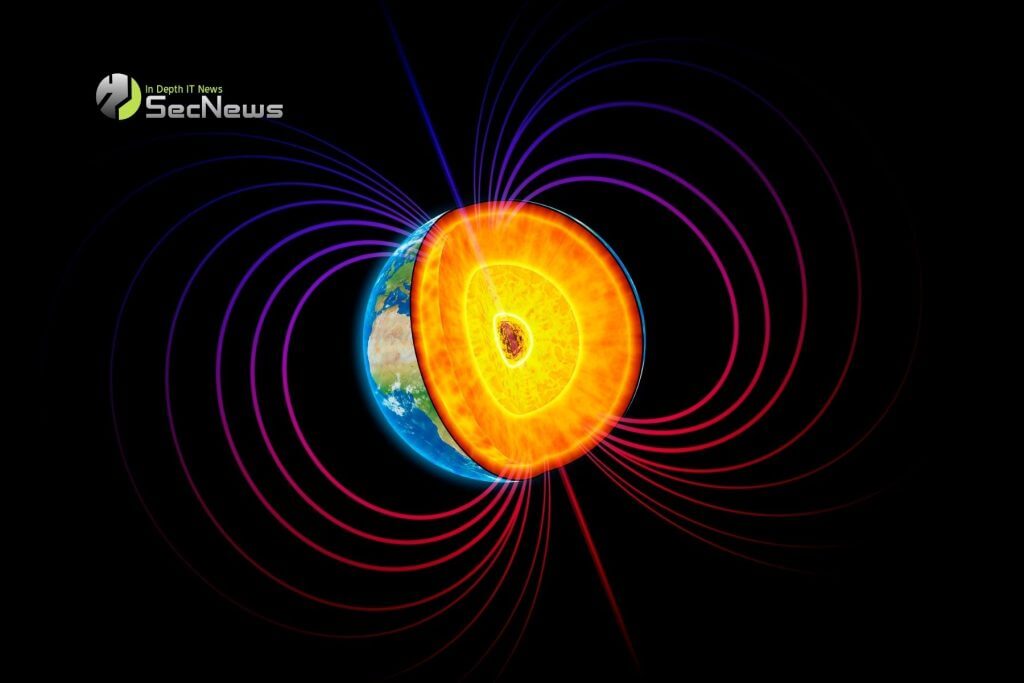
The three satellites were launched in 2014 to precisely monitor magnetic signals from Earth’s core and mantle, as well as the ionosphere and magnetosphere. Earth’s magnetic field (“geomagnetic field”) is believed to be generated by a rotating core of molten iron, about 2,900 kilometers beneath our feet. But the strength of the field is constantly changing, and scientists are still learning about its exact mechanisms.
See also: The strongest solar flare of 2025 affects Europe and Asia

The geomagnetic field protects life on Earth's surface from harmful charged particles of solar radiation. We can observe the effects of charged particles from the Sun interacting with the geomagnetic field in the upper atmosphere during auroras, such as the northern aurora.
And because it extends into space, the geomagnetic field also protects spacecraft in orbit, including most satellites and the International Space Station (ISS). However, the authors of the study warn that spacecraft – and astronauts- that enter the weak spot of the South Atlantic during their orbit around our planet could now be exposed to more radiation.
See also: Europe: Simulation of a catastrophic solar storm – Dangers

For spacecraft hardware, this radiation could cause more malfunctions, damage, or even power outages. “The main consequence is for low-Earth orbit satellite infrastructure,” Finlay said. “These satellites experience higher rates of charged particles when they pass through the weak field region, which can cause problems with electronics.”
