

The European Space Agency (ESA) has conducted one of the most realistic and severe solar storm simulationsever conducted in Darmstadt, Germany. The exercise aimed to assess the readiness of satellites and control teams to face a hypothetical but entirely possible threat: a solar superstorm on the scale of the historic “Carrington Event ” of 1859.
This particular storm, if it were to occur today, could cause massive communications outages, damage to satellites and severe electromagnetic disturbances on Earth. ESA chose to test its limits in view of the upcoming launch of the Sentinel-1D, which is scheduled for November (to ensure its operational safety under extreme conditions).
The triple threat from the Sun
In the simulation, the sun “attacked” Earth with a series of catastrophic events. First, an X-class solar flare —the most powerful type of explosion ever recorded—blasted radiation that reached the planet within eight minutes. The result was an immediate disruption of radar, communications, and satellite signals.
See also: Volcanic eruptions may have left ice on Mars' equator
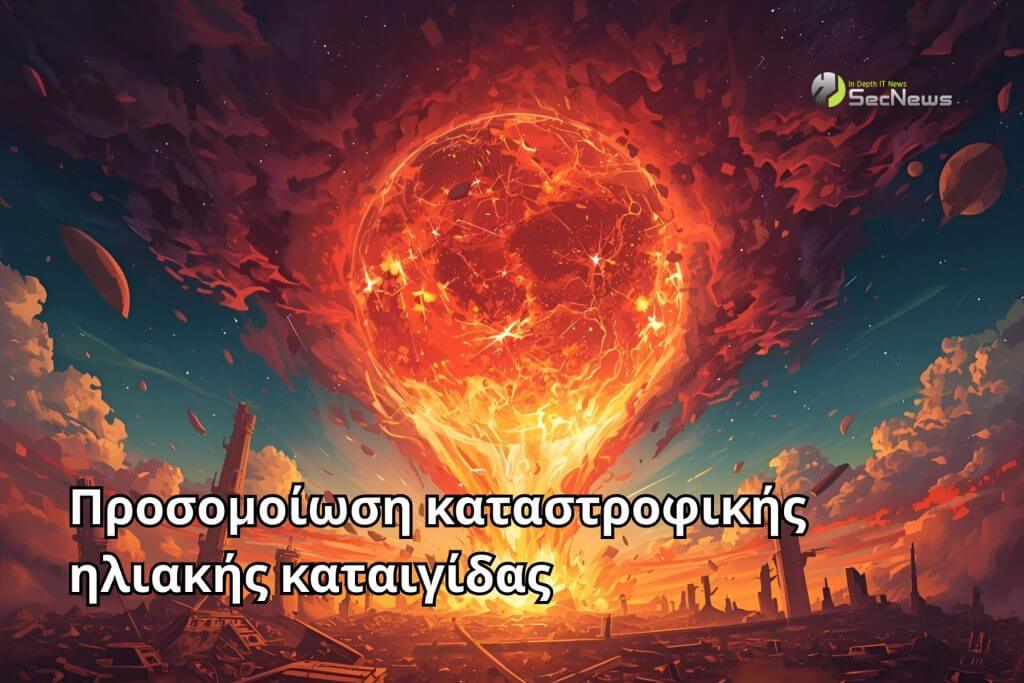
Shortly afterwards, a torrent of high-energy particles, consisting of protons, electrons and alpha particles, struck orbiting satellites, causing data corruption and possible damage to critical electronic systems. The final blow came 15 hours later, when a coronal mass ejection (CME) collided with Earth's magnetic field, increasing atmospheric density and causing up to 400% more aerodynamic drag on low-orbiting satellites.
"In such a scenario, there are no good options," explains Thomas Ormston, deputy director of operations for Sentinel-1D. "The challenge is to keep the satellite safe and minimize damage."
Ripple effects of a solar storm on Earth
The simulation was not limited to space. ESA scientists also examined the consequences on the ground: overloading of electricity networks, geomagnetic disturbances in pipelines and possible damage to critical infrastructure, from GPS to air navigation systems.

"Such a storm could cause a domino effect on our entire technological infrastructure," said Jorge Amaya, coordinator of space weather modelling at ESA. "Even low-lying satellites are only partially protected. An explosion on the scale of the Carrington event would put everything at risk."
See also: James Webb: Galaxies in the early universe were chaotic
The inevitable fact
ESA researchers warn that such an extreme solar event is not just possible, but inevitable. "The question is not if it will happen, but when," said Gustavo Baldo Carvalho, chief simulation officer for the Sentinel-1D mission.
This phrase sums up the philosophy behind the exercise: to familiarize control teams with managing crises that can erupt without warning, but also to identify the weak points of existing security protocols.
ESA's response: More prediction, less damage
To prepare for the inevitable, ESA is expanding its solar cycle monitoring network and preparing the ambitious Vigil mission , scheduled for 2031. The new satellite will be positioned at the L5 point —a fixed gravitational point between Earth and the Sun—so it can detect bursts of solar activity hours or even days before they reach our planet.
See also: Material from the "early Earth" found deep within our planet
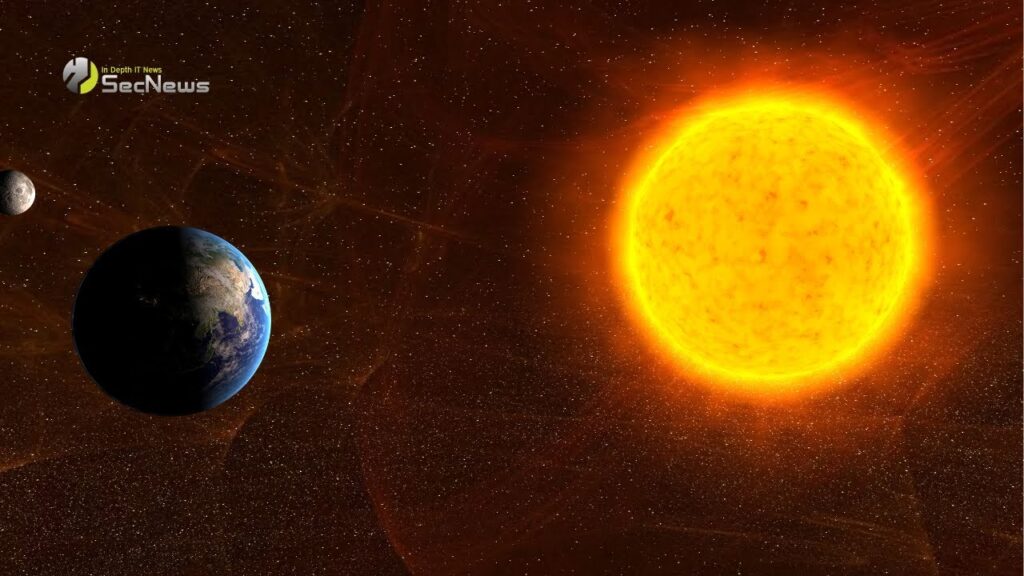
The aim is to provide early warnings, giving satellite operators and energy networks to take protective measures against a catastrophic solar storm. ESA thus aims to drastically reduce the impact of such a phenomenon and strengthen the "resilience" of European technological infrastructure.
The future of "space resilience"
The Darmstadt simulation was a realistic rehearsal for the future — a future in which our dependence on space grows, but with it our vulnerability. ESA scientists emphasize that knowledge and foresight will be our most powerful weapons against the power of the Sun.
