

The Tesla Semi is finally in the hands of customers — nearly a decade after it was first unveiled. The heavy-duty electric truck, first announced in 2017, is now in regular production since April 2026, and Tesla held a special event to prove that the long wait was worth it. The company now has to convince the market and investors that this vehicle can change the game in the heavy-duty transportation industry.
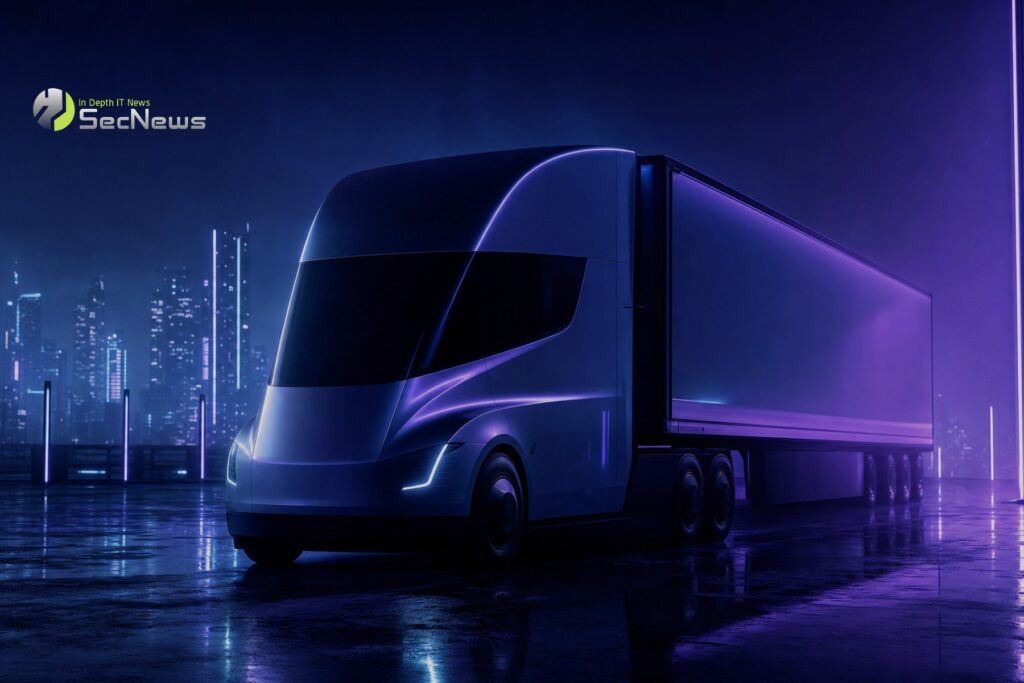
The event was held at Tesla next to Gigafactory Nevadain Sparks Nevada. The company claims the facility can produce up to 50,000 trucks annually, or about 1,000 per week. New and existing Tesla Semi, including PepsiCo, US Foods, DHL, WattEV, ABF, Einride, IMC and OK Produce. The first deliveries began this week.
However, Tesla did not disclose the number of orders it has received to date, nor did it officially announce the price of the vehicle. According to rumors circulating in the market, the long-range version is expected to cost around $ 290,000. Tesla CEO Elon Muskwas not present at the event — he was in Washington.
See also: Tesla Semi: Over 100 Megachargers in Europe
Tesla Semi: A long journey from announcement to production
The story of the Tesla Semi is one of the most typical cases of delay in the modern automotive industry. The truck was first shown in concept form in 2017, with initial estimates of starting production in 2019.However, a series of obstacles repeatedly postponed the plans: the COVID-19 pandemic, global shortages of components and semiconductors, as well as the huge investments required to build a dedicated production line.
In 2022, Tesla delivered a handful of trucks to PepsiCo, but these units were essentially pilot-built. They were not a sample of regular industrial production. Over the next three years, the company worked intensively to improve the vehicle's design, reducing its weight by nearly 450 kilograms (about 1,000 pounds) and building a dedicated manufacturing plant next to the Nevada Gigafactory.
In February 2026, Tesla revealed the final production design, confirming two versions: the Standard Range with a range of 325 miles (about 523 km) at a full load of 82,000 pounds (37,195 kg), and the Long Range with a range of 500 miles (about 805 km). In April 2026, the company announced that the first Tesla Semi had rolled off the assembly line of the new factory, marking the official start of mass production.

Tesla Semi and the heavy-duty transport market: What changes?
The Tesla Semi into the heavy-duty trucking market comes at a critical time for the industry. The long-haul trucking sector accounts for a significant portion of global carbon emissions, and electrification is seen as one of the key tools for reducing them. However, the adoption of electric trucks faces significant challenges: high purchase costs, the need for charging infrastructure, and concerns about long-range autonomy.
Tesla claims that the Semi offers significant advantages over conventional diesel trucks. Operating costs per mile are lower, while maintenance requires fewer interventions due to simpler engineering. In addition, the acceleration and efficiency of the electric motor offer advantages on uphill routes and in urban environments. The company has also developed a Megacharger to charge the trucks, although coverage remains limited compared to the needs of the industry.
See also: Tesla confirms Semi electric truck is coming to Europe
Companies that have already committed to the Tesla Semi represent a broad spectrum of the logistics and transportation industry. DHL, one of the world’s largest logistics providers , and US Foods, one of the largest food distribution companies in the US, are strong references to the vehicle’s reliability. Einride, a Swedish company specializing in autonomous electric transportation, and WattEV, a fleet operator of electric trucks, show that interest extends beyond traditional transportation companies.
See also: Tesla Semi involved in first fatal crash, killing 2 in Nevada
Overall, the Tesla Semi represents a significant step forward for electric mobility in the heavy-duty trucking industry. Its success or failure will be determined in the coming years as the first vehicles begin to rack up real-world mileage. According to The Verge, the launch event was typical of modern Tesla: impressive, but with notable gaps in key information. The market is waiting to see if the company can live up to the high expectations it has created.
