

Artificial intelligence (AI) is rapidly entering consumer devices, transforming smartwatches, glasses, headphones and other wearables into digital assistants that are always by the user's side. But with the new capabilities comes a difficult question: what happens to the privacy of the people around the owner of such a device?

The issue is particularly acute as some of the newer features are no longer limited to responding to a voice command. Instead, they can perceive, process, and summarize what is happening in the user's environment, creating a new category of technology that affects not only the person who buys it, but also everyone around them.
The Apple Watch and the "passive listening" debate
Apple recently found itself at the center of the debate on this very issue, introducing new features on the Apple Watch that leverage recognition and processing.
One of these is Live Rewind, which can utilize a temporary circular buffer to process the last few seconds of audio and convert them to text. Meanwhile, Siri Recap is designed to provide the user with general summaries of events or information recorded during the day.
Apple claims that these features are not designed as a surveillance mechanism. According to the company, the processing is done with specific restrictions, and no attempt is made to identify the people speaking.
There is also an audible notification, a “chime” feature, when speech-to-text conversion occurs. The logic behind this is that the device cannot operate completely silently as a conversation recording tool.
When technology affects others
The problem, however, is not just about what a device does with its owner's data. The bigger question is what happens to people who haven't chosen to participate in this process.
A user may buy a smartwatch or a pair of smart glasses and accept the terms of use. The colleague, friend, passerby or stranger sitting next to them has not necessarily done the same.
This creates a particular void around the concept of consent. In traditional recording of a conversation, participants are usually aware that a microphone or other recording device is present. With modern wearable devices, however, the technology is becoming much smaller, more discreet, and more integrated into everyday life.
The issue also takes on legal dimensions, as laws regarding recording conversations vary significantly by jurisdiction. Some areas require the consent of all parties involved to record a conversation, which can raise significant questions when a device is constantly active.
From Apple Watch to AI glasses
The concern isn't limited to Apple. AI glasses are perhaps the most striking example of how artificial intelligence can turn an everyday object into an environmental sensor.
These devices can have cameras, microphones and connection to AI services, allowing the user to recognize objects, receive information or interact with a digital assistant without using the smartphone.
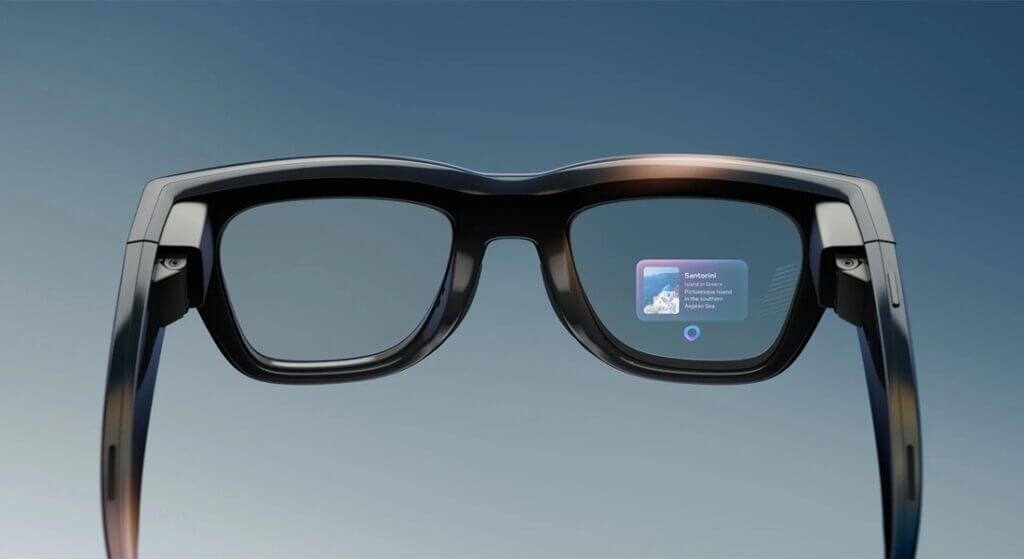
The same technology, however, can be used in a way that makes people around them feel like they are in front of a camera or microphone without knowing when it is activated.
🔒 Protect your privacy with Proton VPN
Swiss VPN from the creators of Proton Mail — strict no-logs policy, strong encryption, and built-in NetShield that blocks ads, trackers, & malware.
- ✔ No-logs, based in Switzerland (except 14-Eyes)
- ✔ NetShield: blocks ads, trackers & malicious domains
- ✔ Covers all devices — free version available
The link is an affiliate link — SecNews may receive a commission at no additional cost to you. It does not affect the independence of our article writing.
The debate became even more intense after the reactions surrounding the use of Ray-Ban Meta in public spaces, where the possibility of discreet recording creates new social and ethical challenges.
A society full of sensors
The broader problem is that AI devices are emerging at a time when surveillance has already become a part of everyday life. Cameras on streets and in private spaces, recognition systems, smart speakers, smartphones and wearables are creating an environment in which data collection is becoming increasingly common.
A typical example is systems such as Flock cameras, which have sparked debates about the extent of surveillance in public and semi-public spaces.
See also: Encrypt Everything: The easy way to secure your data
The result is a paradoxical situation: consumers are now asked to recognize small indicators, lights, and beeps to understand whether a device is recording or processing information around them.
The challenge for technology companies
For big tech companies, the challenge is no longer just to create smarter devices. They must also convince the public that these devices do not turn everyday life into a constant surveillance system.
Meta, for example, has already attempted to differentiate new versions of its smart glasses by limiting some of the more intrusive features. The move shows that acceptance of a new technology does not depend solely on its technical capabilities.
Social acceptance is now an equally important factor.

Privacy as a key feature
The big question for the next generation of AI devices is whether privacy will be treated as an additional security feature or a core design feature.
Having notifications, limited buffers, local processing , and mechanisms that prevent third-party identification is important. But it is not enough on its own. Users need clear information about what is being recorded, how long it is kept, where it is being processed, and who can access the data.
See also: Apple Maps Ads – There's No Way to Turn It Off
As AI moves from the smartphone screen to devices that are constantly on our bodies and perceive our environment, the line between personal technology and unintentional surveillance is becoming increasingly thin.
In 2026, therefore, the real challenge for the industry is not simply to make devices “hear” and “see” better. It is to prove that they can do so without turning the people around them into unwitting participants in an ongoing artificial intelligence experiment.
