

The Tesla recall in China reaches 2.98 million vehicles and is part of the largest mass recall of electric cars in the country's history, with a total of about 4.3 million vehicles from nine manufacturers. The cause is common: electronic door handles — a design feature pioneered by Tesla and widely adopted by the Chinese EV industry — can "lock" passengers inside the vehicle when a severe accident disrupts the low-voltage power supply.

According to Reuters, Tesla and eight other manufacturers — including Xiaomi, Xpeng, Geely, Leapmotor, BAIC, Chery, FAW Hongqi and Dongfeng — have submitted recall plans to State Administration for Market Regulation (SAMR) . The fixes include OTA (Over-The-Air) software updates, warning labels and improved markings around the mechanical emergency handles. The first actions will begin on September 25, 2026.
See also: Tesla confirms Semi electric truck is coming to Europe
What is the Tesla recall in China about?
The Tesla recall includes 2,975,910 Model 3 and Model Y vehicles made in China, as well as 46,041 imported Model 3, Model X and Model S vehicles. The production period covers from March 4, 2019 to April 29, 2026, essentially the entire Tesla lineup produced through the Shanghai factory and imported into the country. According to the official plan, Tesla will install warning labels that identify the location of the mechanical emergency handles and distribute OTA software that automatically lowers the windows after a collision is detected.
The SecNews technical team points out that Tesla is NOT replacing the hardware of the handles — the solution is purely a software patch plus visual cues. Tesla designer Franz von Holzhausen himself has stated that the company is working on a new design that will combine the electronic and mechanical systems into a single, intuitive panic control element.
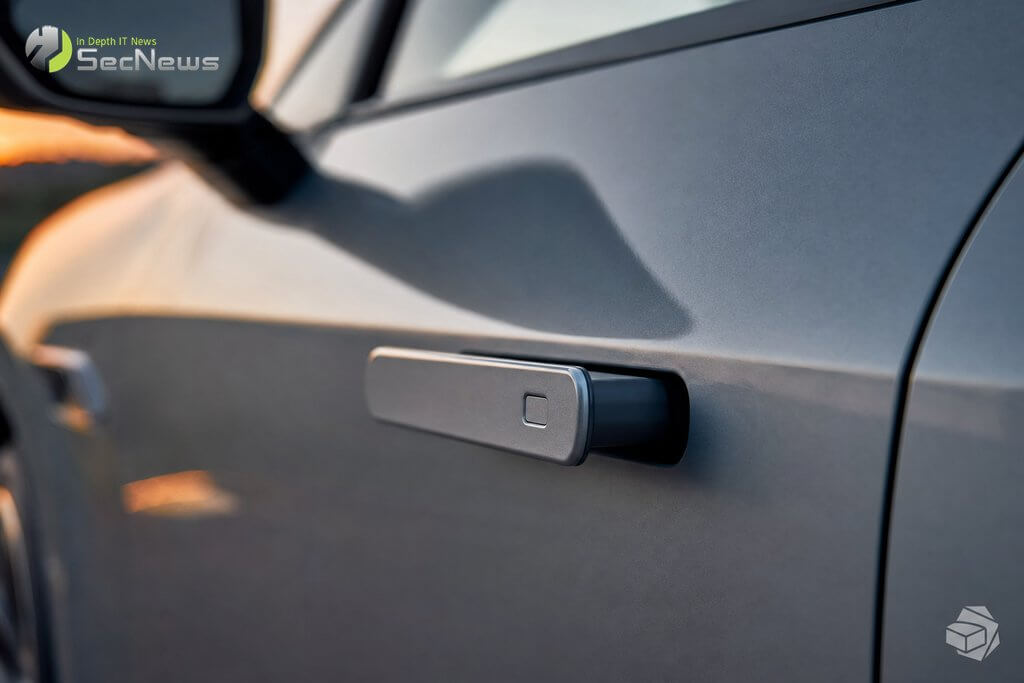
Why electronic handpieces are a danger
Flush grab handles were introduced by Tesla with the Model S in 2012 and have been adopted by Chinese EV manufacturers. They operate with electronic buttons instead of a classic mechanical lever, extending outward when the owner approaches the vehicle with their key or smartphone. This gives a cleaner design and reduces aerodynamic drag, but it creates a critical safety issue.
In a serious accident, the 12V low-voltage system can fail — and with it, the ability to open the door electronically. Passengers must locate the alternative mechanical handles, which SAMR says are “similar in color to the cabin trim and difficult to locate or use.” In the Model 3, for example, passengers must remove a cover from the door pocket and pull a hidden cable. Bloomberg has documented at least 15 deaths in 12 crashes over the past decade in which passengers or rescuers were unable to open the doors of hot Teslas.
Which models and brands are included?
The overall distribution of the mass recall, as recorded by SAMR, shows the wide spread of the problem: Tesla 2.98 million vehicles, Xiaomi about 390,000, Leapmotor 371,000, Xpeng 264,000. BAIC, Chery, FAW Hongqi, Geely and Dongfeng follow with smaller numbers. Tesla accounts for the largest share due to its huge installed base in the Chinese market.
Additionally, Tesla is facing a second parallel recall of 2.7 million vehicles for defective driver attention monitoring systems used in Autopilot and FSD assist. This concerns Chinese-made Model 3 and Model Y vehicles from March 4, 2019 to December 7, 2025, and is a separate issue from the handgrips.
See also: Lawsuit against Amazon: Creators' material for AI training
What should the owner do?
Greek Tesla owners are not directly affected by the Chinese recall, as it concerns vehicles within China only. However, the issue is of great interest to every EV owner worldwide, as regulators in the US and Europe are considering similar standards for electronic handbrake. The editorial team of SecNews recommends that all electric vehicle owners carefully read the manual and accurately locate the location of the mechanical emergency system, so that they can react immediately in a critical situation.
In the EU, no such recall has been announced so far. Interested Greek drivers can contact their local Tesla dealer or monitor the official vehicle software update page. At the same time, it is a good idea to familiarize yourself with the operation of the mechanical emergency handles, especially for passengers in the rear seats of Model 3 and Model Y, where the location of these mechanisms is less obvious.
The broader EV safety problem
The Tesla recall signals a broader regulatory wave. China is the first country in the world to ban hidden door handles from January 1, 2027.The new standard from China’s Ministry of Industry and Information Technology (MIIT) requires every door to have an exterior handle with mechanical opening functionality, while interior handles must be clearly visible and located within 300mm of the door edges. Existing vehicles have until 2029 to comply.
The SecNews technical team observes that the issue of electronic handgrips highlights a fundamental conflict in the design of modern EVs: aesthetics and aerodynamics versus classic safety standards. As Greek consumers begin to choose electric vehicles more often, knowledge of the safety systems involved becomes increasingly important. The Tesla recall is a reminder that technology, no matter how elegantly designed, must adhere to the basic safety principles that have been in place in the automotive industry for decades.
