

OpenAI will begin adding an invisible watermark to texts written by ChatGPT and Codex for users in the European Union. The ChatGPT watermark is not visible to the naked eye and does not change the appearance of the text, but a special tool can, under certain conditions, detect it. The change comes a few weeks after schools and universities reopen and directly affects those who use ChatGPT for assignments, reports or professional texts.
The company unveiled the system, called textGrain, on October 5, 2026, in a post about European text provenance rules. The reason is the EU’s Artificial Intelligence Regulation (AI Act), which requires providers to label AI-generated content in a way that a computer can recognize it. The transparency rules went into effect on August 2, as TechCrunch notes.

How ChatGPT's watermark works
A language model writes by choosing the next word from a number of possible ones. This is where textGrain comes in: it periodically chooses a different word, ideally a synonym, so that the text acquires a hidden statistical pattern. The reader doesn’t see anything unusual. However, the special detection tool looks for this pattern in the words and judges whether the text bears the OpenAI watermark.
The change will be implemented gradually over the coming weeks, across all ChatGPT and Codex subscription packages within the EU. OpenAI talks about “eligible” texts, without explaining in detail which ones are excluded. Outside Europe, it will not be automatically enabled. Companies that use OpenAI models via API (application programming interface) can enable it anywhere in the world, but it remains disabled by default.
See also: ChatGPT trap: Fake GPT leads to ClickFix and RAT installation
Can the teacher check an assignment?
For now, no. The detection tool is not public. OpenAI only gives access to approved researchers and specialized organizations, who must apply and are reviewed one by one. This means that a teacher or university professor cannot currently upload a paper and check if it has a watermark. According to the company, the tool only responds if it detects a watermark and does not reveal who wrote the text or what they asked ChatGPT for.
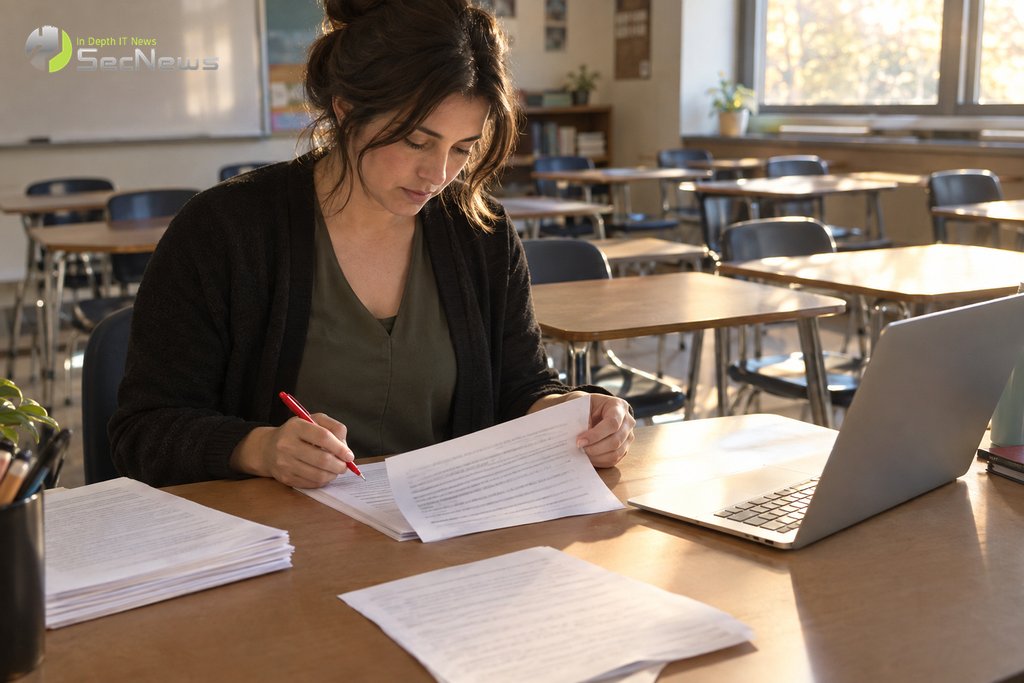
OpenAI itself warns that the watermark doesn’t prove much. It can show that one of its systems wrote or edited part of a text, but it doesn’t measure how much work a human did, it doesn’t judge whether the use of ChatGPT was allowed, and it doesn’t check whether the content is correct. And even more important for ChatGPT tasks: if a watermark isn’t found, it doesn’t prove that the text was written by a human. It could simply have been too short, had been corrected or translated, or came from another company’s tool.
How reliable is AI text detection?
The data published by OpenAI shows that the method has clear limits. Aiming for false positives to be under 1%, the tool detected the watermark in about 80% of short passages (200 tokens, or units of text, corresponding to one to two paragraphs) and in 95% of passages twice as long. The results were noticeably worse in math texts, where words cannot be easily changed.

The biggest weakness is text processing. In the company’s tests, when 10% of the words were replaced with synonyms, the detection rate dropped from about 92% to 66%. When 25% of the words were changed, the watermark was detected only 17% of the time. OpenAI says that translation also makes detection difficult, without giving numbers. In other words, the watermark is not visible enough to be erased, but it fades significantly the more the text is rewritten.
The Register's review
The British technology outlet The Register called the system weak. It argues that OpenAI is implementing it only to formally comply with European regulation, that it lets a significant part of the AI texts escape, and that it is easily circumvented by changing words. It also raises an issue that concerns every user: OpenAI's publication does not consider whether the "statistical" change of a word can alter the meaning of a text or even a crucial element or number.
OpenAI isn’t the first company to take this step. Anthropic has been watermarking Claude’s texts globally since August, using technology based on Google’s SynthID, according to The Verge. OpenAI says textGrain performed as well or better than SynthID in its tests, and plans to make it open source.
See also: ChatGPT Ads: Visual Ads are coming to Image Generation
What it means for pupils, students and professionals
For students, the practical conclusion is that ChatGPT assignments within the EU are no longer technically "invisible", even if the teacher currently has no way of checking it. Each school's and university's rules for using AI still count more than any detection tool. The safest option is to openly declare when and how one used ChatGPT.

For educators, the message is the opposite: the ChatGPT watermark cannot be used as the only evidence, neither when it is found nor when it is missing. An oral presentation of a task or a discussion with the student remain more reliable ways to see if he understands what he has delivered. As for professionals, those who send texts written with ChatGPT to clients or colleagues should be aware that they may now be marked, and always check critical elements, such as numbers, names and dates, before using them.
See also: OpenAI Dots: New AI agents that work 24/7
