

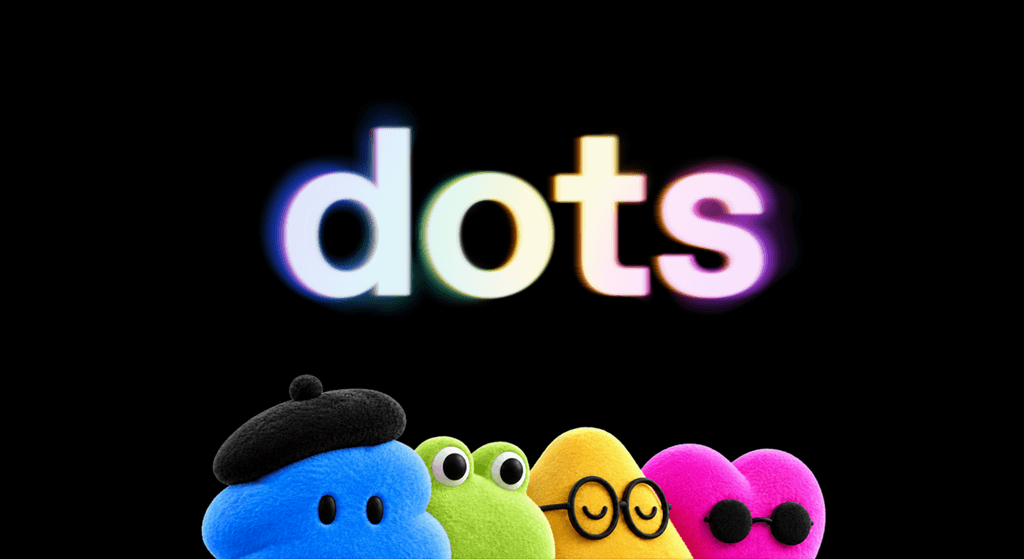
OpenAI is introducing Dots , a new AI service designed to take on tasks with greater autonomy , learn from users’ preferences , and operate in the background , even when they’re not in front of their computers. The new offering is part of the company’s effort to expand the capabilities of AI agents, transforming AI tools from question-answering systems to digital assistants that can take over entire workflows.

The move places OpenAI in the growing market for autonomous AI agents, where companies are seeking to combine the reasoning of language models with access to applications, data and productivity tools. Dots appears as a competitive proposition to Meta's Muse, with a key feature being continuous operation and the ability to collaborate with the user through different digital environments.
What are OpenAI Dots and how do they work?
According to OpenAI’s presentation, Dots are AI agents that can work towards goals on a continuous basis. They are based on the GPT–6 Astra and use a cloud computing environment, which includes a web browser. This infrastructure allows the agent to perform tasks online, rather than being limited to generating responses within a chat window.
See also: Meta's Muse highlights new risk to Apple's revenue
The philosophy behind the service is that the user does not need to provide detailed instructions for each individual step. They can describe the end goal, provide clarifications when needed, and evaluate the results. The agent then takes the necessary actions, maintaining the context of the task and adapting its behavior based on the feedback it receives.
OpenAI claims that Dots can operate 24/7. This means that gathering information, preparing material, or monitoring a task doesn't have to happen exclusively during an active session with the user. Actual usefulness, however, will depend on the access rights, available tools, and constraints of each task.
Connect to over 4,000 apps
One of the key features of Dots is the ability to interface with more than 4,000 applications. OpenAI seeks to allow agents to operate within the broader user environment, leveraging different tools to perform complex processes.
Users will be able to communicate with agents through ChatGPT, as well as from professional communication apps like Slack and Microsoft Teams. The company also plans to add text messaging, expanding the ways in which someone can assign tasks or request updates.
Of particular importance is maintaining the context of the conversation between different channels. This way, the user will be able to continue a task from a different environment, without having to repeat all the previous instructions. OpenAI also says that Dots will be able to perform proactive research in the background, preparing information and materials related to the user's projects.
See also: Muse Charm: Meta makes gadgets for its AI agent
Personalization and collaboration with the user
Dots is designed to gradually adapt to each user's preferences and way of working. The feedback they receive during a collaboration can help them better understand the desired style, level of detail, and criteria that define a satisfactory result.
Interaction is not limited to written commands. Users can ask questions, explore ideas, correct the course of a task, or use voice communication for more complex conversations.
For example, a professional might be asked to gather information for a project, organize related data, and prepare an initial presentation draft. Similarly, a team might leverage an agent to support repetitive tasks and prepare updates.
This does not mean that every process will be completed automatically or without errors. Human oversight remains important, especially when the tasks involve sensitive data, financial decisions, or communications to third parties.
Access rights and control of actions
The increased autonomy of AI agents raises questions about security and control. For this reason, OpenAI says that Dots follows ChatGPT's permission settings and allows for the creation of custom rules for tasks that require prior approval.
This capability is important for businesses that want to leverage AI without allowing uncontrolled actions on corporate accounts and applications. However, organizations should carefully consider the permissions they grant, the information the agents access, and the actions they can perform without human intervention.
See also: Meta tests human callers behind AI agent Muse
Availability and the new GPT–6.1 Sol
Dots are initially available in select markets for Pro, Business Premium, and Enterprise plan users. Beneficiaries get a primary agent at no additional charge, and the ability to create and name a primary Dot is available from launch. The ability to create agent groups is expected to be added later.
Initial configuration is done through the ChatGPT desktop, with access later provided for mobile devices. Although conversations with the agent do not count towards ChatGPT usage limits, the tasks it performs consume the available limits of the respective program. Access for other users is expected to be expanded gradually.
At the same time, OpenAI introduced GPT–6.1 Sol, an upgrade of GPT–6 Sol with improvements in agentic coding, computing, and professional tasks.
The two announcements underscore the company's strategy to move from models that simply produce content to systems that can organize and execute tasks. Whether Dots will fundamentally change everyday work will depend on their reliability, the quality of the interfaces, and the level of control users have over their actions.
