

Meta smart glasses are getting a powerful new ally: the AI agent Muse, which will soon be available directly on the company’s smart glasses. Just a few weeks after the official launch of Muse, Meta announced that it is “working” on integrating it into Meta smart glasses, including the new models presented at Meta Connect. The move marks a new era for smart wearables, as artificial intelligence becomes an integral part of the user’s everyday experience.
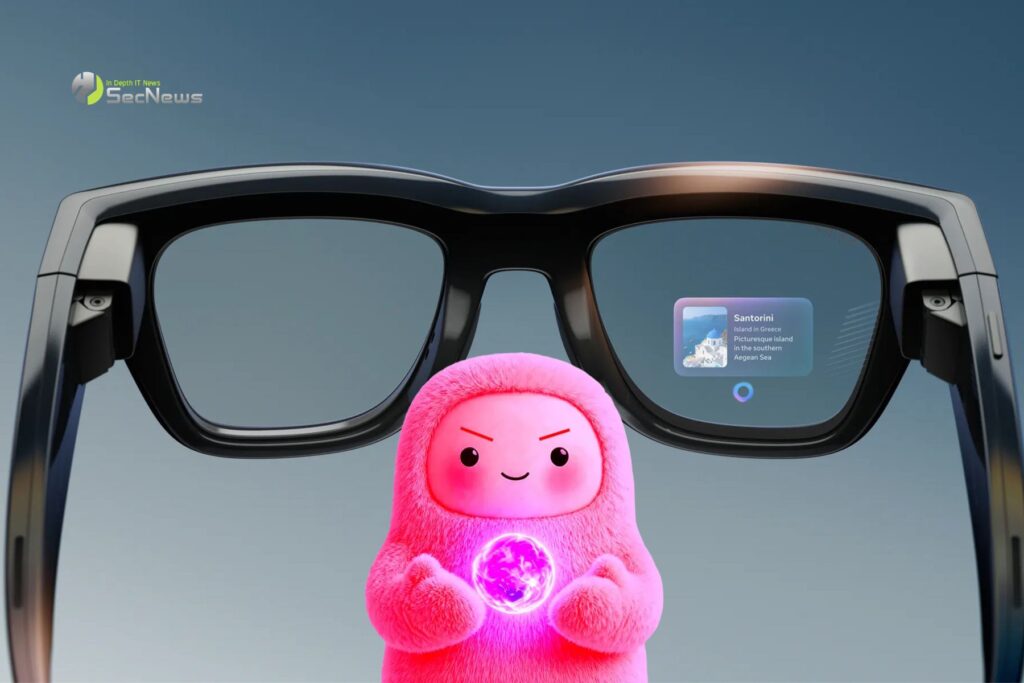
Users will be able to activate Muse simply by saying its name, and then assign it tasks like coaching workouts, logging meals, or helping with shopping — by analyzing objects in front of them. It’s a hands-free experience that fundamentally changes the way we interact with technology in everyday life.
Meta smart glasses: New accessibility and audio capabilities
Beyond Muse , the Meta smart glasses are getting a number of important new features. One of the most notable is Hearing Enhancement , a feature that Meta describes as “ FDA-cleared software for adults with mild to moderate hearing loss .” The feature is expected to launch later this year, either through a Meta One subscription or as a $149 add-on for compatible glasses. This is a major move by Meta into the health and accessibility space, opening up smart glasses to a wider audience.
See also: Meta tests human callers behind AI agent Muse
Additionally, Meta AI will now be able to provide “richer contextual responses” when users ask the glasses what they see in front of them. This makes Meta smart glasses more effective at helping blind or low-vision users, who can better understand their surroundings through audio description. A new audio adjustment also allows users to shift the volume between the left and right ears, and even send all audio to just one ear — ideal for people with single-sided hearing loss.
In the audio department, Meta is introducing Dolby Atmos Capture, which allows users to record videos with 360-degree spatial audio. This significantly upgrades the glasses’ video recording capabilities, bringing them closer to professional cameras. Meanwhile, the new Dynamic Photo automatically captures multiple frames when taking a photo and uses Meta AI to suggest the best frame from each series — a feature similar to what we know from modern smartphones.
See also: Meta Muse: Amazon blocks AI shopping agent
Meta smart glasses Ray-Ban Display: Hologram, navigation and more
Meta Ray-Ban Display glasses are getting a new Hologram feature , originally announced for the company’s new VR Glasses . It’s a “ photorealistic digital version of your face for calls from Meta Ray-Ban Display ,” which “infers” your expression using your voice. The feature will be released in Early Access on WhatsApp for Meta Ray-Ban Display users in the US later this fall. It’s an interesting step towards augmented reality communications without the need for an expensive VR headset.

In the area of navigation, Meta Ray-Ban Display is getting two new heads-up navigation. Starting later this month, users in the US and Canada will be able to ask for real-time navigation directions by voice for cycling or public transport. In addition, the glasses will use “the world in front of you instead of street signs” for navigation directions — pointing out, for example, a house, a car or a landmark that the glasses detect. This approach is much more natural and intuitive than traditional GPS directions.
It is worth noting that Meta has invested significantly in smart glasses in recent years, in collaboration with Ray-Ban. These glasses have experienced great commercial success, especially after the integration of Meta AI, and are now one of the most popular technological products worldwide. The company's strategy is clear: to turn glasses into a platform that competes with smartphonesin everyday use.
See also: Meta invests in AI agent Muse to make up for lost ground in the artificial intelligence race
The integration of Muse into Meta smart glasses represents a significant development in the field of AI agentsand wearable devices. While other companies such as Apple and Google are developing their own AI assistants, Meta is choosing to integrate a more autonomous agent that can perform complex tasks without constant user supervision. A
For Greek users, the availability of these features depends on Meta's gradual expansion to European markets. Some features, such as navigation, are starting in the US and Canada, while others are expected to reach Europe at a later stage. However, the trend is clear: Meta smart glasses are becoming increasingly powerful and accessible globally.
