

Smart glasses with built-in cameras and microphones are moving from the realm of technological innovation to the center of a broader debate about privacy and security. The Paris prosecutor's office has opened at least one criminal investigation after allegations of sexual harassment linked to the use of such devices , according to Reuters. The development shows that the use of camera-equipped wearables is now being scrutinized not only by data protection authorities but also by the criminal justice system.
The case concerns incidents in which men allegedly used glasses with cameras to record women in public places without their knowledge or consent and then posted the footage online. The prosecutor's office has not released the exact number of complaints or announced whether any suspects have been identified.
See also: Limited edition Motorola Razr Plus in collaboration with Paris Hilton
Invisible camera becomes new privacy problem
The peculiarity of these devices lies in the fact that they largely resemble conventional glasses. The camera and microphone are integrated into the frame and can be activated without the user having to hold a smartphone or other visible device in their hands.
The French data protection authority CNIL had already warned of the risks in June. The authority points out that smart glasses can record images and sound in everyday environments, while their presence may not be easily noticed by people around the user.
The CNIL has described the rise of smart glasses as a new challenge to privacy and has announced an action plan around the risks involved. So far, the French authority has received fewer than ten complaints related to the use of such devices in the workplace, and has also received questions from companies about whether they can limit or ban their use in their facilities.
Is the camera light enough to provide information?
One of the main issues that arise concerns the light indicator that indicates that a recording is taking place. The CNIL has warned that a small light indicator is not in itself a sufficient solution to ensure that people in front of the camera are aware that they are being recorded.
See also: Meta Luna: Smart glasses without a camera are coming
The problem becomes even more complex when the video does not remain on the device, but is transferred to a platform and can be posted publicly. The recording and subsequent dissemination are different stages of processing and create different risks for the person appearing in the material.
The organization e-Enfance, which deals with the online safety of children and young people, has emphasized to Reuters that activating a light indicator does not amount to consent to the filming or subsequent distribution of a person's image.
Meta changes the way glasses work
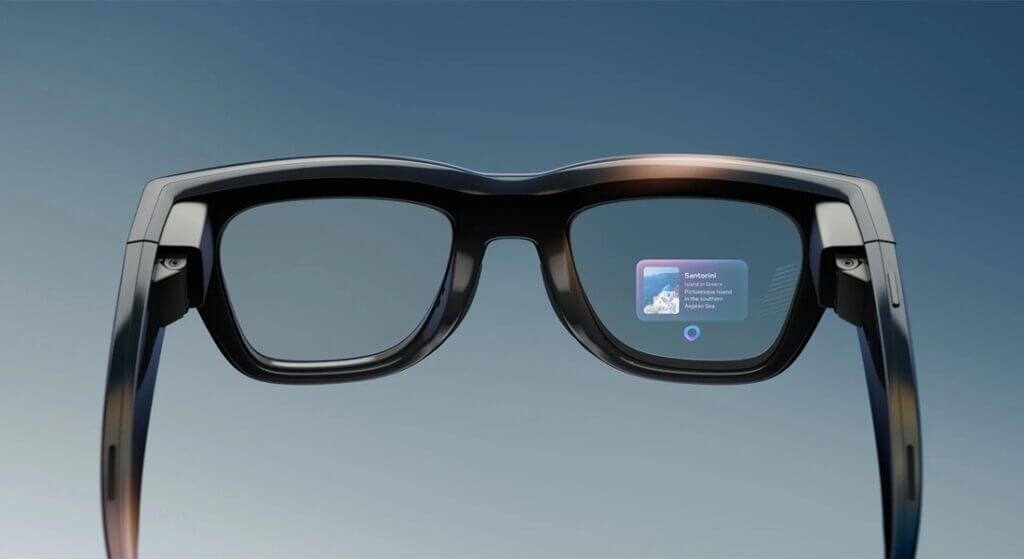
The Ray-Ban Meta , which is made by Meta in partnership with EssilorLuxottica , is particularly at the center of the issue . Meta has issued two software updates since June to prevent the camera from recording when the power light is covered.
The company claims to have built privacy into the design of its AI glasses, but their increasing use raises a broader question: how effectively can the people around the user be protected without requiring them to know the technical details of each wearable?
A legal gap that makes it difficult to address
French law includes provisions for illegal recording of images without consent. However, as Reuters points out, Article 226-1 of the French Penal Code is specifically concerned with the protection of privacy and does not cover all cases of recording in a public place in the same way. This creates a particularly complex legal issue when a device records someone on the sidewalk and the footage is then published online.
The development thus shows that technology is advancing faster than existing rules. A smartphone is easily recognizable as a camera, while a pair of glasses can incorporate corresponding capabilities without significantly changing the user's appearance.
🔒 Protect your privacy with Proton VPN
Swiss VPN from the creators of Proton Mail — strict no-logs policy, strong encryption, and built-in NetShield that blocks ads, trackers, & malware.
- ✔ No-logs, based in Switzerland (except 14-Eyes)
- ✔ NetShield: blocks ads, trackers & malicious domains
- ✔ Covers all devices — free version available
The link is an affiliate link — SecNews may receive a commission at no additional cost to you. It does not affect the independence of our article writing.
The problem has already crossed French borders
France is not the only country considering restrictions. In Germany, the organization HateAid has taken legal action against Meta, Ray-Ban, Oakley and retailers, while Australia is considering restricting the use of camera-equipped smart glasses in public spaces.
See also: Polish developer creates app that detects nearby Meta smart glasses via Bluetooth
In the United Kingdom, restrictions have also increased in specific areas, while British authorities have examined issues related to the protection of personal data. At the same time, at the European level, the protection of privacy from new technologies is a broader priority. The European Data Protection Board has placed transparency and information obligations for citizens regarding the processing of their data at the center of its coordinated actions for 2026.

The next generation of smart glasses comes at a crucial time
The situation is getting even more interesting ahead of Meta Connect on September 23, where new developments around Meta's smart glasses are expected to be presented. The company now faces a market in which technological demand is growing, but at the same time questions are intensifying about how people around the user are protected.
The key question for the next generation of such devices is therefore not just the best camera, artificial intelligence or more features. It is also how to ensure that user convenience does not turn into an unintentional violation of the privacy of others. The criminal investigation in France shows that this question is now moving from theory to practice.
