

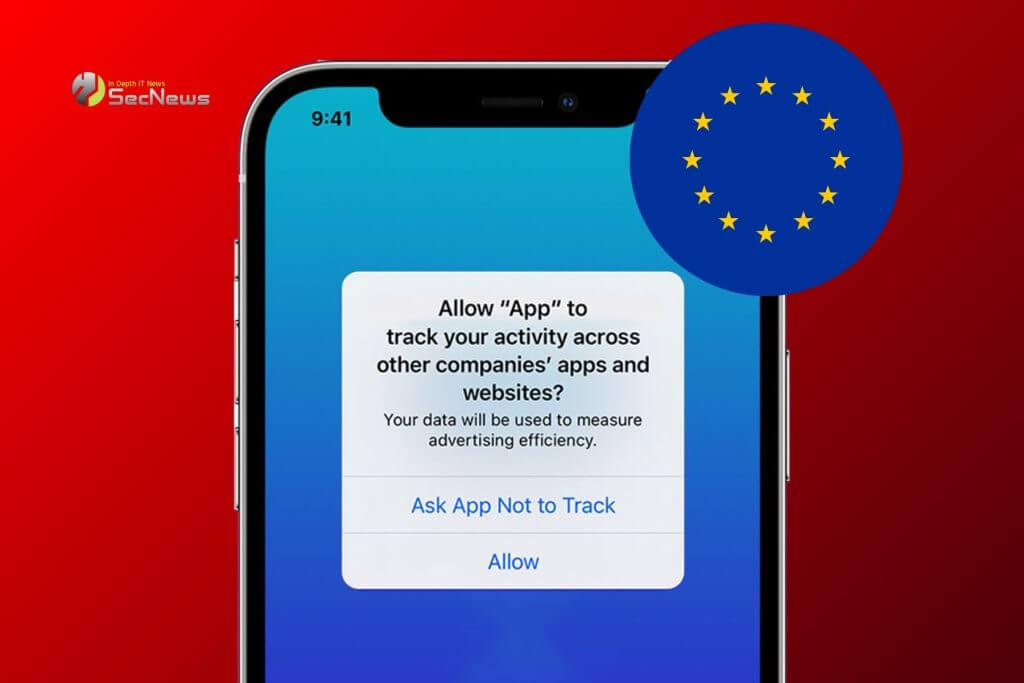
Apple is making changes to the way its App Tracking Transparency (ATT) works in the European Union, following years of scrutiny and intervention by European competition authorities. The changes mainly concern the appearance and wording of the message through which apps ask the user for permission to track across different apps and websites.
See also: Apple may bring back Xserve with Nvidia technology

Apple says that, starting with iOS 27.2 and iPadOS 27.2, developers in the EU will be able to leverage an alternative version of the relevant consent system. The basic requirement, namely that an app must ask for permission before performing this type of tracking, remains in place.
Competition concerns in focus
ATT has been the subject of intense debate between Apple, developers, and regulators in recent years. The system was designed to give users greater control over whether an app can connect data it collects with information from third-party apps, websites, or other services for the purposes of targeted advertising and ad measurement.
European authorities, however, have examined whether these rules create different conditions for third-party apps compared to Apple's own services. Similar concerns have been expressed at the national level. The Italian competition authority, for example, argued in 2025 that the implementation of the ATT policy could lead to additional consent procedures for developers and affect businesses that rely on advertising.
New look to the consent message
The most significant change isn't the removal of App Tracking Transparency, but the way it's presented to the user. Apple now allows for an alternative consent screen with different formatting and wording.
Changes include replacing the pop-up window appearance with a full-size screen, while the language, colors, and buttons are also different. The wording using the word “track” is removed from this alternative version, while the options are configured as “Allow” and “Reject”.
At the same time, developers can add an "Additional Information", through which the user will have access to more information about why the permission is being requested and how the data will be used.
Which countries are directly affected?
Apple clarifies that, due to legal requirements, the alternative version of the system will be the only one available for apps distributed in Germany, France, Italy, Poland and Romania. In the rest of the EU, developers will have the option to choose the alternative version.
See also: Musk can't just drop his lawsuit against Apple
The development is part of a broader framework of increased European scrutiny around major digital platforms. Apple is already a gatekeeper under the Digital Markets Act (DMA) for services such as the App Store, iOS, Safari and iPadOS.
Why ATT matters so much to advertising
Consent to tracking is directly related to the app economy. When a user allows data to be linked across different apps and websites, advertising platforms can create more targeted profiles and measure ad performance more effectively.
This is especially important for companies that base a large portion of their revenue on advertising. Limited tracking capability can reduce the accuracy of targeting and, by extension, the value of some advertising campaigns.
Apple, for its part, has argued that the ATT is a privacy protection mechanism. The issue being examined by the authorities is therefore not only technical, but also concerns whether the same rules are applied in a way that maintains a level playing field between Apple and third-party developers.
Users will be able to give consent again
Another important change concerns the ability to reset the request. In the EU, a developer will be able to ask the user for a new choice regarding ATT one year after their previous response, whether it was positive or negative. There is, however, an exception when the user has completely disabled the ability for apps to request such permission in the device settings.
See also: Musk drops lawsuit against Apple over ChatGPT Siri deal
For users, this means that a decision made a long time ago will not necessarily be permanent at the application level. For developers, it creates a new opportunity to re-explain the use of their data and ask for consent.
A change that affects the entire ecosystem
The new regulations show that the discussion around the ATT has now moved from the simple question of personal data protection to a broader issue of competition, transparency and equal treatment of businesses.
Apple is not removing the system or relaxing the consent requirement. Instead, it is changing the way it is presented and adding more -informed options . The result will be seen in practice, as developers, advertisers, and users adapt to the new reality that is being shaped by the implementation of the changes in iOS 27.2 and iPadOS 27.2.
