

Lucid of and Bolt are opening a new chapter in autonomous mobility in Europe , announcing a strategic partnership aimed at creating and developing a large electric vehicles driverless fleet . At the heart of the agreement is Bolt’s intention to integrate at least 25,000 Lucid autonomous electric vehicles into its network , creating the basis for the expansion of robotaxi in European cities.

The deal is Lucid's second major move into autonomous fleets in about a year and shows that the American automaker is attempting to leverage its electric vehicle expertise in a market that is still in the early stages of transitioning to fully autonomous transportation.
Aiming for a large European fleet
Bolt already has a particularly extensive network of transportation services in Europe. The platform reports more than 200 million customers, around 4.5 million drivers and delivery drivers, and a presence in more than 50 countries and 850 cities.
Lucid's 25,000 vehicles are, according to Bolt, a first important step towards an even bigger goal: the integration of 100,000 autonomous vehicles on the platform by 2035.This is an ambitious timeline, which shows that the company sees autonomous mobility not as a limited test service, but as a potential key part of the future transportation market.
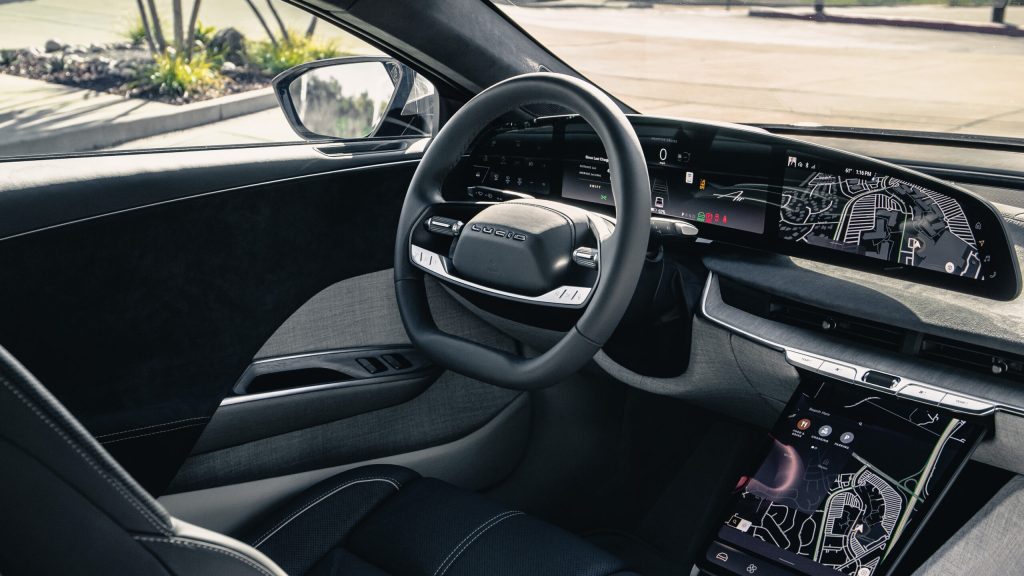
The vehicles will be based on Lucid's new Midsize platform, which is still under development. They will be designed from the ground up with Level 4 autonomous driving in mind, so that the vehicle can operate without human intervention in specific conditions and areas covered by the system.
See also: Waymo: Sends autonomous vehicles to Japan for testing
NVIDIA Hyperion and architecture for autonomous driving
An important technological element of the collaboration is the intention to leverage NVIDIA Hyperion, a reference architecture designed for autonomous driving applications and combining high computing capabilities with a standardized set of sensors.
This approach allows companies to design the vehicle as ADS-ready from the start, rather than trying to retrofit the necessary equipment to a conventional car.
However, there is a critical detail. Hyperion provides the computing and sensory infrastructure, not a complete autonomous driving system. Achieving Level 4 will require collaboration with specialized autonomous driving technology providers.

Bolt takes over the operation of the fleet
Under the agreement, Bolt is not limited to the role of an application through which robotaxi will be called. The special unit Bolt Autonomous Driving Solutions will participate in defining the vehicle specifications, software and safety requirements.
At the same time, Bolt plans to develop the necessary infrastructure for operating the fleet, collaborate with European cities, and assume ownership and management of the vehicles.
From Lucid's perspective, the project goes through the newly formed Lucid Technologies, which brings together the company's activities around artificial intelligence, driver assistance systems and autonomous driving.
Lucid's second big deal
The partnership with Bolt comes after Lucid's agreement with Uber, which was announced in July 2025 and called for the deployment of 20,000 autonomous vehicles.
See also: Lucid's 'fire hazard' recall has already been fixed with a software update in July
The two agreements, however, have different orientations. The partnership with Uber mainly concerns the US market and is based on the Gravity SUV, while the agreement with Bolt focuses on Europe and the new Midsize platform.
So, theoretically, Lucid now has agreements equivalent to 45,000 autonomous vehicles in two different markets. But the real stakes aren't just in producing the cars.
The big question remains the technology
The most important issue is the software that will turn an electric Lucid into a true robotaxi. The company provides the vehicle, while Hyperion can provide the computing power and sensors. The full system that will take over driving in Level 4 conditions, however, requires additional technology and partnerships.
This is particularly critical in Europe, where roads, weather conditions, traffic rules and national regulatory frameworks vary significantly from market to market. Developing a robotaxi is therefore not only a question of hardware and artificial intelligence, but also data management, certification, security and regulatory compliance.
The Midsize platform is not ready yet
Another major hurdle is that the platform on which the 25,000 vehicles will be based has not yet entered production. Lucid recently announced a delay to its Midsize program, which adds uncertainty to the deal's timeline.
The company is also in a period of reorganization, which included cutting about 18% of its workforce, or about 1,500 jobs, while withdrawing its 2026 production forecasts. In the second quarter, it delivered 3,953 vehicles
See also: Lucid Motors lays off 18% of its staff
So far, neither Lucid nor Bolt have given a specific date for the autonomous fleet to go live, so the 25,000 vehicles is more of a large-scale strategic goal than an immediate commitment to putting them on the road.
The European bet
The Lucid and Bolt collaboration shows in which direction the transportation market may move in the coming years: electric vehicles, autonomous systems, and platforms that will operate as a single ecosystem.
Whether the plan will turn into an actual fleet of 25,000 robotaxi will depend on the completion of the Midsize platform, the selection of autonomous driving providers, the technological maturity of Level 4 and, most importantly, the European regulatory framework. For Lucid and Bolt, the next period will be critical, as the ambitious announcement must now be transformed into a working product.
