

NASA's Curiosity rover continues to impress, more than 13 years after its arrival on Mars . Its most recent mission gave us a stunning panoramic view from the slopes of Mount Sharp . It is a visual testament to its long scientific journey in Crater Gale and the relentless search for traces of ancient life on the Red Planet.
A panorama of two Martian days
The new image is not a single snapshot. It is a composite panorama taken in November 2025, during two consecutive sols – Martian days 4,722 and 4,723 of the mission. Curiosity’s navigation cameras captured the landscape at different times of day , capturing the changes in lighting from afternoon to the next morning.
See also: Scientists discovered 26 new bacteria in NASA cleanrooms
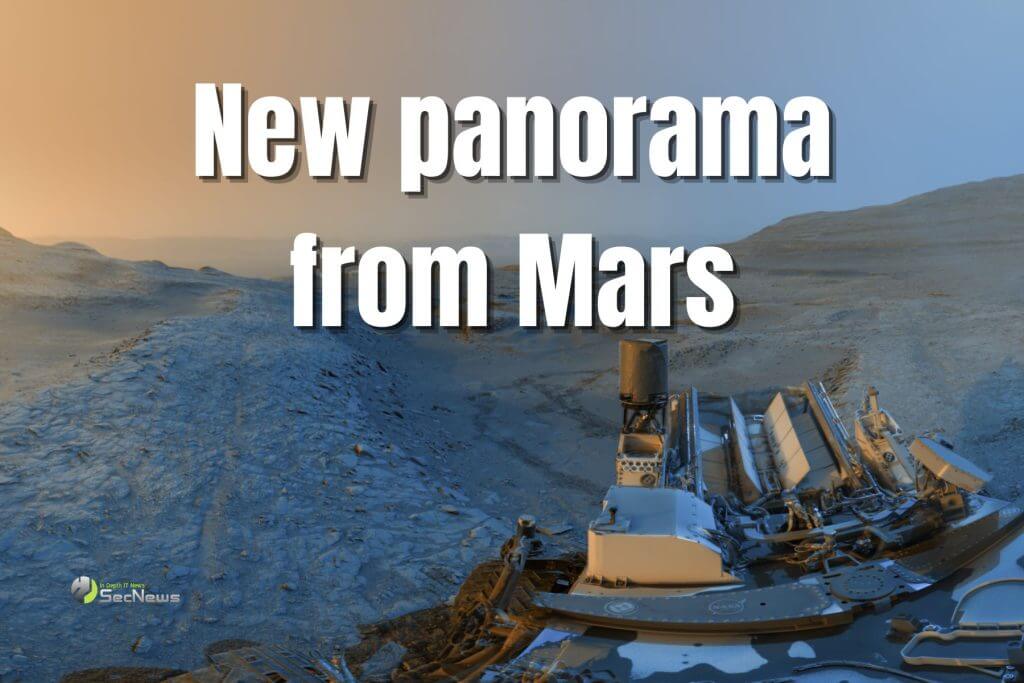
Although the original images were black and white, NASA scientists artificially added shades of cool blue and warm yellow. The goal was to scientifically read the landscape. Color differentiation helps to distinguish details in the ground and make changes in lighting conditions more understandable, offering an analysis tool that goes beyond simple photography.
Mars: The boxwork formation and the water footprint
At the center of the panorama is the so-called boxwork formation: a complex network of mineral-rich ridgesthat resemble a natural labyrinth. These structures were created when groundwater flowed through cracks in the rocks billions of years ago. As wind eroded the softer materials, the harder mineral veins were exposed, serving today as a geological record of Mars' wet past.
Curiosity: The slow climb up Mars' Mount Sharp
See also: Mars: NASA has lost communication with the MAVEN spacecraft
In this area, the rover is not limited to observation. Using its robotic arm's drill, it recently collected a rock sample from the "Nevado Sajama" site, and it had previously drilled into the "Valle de la Luna" site. Analyzing these samples allows scientists to study the chemistry, textures, and minerals that indicate how water circulated in Gale Crater.
From a wet world to an arid planet
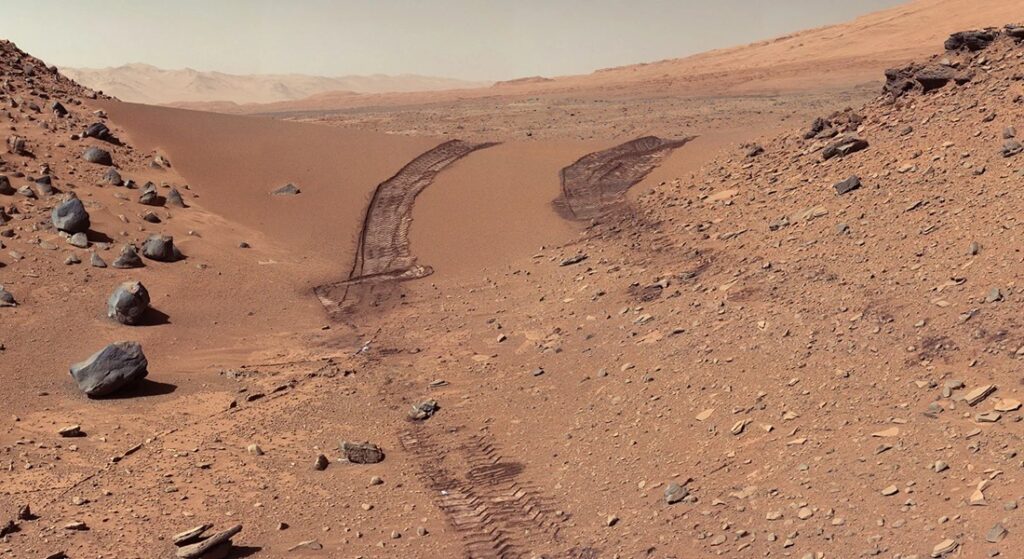
The sedimentary layers studied by Curiosity record Mars' gradual transition from a wetter and potentially habitable world to the cold, dry planet we know today. Each analysis brings scientists closer to answering the big question: could these ancient environments have harbored microbial life?
See also: Mars: Light-colored rocks suggest there was once a tropical oasis

Ares has a lot more to say
Despite its age, Curiosity remains one of the most prolific explorers in space. With each new image and each rock sample, it proves that Mars is not just a desert planet, but a world full of stories waiting to be revealed.
