

rover is NASA's Perseverance has made a discovery that has the geological community reeling: it has found an unusual, metal-rich rock that doesn't appear to have formed on Mars . The rock, rich in nickel and iron, likely a meteorite , and the first the rover has found in its four years of exploring the Red Planet . Perseverance's mission has already uncovered strange formations and organic evidence that are fueling the search for ancient life — but this discovery stands out for different reasons.
A rock that is unlike any other
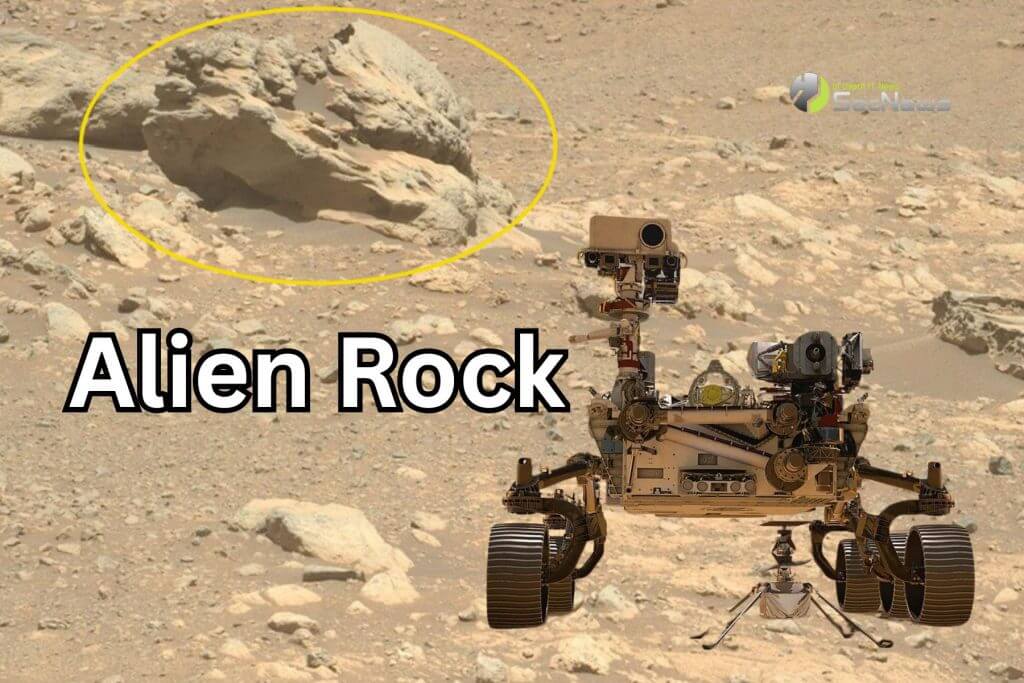
Since 2021, Perseverance has encountered eccentric specimens: a rock that looked like a “spider egg,” a formation similar to a “skull,” and most recently a “turtle-shaped” rock. Despite the variations in morphology, they all had one thing in common: they came from the red planet.
See also: ESCAPADE: Two satellites will reveal how Mars lost its atmosphere
That changed on September 19, 2025, when the rover spotted a rock in an area of Jezero Crater called “Vernodden.” This unique find—about 80 centimeters in diameter—was named “Phippsaksla” and immediately caught the attention of the scientific team due to its unorthodox appearance.
Candice Bedford, a geochemist and mineralogist at Purdue University, explained that the rock's structure stood out from the low, crushed rocks that generally cover the area. Initial spectral analysis showed high concentrations of iron and nickel — characteristics that Martian rocks are rare, but in meteorites... almost the norm.
How do meteorites stand out on Mars?
The striking fact is not only that Phippsaksla is likely a “visitor” from another region of the solar system, but also that to date Perseverance had not detected a single meteorite in Jezero Crater. Previous missions —Spirit, Opportunity and Curiosity— had detected similar samples for years.
The paradox, as Bedford notes, is that Jezero is of a similar age to Gale Crater, where Curiosity has already found several meteorites.
Martian meteorites on Earth: the reverse journey
Although meteorites on the Red Planet are relatively rare, on Earth we have found hundreds of rocks that were actually… blasted off from Mars thousands or millions of years ago. Powerful impacts propelled these pieces into space, where they wandered until they landed on our planet.
See also: Volcanic eruptions may have left ice on Mars' equator

Martian meteorites are "treasure troves of information" for scientists, since their chemical analysis reveals information about the Martian subsoil and the planet's past.
In 2024, a study showed that about 200 of these meteorites found on Earth came from just five impact craters on the red planet—which helps researchers map the planet's geological history.
And in July 2023, one of these rocks, NWA 16788, weighing 24.5 kilograms, discovered in the Sahara, was sold at auction for $5.3 million, breaking every previous record for a meteorite of Martian origin.
See also: Perseverance rover: Did it really find evidence of life on Mars?
What the discovery means for the future of the mission
The discovery of Phippsaksla isn't just a curious footnote in the Perseverance mission — it's a sign that Mars still has many secrets to reveal. With each new sample, NASA is gathering data that will shape future sample return missions and, in the long run, human exploration.
And if a meteorite managed to cross the solar system to "pin" itself on Jezero, then imagine what else might be hiding under the Martian dust.
