

NASA's long-awaited study into the investigation of UFOs begins today.
In June, the space agency announced it had created a committee to investigate UFOs, or “unidentified aerial phenomena,” as they’re being called lately .The independent study was scheduled for the fall, will cost less than $100,000 and take about nine months, according to NASA officials.
See also: The “Pillars of Creation” through the eyes of James Webb
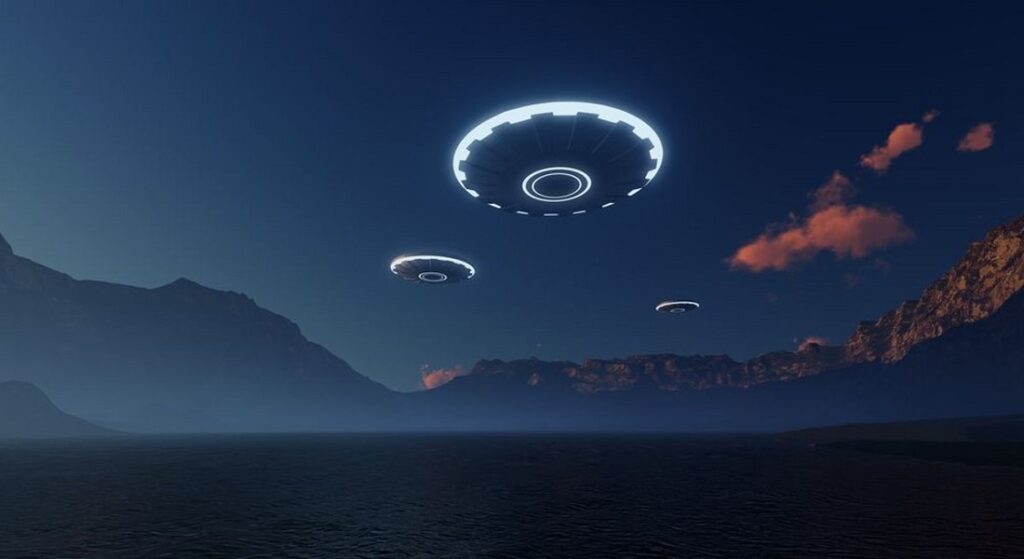
Autumn has arrived and it seems that researchers are starting this interesting study today.
This study will examine observations of “unidentified aerial phenomena” that have been collected in the past. The committee will only examine unclassified information and reports, so it will not have access to sensitive military data. The researchers will focus on how such data could be better organized and analyzed in the future to shed more light on the mysteries of the sky.
“Exploring the unknown in space and the atmosphere is at the heart of who we are at NASA,” said Thomas Zurbuchen, associate administrator of the Science Mission Directorate (SMD) at NASA Headquarters.
“Understanding the data we have around unidentified aerial phenomena is critical to helping us draw scientific conclusions about what is happening in our skies,” he added. “Data is the language of scientists and makes the inexplicable explainable.”
NASA had previously reported that the head of the UFO study team would be astrophysicist David Spergel, president of the Simons Foundation, and that the NASA official orchestrating the effort is Daniel Evans, the assistant deputy administrator for research at SMD.
See also: NASA's X-59 plane may enable commercial flights at the speed of sound
But now, NASA has revealed the full team. There will be 16 researchers from a variety of fields, from astronomy to oceanography, computer science to journalism. There's even a former NASA astronaut.
Here are the members of the UFO study group in alphabetical order (excluding David Spergel):
- Anamaria Berea, associate professor of computing and data science at George Mason University, research associate at the SETI Institute in Mountain View, California, and researcher at the Blue Marble Space Institute of Science in Seattle.
- Federica Bianco, professor at the University of Delaware in the Department of Physics and Astrophysics, at the Biden School of Public Policy and Administration, and at the Urban Observatory.
- Paula Bontempi, dean of the Graduate School of Oceanography at the University of Rhode Island (URI) and professor of oceanography at URI.
- Reggie Brothers, an operating partner at AE Industrial Partners in Boca Raton, Florida, and former CEO and board member of BigBear.ai in Columbia.
- Jen Buss, CEO of the Potomac Institute of Policy Studies in Arlington, Virginia.
- Nadia Drake, independent science journalist and contributing writer at National Geographic.
- Mike Gold, executive vice president of Civil Space and External Affairs at Redwire in Jacksonville, Florida, and former NASA associate for Space Policy and Partnerships.
- David Grinspoon, senior scientist at the Planetary Science Institute in Tucson, Arizona, and a frequent NASA advisor on space exploration.
- Scott Kelly, former NASA astronaut, test pilot, fighter pilot, and retired U.S. Navy captain.
- Matt Mountain, president of the Association of Universities for Research and Astronomy and telescope scientist for NASA's James Webb Space Telescope
- Warren Randolph, deputy executive director of the U.S. Federal Aviation Administration (FAA) Division of Accident Investigation and Prevention for Aviation Safety;
- Walter Scott, executive vice president and chief technology officer at space technology company Maxar.
- Joshua Semeter, professor of electrical and computer engineering at Boston University and director of the school's Center for Space Physics.
- Karlin Toner, executive director of the FAA's Office of Aviation Policy and Plans and former director of global strategy for the FAA;
- Shelley Wright, associate professor of physics at the University of California, San Diego's Center for Astrophysics and Space Studies.

The above are abbreviated versions of the scientists' biographies. You can read the full versions in this post.
“NASA brought together some of the world’s leading scientists , data and artificial intelligence professionals, [and] aerospace security, to see how we can apply the full focus of science and data to UFOs or unidentified aerial phenomena,” Evans said in the same statement.
See also: NASA: Will explore Venus with a balloon
The team's findings will be released in mid-2023, when the study is complete. NASA has pledged that the committee's findings will be released "in accordance with NASA's principles of transparency, honesty and scientific integrity."
Source: www.space.com
