

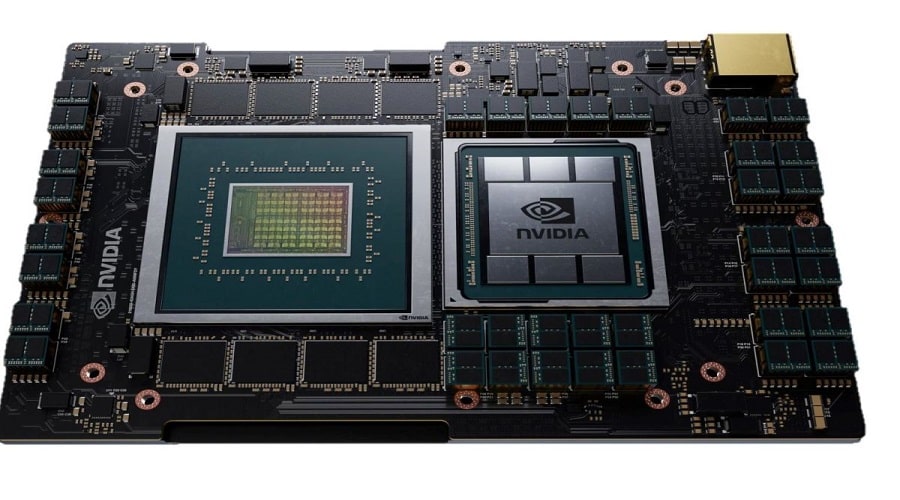
Following the example of Apple , which released the M1 chip and “overthrew” Intel , NVIDIA is now creating its own ARM-based processor, named Grace (inspired by the scientist Grace Hopper). Grace CPU is NVIDIA’s first data center processor , designed in such a way as to meet the demands of the most advanced applications, such as AI supercomputing and natural language processing (NLP) . It is powered by ARM Neoverse cores and will be integrated with the company’s latest GPU technology.
See also: 10th Gen Intel Core processors get deep discounts
Grace is a highly specialized processor targeting workloads such as training next-generation NLP models with more than 1 trillion parameters. Combined with GPUs , a Grace CPU-based system will deliver 10x faster performance than today’s state-of-the-art NVIDIA DGX™ systems based on x86 processors.
See also: Is Nvidia designing the fastest Cryptocurrency mining GPU?

“Breakthrough AI and data science technology are pushing today’s computing architecture beyond its limits as they process unimaginable amounts of data,” said Jensen Huang, founder and CEO of NVIDIA. “Combined with GPU and DPU, Grace CPU gives us the third fundamental technology for computing and the ability to reimagine the data center to advance AI. NVIDIA is now a three-chip company.”
See also: 'Switch Pro' reveals Nvidia's big plans for gaming
NVIDIA has already found buyers for the new hardware. Both the Swiss National Supercomputing Centre (CSCS) and Los Alamos National Laboratory have announced that they will use Grace CPU-based supercomputers to boost their research efforts.

Grace systems will rely heavily on NVLink technology , which can deliver speeds of 900 GB/s between CPUs and GPUs. NVIDIA claims that's about 30 times faster than today's leading servers.
The Grace processor will also use an innovative LPDDR5x memory subsystem that will offer twice the bandwidth and improved energy efficiency compared to DDR4 memory.
Finally, the Grace CPU will be supported by the NVIDIA HPC software development kit and the full suite of CUDA® and CUDA-X™ libraries that help scientists and researchers working on important projects.
According to the company, the Grace data center processor will be available in 2023.
Source: Engadget, NVIDIA Newsroom
