

Quantum computing hardware continues to improve to the point where we may see it used in the real world in the coming years, so it’s probably no surprise that we’re seeing a steady increase in research projects focused on how to better program these machines. One of the newest efforts in this space is Silq, a high-level programming language for quantum computers from ETH Zurich . The researchers behind this programming language for quantum computers note that existing quantum languages still operate at a very low level of abstraction, which makes life for quantum programmers much more difficult.
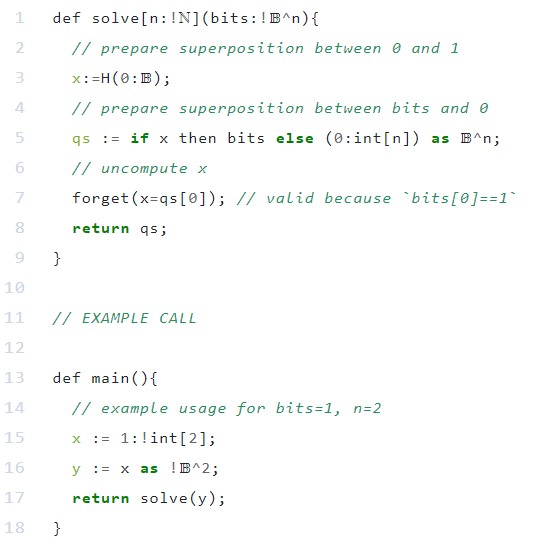
Associate professor of computer science Martin Vechev said in a statement that the researchers wanted to solve a fundamental problem in quantum computing. He added that if you want to solve a fundamental problem in quantum computing, such as analyzing and justifying quantum programs, you need a language in which these problems are expressed — and there are such languages. The team began looking at various languages used by users, including Microsoft and software development kits like IBM's Qiskit. Benjamin Bichsel, who is doing his doctorate in quantum computing, said the researchers didn't think they would need to create a new programming language. At first, they just wanted to solve much more advanced problems in quantum computing. They thought they could just pick a language and work with it. And then they realized that existing languages are completely inadequate for the kind of higher-level properties they were interested in.
So what happens to existing languages? A great way to answer that question is to look at one of the fundamental challenges in quantum computing that doesn’t arise in classical languages, namely that of non-controversy, Vechev noted. Non-controversy is at the core of Silq’s approach and is built in. In classical programming languages, if you were to compute “A or B or C,” you would first compute “A or B,” and then use that to compute the result of that. Or “C,” and you would forget about that temporary value that you computed. If you do that quantumly, then you have unintended side effects. The bottom line is that what you would expect is not going to happen in this case. So you have to deal with that somehow. And what that essentially means for all existing quantum languages is that you're forced to work at a very low level of abstraction, where you have to think about all the temporary values. And that prevents any kind of high-level thinking. That means that even if you want to do something relatively trivial, like adding integers, in a quantum machine, you have to think about all the temporary values that you create in the process and handle them explicitly.
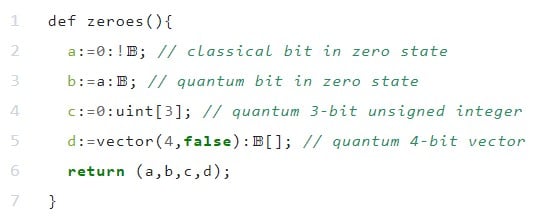
Vechev also added that writing low-level programs is more error and makes it harder to understand what the algorithm. In addition, the Silq compiler’s type checker tries to prevent programmers from making common mistakes. The team also looked at recent developments in classical languages, such as property types, systems , and so on, and applied them to the context of quantum computing — also a first for Silq. Perhaps unsurprisingly, the team found that their language produced programs that were significantly smaller than those written in Q# and Quipper, for example, and used far fewer quantum primitives. For now, Silq is still a research project that is not yet running on any of the existing quantum hardware. Instead, the researchers built their own quantum simulator to test their hypotheses. The team envisions compilation as a two-step process, where first you express the high-level intent, and then it's the compiler's job to decide which architecture to run on and how to optimize for a particular architecture.
