

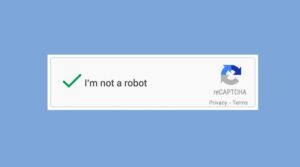
 To be honest, checking the correct checkboxes in Google CAPTCHA can be a difficult process for some users. But now Google, taking note of the situation, has discontinued the CAPTCHA mechanism, which has been replaced by a behavioral analysis mechanism to ease the problems faced by users.
CAPTCHA, or “Completely Automated Public Turing Test to tell Computers and Humans Apart,” was developed by Google for websites to ensure that humans and not robots have access to them.
Google has improved its CAPTCHA mechanism over the years. Previously, users had to enter a series of scrambled numbers and letters that appeared in a box. Then came the mechanism that involved puzzles where they had to match the image to what was being asked of them.
Ticking the CAPTCHA checkboxes was a challenge for those suffering from vision-related syndromes. Therefore, Google introduced reCAPTCHA v3, which considers a score based on behavioral analysis of a user. Using this score, the company can determine the authenticity of the login. Websites can allow or deny a user access based on this score.
Websites can also customize this score by creating a filter that analyzes the login from the CAPTCHA result and any previous user information stored by the website. The score can also be used to train a machine learning model by websites.
A new feature called “Action” has also been introduced in reCAPTCH v3 and aims to curb cyber attacks. CAPTCHA scores from different websites can be studied to decipher a pattern used by attackers.
Wei Liu, Product Manager of reCAPTCHA at Google, said in an official blog post: “We are fundamentally changing the way websites can distinguish human activity from bot activity by analyzing a score … and eliminating the need to interrupt users to take a test.”
