

A murder case from the past, specifically from September 2016, when 26-year-old Caroline Dela Rose Nilsson killed her 57-year-old mother-in-law, Myrna Nilsson, in America, is frighteningly reminiscent of the murder case in Glyka Nera, of Caroline Crouch by her husband, Babis Anagnostopoulos. Key evidence to prove the guilt of the two murderers, the smartwatches of their victims.
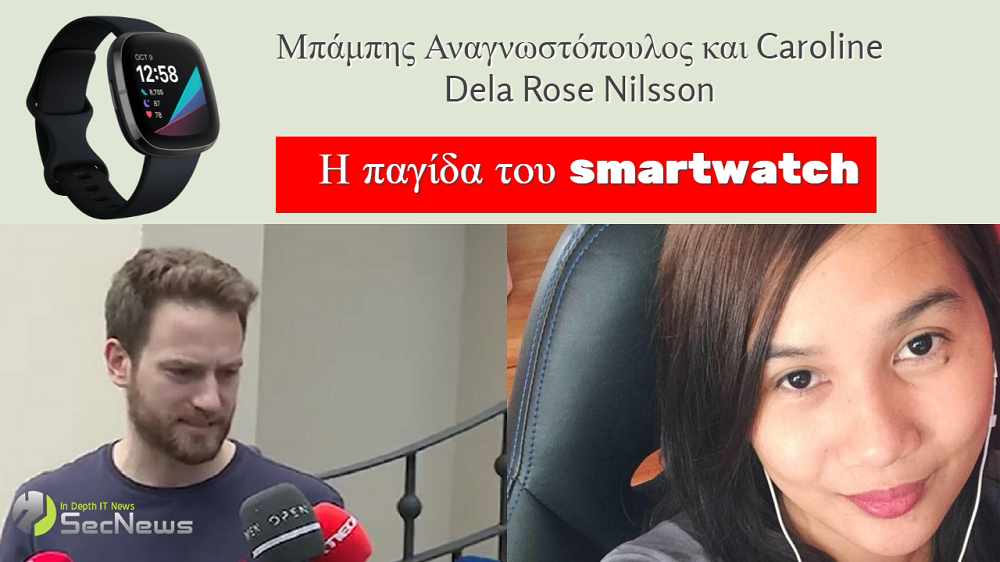
The recent murder that took place in Glyka Nera has caused public dismay , with more and more evidence coming to light about the confessed murderer of 20-year-old Caroline Crouch . This is a case that has recently been of concern not only to Greece but also to other countries around the world. There are still many gaps in the puzzle of the crime, which the Greek Police officers must fill in, in order to provide all the answers for this criminal act.
One of the questions that arises is whether and to what extent the 32-year-old pilot was inspired by the story he invented to mislead the authorities, in his attempt to cover up his guilt. It is noteworthy that the case in question presents many similarities with a murder that occurred in America – the case of Caroline Nilsson in 2016 – with the coincidences between the two murders being obvious. But let's look at the two murder cases, while emphasizing how important a role advanced technology, and specifically the smartwatch, played in both cases.
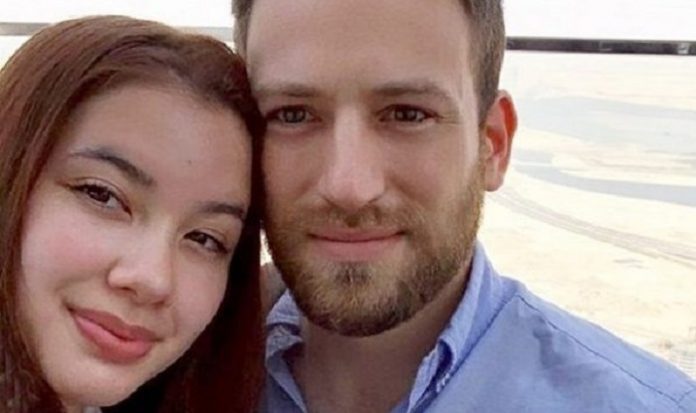
Data collected from the smartwatch worn by an elderly woman in Adelaidewho was brutally attacked in her home has led to the arrest of daughter-in-law , who has been charged with her murder.
Myrna Nilsson, 57, was found dead while hanging out laundry at her home in Valley View, north-east Adelaide, in September 2016.
A neighbor called police to Bunbury Terrace at about 10:10 p.m.after seeing the elderly woman's daughter-in-law, then 26-year-old Caroline Dela Rose Nilsson, come out of the house in a panic and say someone had broken into their home.
Although Caroline was the prime suspect in her mother-in-law 's death , police arrested her and charged her with murder two years later, in March 2018 .
Read also: Glyka Nera murder: Caroline's smartwatch & forensic analysis

Caroline told police that unknown men followed her mother-in-law to her home in a ute and that she had an argument with them for about 20 minutes. She also claimed she did not hear the fatal attackbecause she was in the kitchen with the door closed, and added that she was tied up by the "assaults" shortly afterwards.
However, prosecutor Carmen Matteo said at the time that critical evidence collected by authorities from the victim's smartwatch had been analyzed, which confirmed their suspicions that Caroline Nilsson fabricated the scenario of the home invasionto conceal her involvement in the murder of her mother-in-law.
Specifically, Matteo stated the following at the time: “The evidence from the Apple iWatch is a fundamental element in proving the defendant’s false statement to the police. A watch of this type … contains sensors capable of monitoring the movement and pace of the wearer and keeping a history of the wearer’s daily activity, while also measuring their heart rate.”
Matteo also noted that the smartwatch data showed that Myrna Nilsson appeared to have been attacked as she was returning home shortly after 6:30 p.m. The smartwatch then showed activity and heart rate readings that indicated the victim went into shock and lost consciousness.
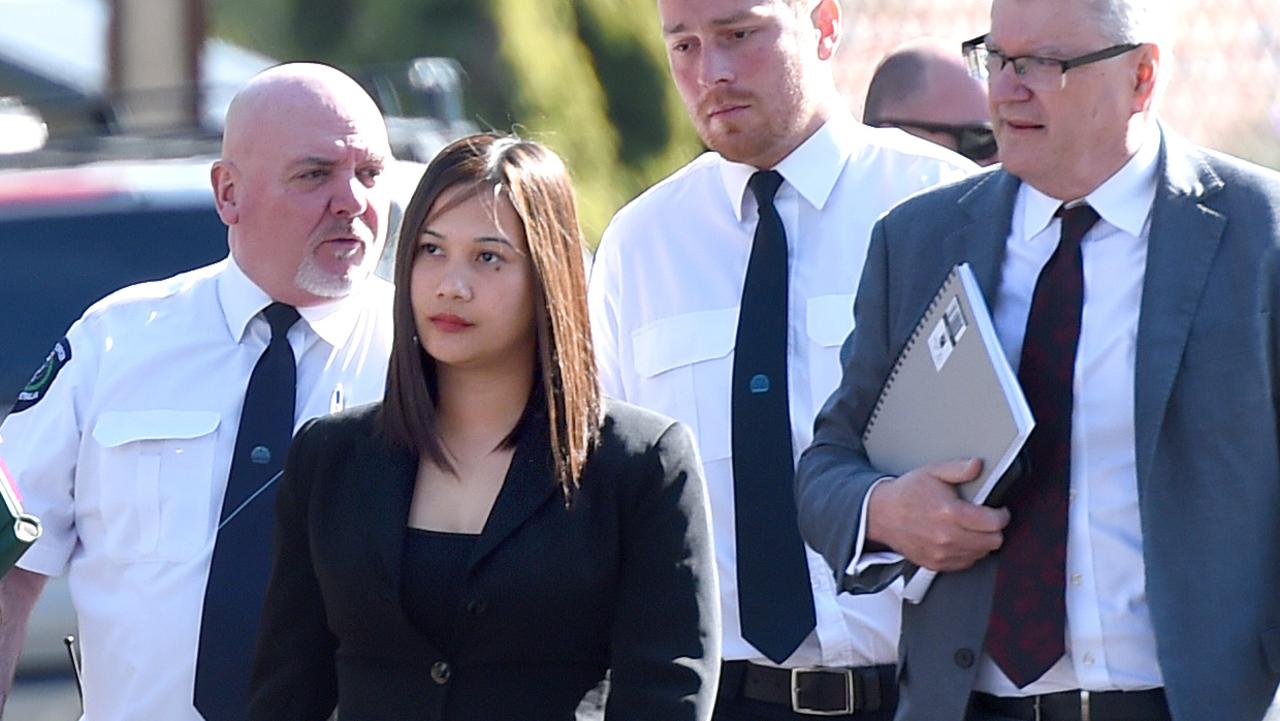
The prosecutor also emphasized the following: "The deceased must have been attacked at 6:38 p.m. and was certainly dead by 6:45 p.m. If the evidence is accepted, it contradicts the defendant's version that an argument took place between the victim and the unknown men for approximately 20 minutes."
The court heard that a neighbour returning home at the time never saw a ute outside the front of the victim's house.
DNA evidence also showed that Caroline Nilsson's version of events was not consistent, according to the prosecutor.
Matteo said Caroline Nilsson told police she left the house to set the alarm immediately after the "perpetrators" left.
See also: Smartwatches may detect symptoms of COVID-19
"Her exit from the house took place well after 10:00 p.m., if the evidence of the Apple iWatch is accepted, that is, more than three hours after the attack on the deceased. During this time, she staged the scenario of the invasion, while also cleaning and throwing away the clothes that were covered in blood. The defendant did not consider that the police would be able to discern the time of death and other information from this device," the prosecutor said.
Caroline Nilsson's lawyer, Mark Twiggs, asked for his client to be released on bail, arguing in court that she knew she was the main suspect in the case and never tried to leave the country.
"If he wanted to leave, he could do so legally," Twiggs said.
Twiggs also noted that his client had the support of her husband, Mark Nilsson, who pleaded with the court to release his wife, as she was the one who primarily cared for their three young children (aged five, six and three at the time).
"We just want them to be with the children," he said characteristically.
Caroline Nilsson wept as Judge Oliver Koehn said he was rejecting the bail application based on the "apparent strength of the prosecution's case" and the seriousness of the alleged violation.
Heath Barklay, Nilsson's lawyer, told the jury that his client was a loving mother who had a good relationship with her mother-in-law and that there was no sign of animosity between them.
Additionally, Barklay told the jury: "You should be concerned about this prosecution case. It seems so implausible that this beautiful, loving mother is portrayed as a psychopath who kills her mother-in-law the moment she gets home, drugs her children, surfs the Internet for a while, changes into her bloody clothes, and then presents herself as the victim. She's in love with her husband, sends him nice text messages. And then she turns into a cold-blooded killer."

Barklay told the court that Nilsson had no motive to murder her mother-in-law, despite the indictment stating that there was a financial motive.
On August 2, 2021, Caroline Dela Rose Nilsson will face a marathon second trial for the murder of her mother-in-law. Prosecutors asked the Supreme Court for a retrial dateafter the first jury failed to reach a verdict. Like the first trial, this one is expected to last up to eight weeks.
On the other hand, we have the horrific murder of 20-year-old Caroline, by her 32-year-old pilot husband, Babis Anagnostopoulos. An important role in solving this case was played by the smartwatch that the victim was wearing at the time of his murder, as well as the smartphone . We cannot help but reflect that if this advanced technology did not exist, we might never have learned the truth, or at least the truth would have taken much longer to be revealed. A more saddening thought in our minds tries to list the millions of other murder cases where this technology did not exist to indicate the murderer.
The conclusion is that smartwatches save lives – whether through health notifications, heart rate measurements, alerts in cases of accidents or by acting as a key element in forensic investigations that, although in this particular case, may not have actually saved Caroline's life, it did save her soul. But let's take a closer look at what information was gathered from the two devices.
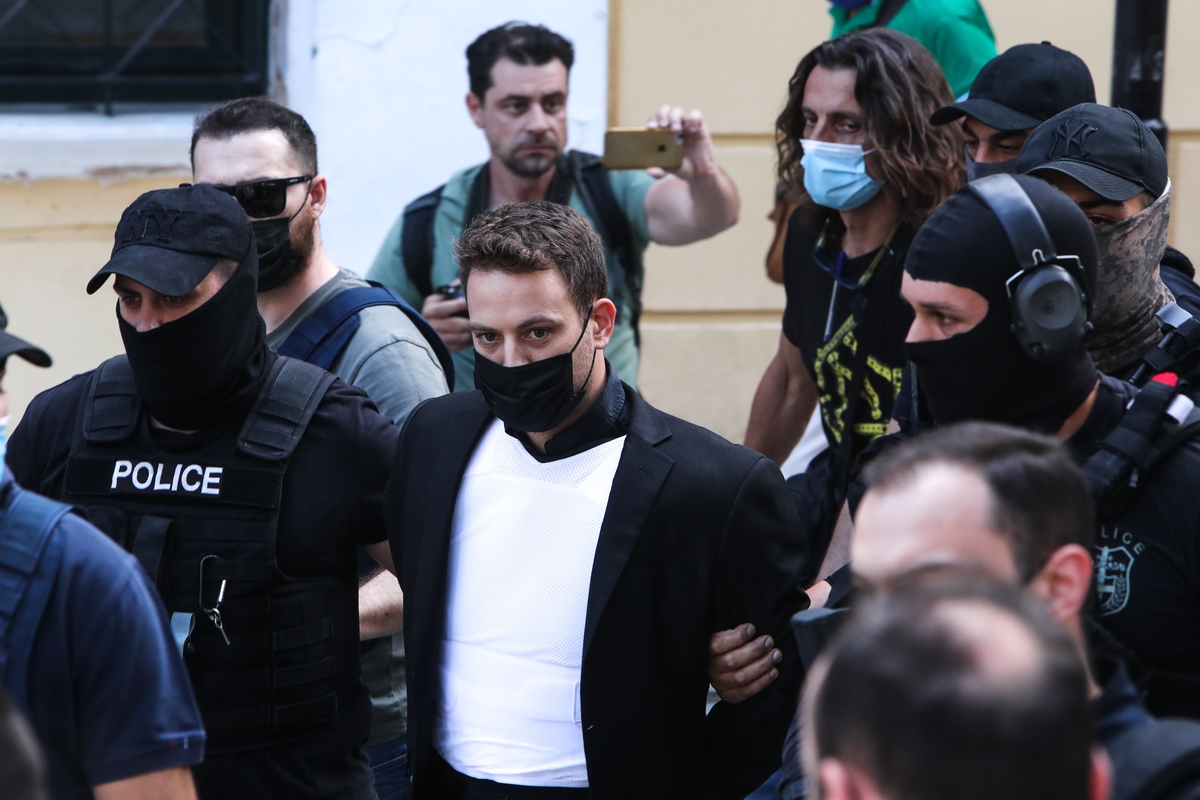
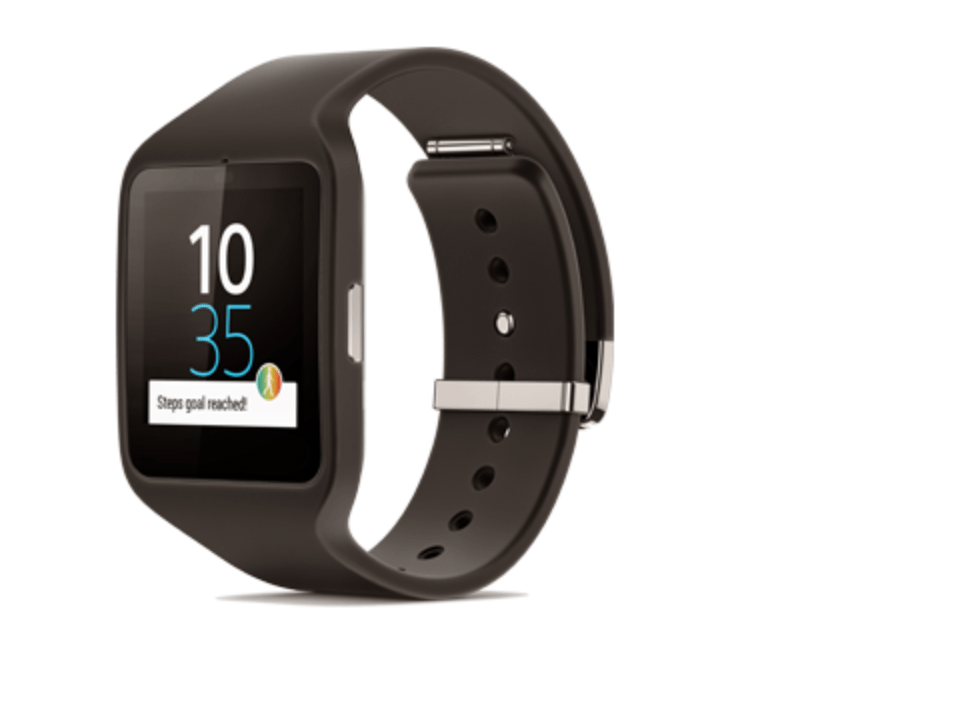
The victim was wearing the smartwatch with the “APPLEHEALTH”, which records heart rate, steps, floors climbed, and distance traveled.
According to what was recorded on May 11, 2021 from 12:05:46 midnight to 01:17:45 Caroline had a pulse of 51-61. From 01:26:19 to 01:36:34 she had 77.79, 64.66 heartbeats, from 01:41:35 to 03:51:25 48-58 heartbeats were recorded. At 03:58:06 she had 60 heartbeats. At 04:05:15 she had 87 heartbeats while at 04:10:02 she had 75 heartbeats. According to the forensic examination, from 01:41 to 03:51 and also at 03:58 in the early hours of May 11, Caroline was sleeping, as her heart rate was 48 to 58 to even 60.
While at 04:05 the heart rate showed 87 consistent with the fact that the victim was found from a state of sleep in a state of very strong mental or physical stress. From 04:05 to 04:11 a drop in heart rate is recorded 87 75 59 while at 04:11 the recording of heart rate by the smartwatch stops.
This means that the perpetrator suffocated her for a full six minutes.
Also important is the evidence from the killer's smartphone, which revealed that the 32-year-old was walking home at the time he had initially testified that he was unconscious and tied up.
More specifically, at 04:20, the neighbor who lives in the maisonette that is next to the couple's house, heard a bang from the couple's house immediately after the dog's crying, followed by footsteps on the stairs coming from a person.
At 04:24 in the morning, the time at which the murderer had initially reported to the authorities that he was unconscious, his mobile phone comes out of charging mode, then unlocks using the personal secret code and locks several times while simultaneously recording movement of several meters and a rise in floors.
The descent was not recorded. At 06:08:30 the mobile phone unlocks and calls for the first time the number 180 then 1000 and then 100 at 06:12:59.
These calls are also mentioned in the perpetrator's initial statement, while the actions were done, as he said, with his nose since he was tied up.
According to what he had initially stated, he was tied up from 04:11 to 06:20. The clinical forensic examination found that the injuries he had to his head and the bruises on his hands and feetwere barely discernible and therefore his physical injuries were minor. He had testified that he was unconscious from the time of death until the time he called on his mobile phone, that is, for approximately 2 hours.
Also, the perpetrator had claimed that he was tied behind his back, but the police officers who untied him found his hands tied in front.
He had also said that the robbers had tied him to the bed, but this was not proven by the statements of the police officers who arrived first at the crime scene.
Babis Anagnostopoulos had testified that he had fallen asleep between 01:15 and 01:30 after midnight and woke up when he noticed the robbers, however, his mobile phone showed that he used it at 02:27 and 02:30, where he unlocked it with his code and entered the messaging application.
Specifically, regarding what the smartphone the police, we have the following information: In the “iMessage” on the perpetrator’s mobile phone, there is the message “you stupid”, at 23:18 from Caroline’s email.
At 23:42 on May 10, 2021, in the Facebook Messenger application on the perpetrator's mobile phone there is the message "in the morning don't leave her with me" from Caroline's account.
At 23:46 in the evening, a three-story rise is recorded. At 01:15 the mobile phone enters charging mode. At 02:27 the mobile phone is unlocked and 16 seconds later it locks again.
At 02:30 it unlocks and the perpetrator looks at his messages and at 02:31 the phone locks again. At 04:24 the phone is taken off the charger while at 04:36 it unlocks and enters the Gmail.
Proposal: Facebook: It will launch its first smartwatch with two cameras in 2022

At 04:38 he locks the phone again. At 05:22 he records 29 steps over a distance of 21.93 meters. At 05:40 and 05:41 he climbs two floors. At 05:53 he records 14 steps over a distance of 10.74 meters, while he unlocks the phone and after 2 seconds he locks it again.
At 05:53 he went up one floor. At 06:01 and 06:02 we have the mobile phone unlocked and locked again. At 06:08 he unlocks and 26 seconds later a call is made to 180.
At 06:10 an attempt is made to call 100 and the mobile phone remains on the screen until 06:11:10 where it locks again. At 06:11:59 it unlocks and at 06:12:59 100 is called.
At 06:16:58 the perpetrator calls a number corresponding to Lila Gerolimatou , while a call had previously been made to the number with the saved name Lazarou etairiko.
The conclusion from these two heinous crimes is, on the one hand , how easily the human mind can invent a fictitious scenario to deceive those around it, and on the other hand, how useful and life-saving advanced technology can prove to be, as it can work both in advance, preventing "evil" and in hindsight, providing solutions and answers to many issues.
