

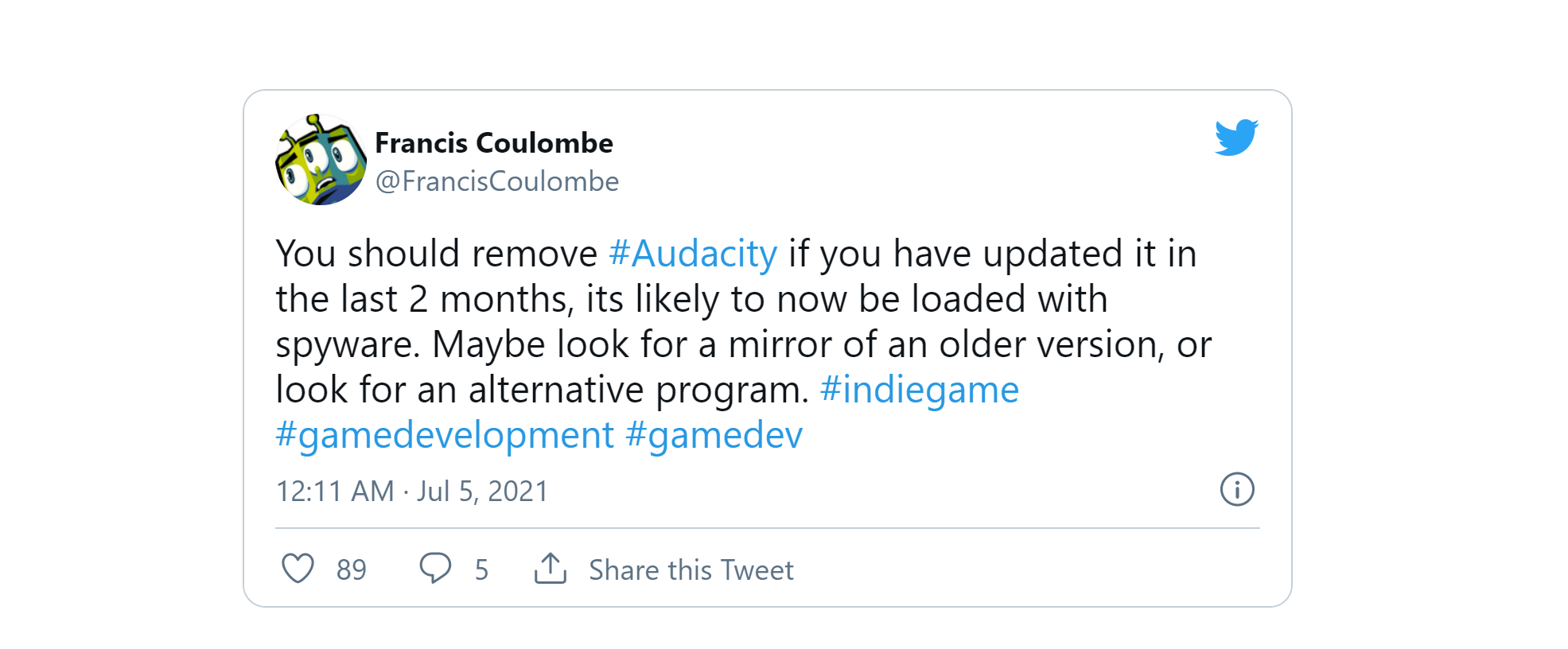
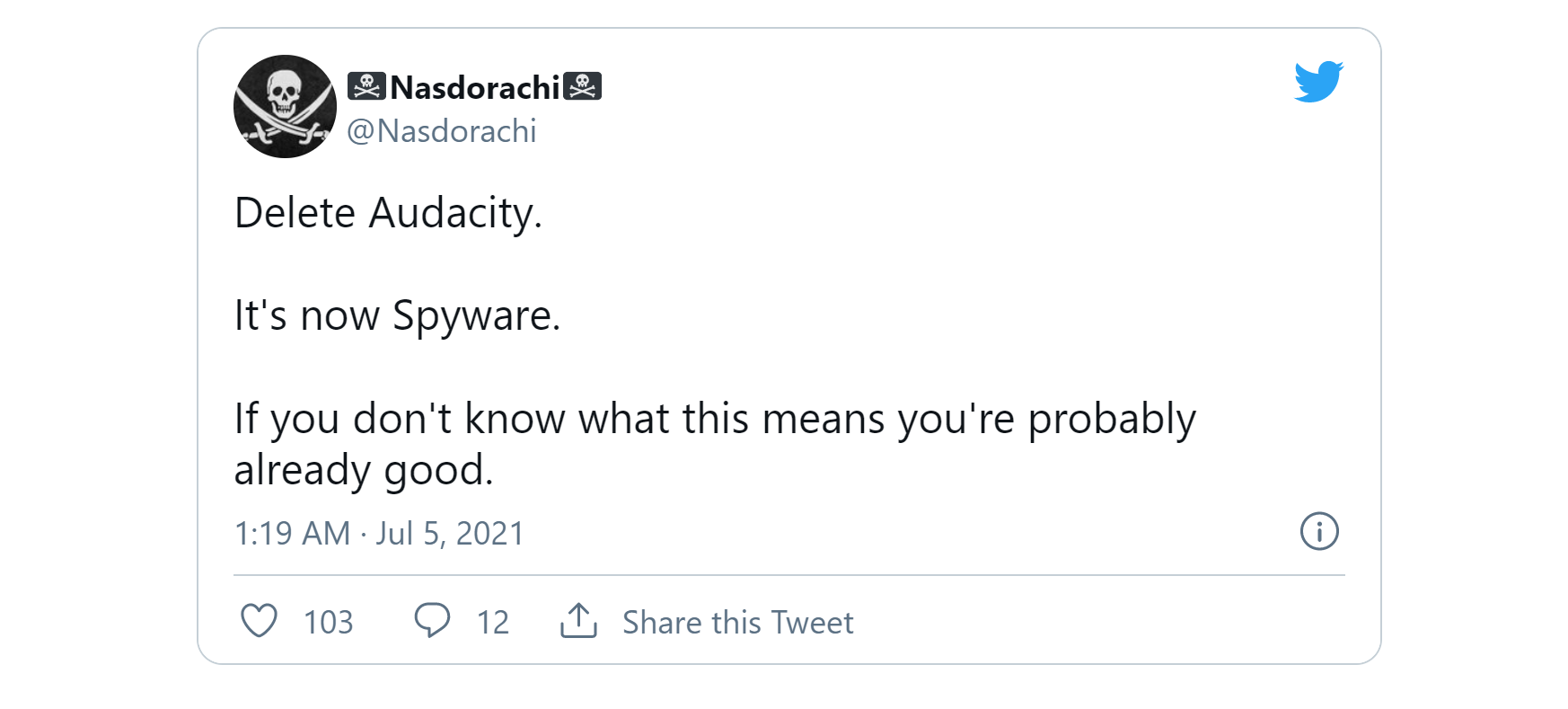
Popular audio editing program Audacity is trying to clarify its position on the accusations that it is “spyware.” The accusations follow recent changes to the program’s privacy policy. However, many users remain unconvinced.
On July 2, Audacity updated its privacy , noting that it would now collect users’ “personal data”for analytics and to improve its software. The data collected includes their operating system and version, their IP address (i.e. their country), and the processor (CPU) they use. All of this naturally sparked a backlash from users who had been using the free audio editing software without providing any of their data since it was released two decades ago.
Read also: Audacity 3.0: Revealed to be spyware that collects and shares user data
It didn't stop there. The new privacy policy also states that Audacity may collect "Data necessary for law enforcement, litigation, and government requests (if any)" — a vague and broad categorization that should cause users considerable concern. The data may also be shared with third parties, such as law enforcement agencies, consultants, and potential buyers.
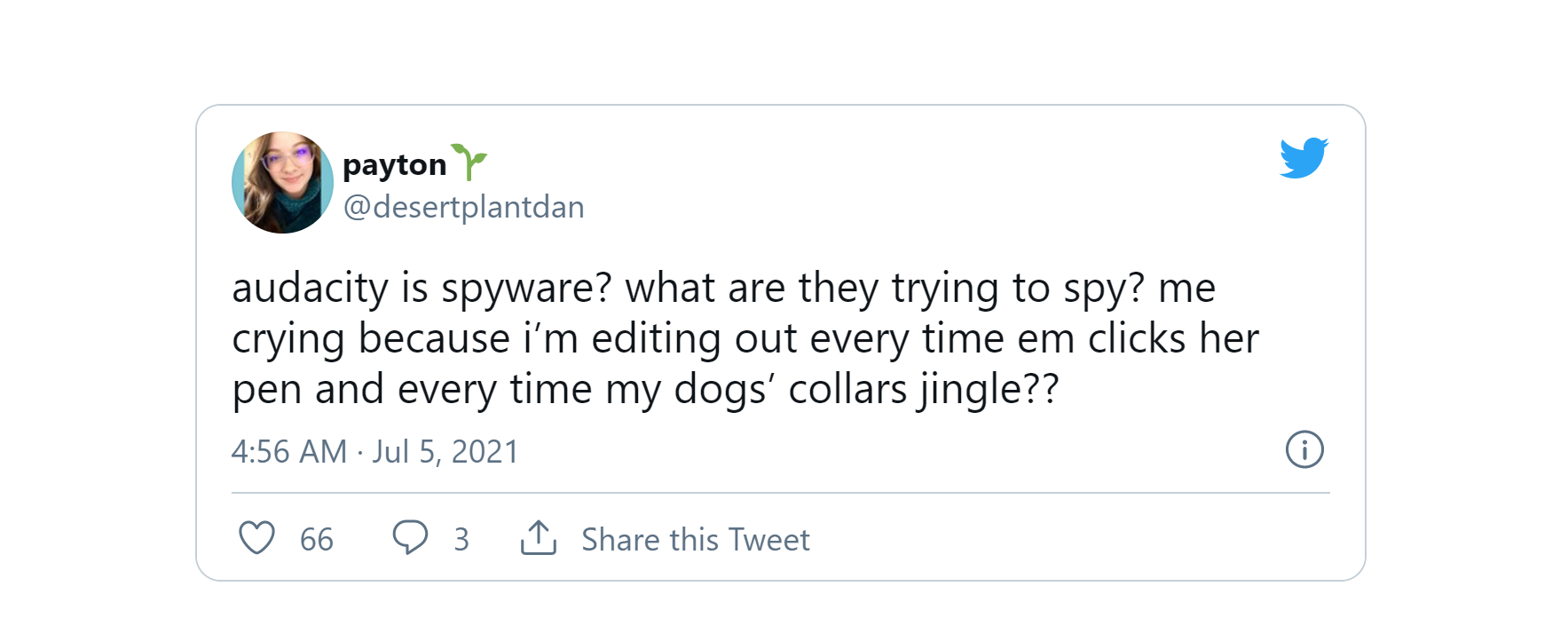
Users have expressed their displeasure over these updates, accusing Audacity of being “spyware” and speculating that it could even be monitoring their microphones. Now the company has attempted to clarify its intentions, stating the following:
“We believe the concerns stem largely from the vague wording of the Privacy Policy, which we are currently in the process of correcting,” Muse Group chief strategy officer Daniel Ray said in a statement. Muse Group acquired Audacity in May and assured users at the time that the software would remain free and open source. “We will be releasing a revised version shortly . ”
According to Ray, Audacity “[does] not sell ANY data [it collects] or share it with third parties.” However, this seems to directly contradict the privacy policy’s original statement that it may disclose personal data to a “potential purchaser,” “any appropriate law enforcement agency … or third parties.”
See also: Android stalkerware and spyware detection increased by 48% in 2020!
Ray also clarified that the only data Audacity collects is users' IP address, which becomes anonymous and unrecoverable after 24 hours, as well as operating system version and processor type. Users can also manually submit data in bug reports, but this is optional.
Ray added: "We do not collect any additional data beyond the points listed above for any purpose. We will not collect or provide information other than the data described above to any government entity or law enforcement agency."
He also explained that the company would not share information with such services upon simple request and would have to be compelled by a court to do so.
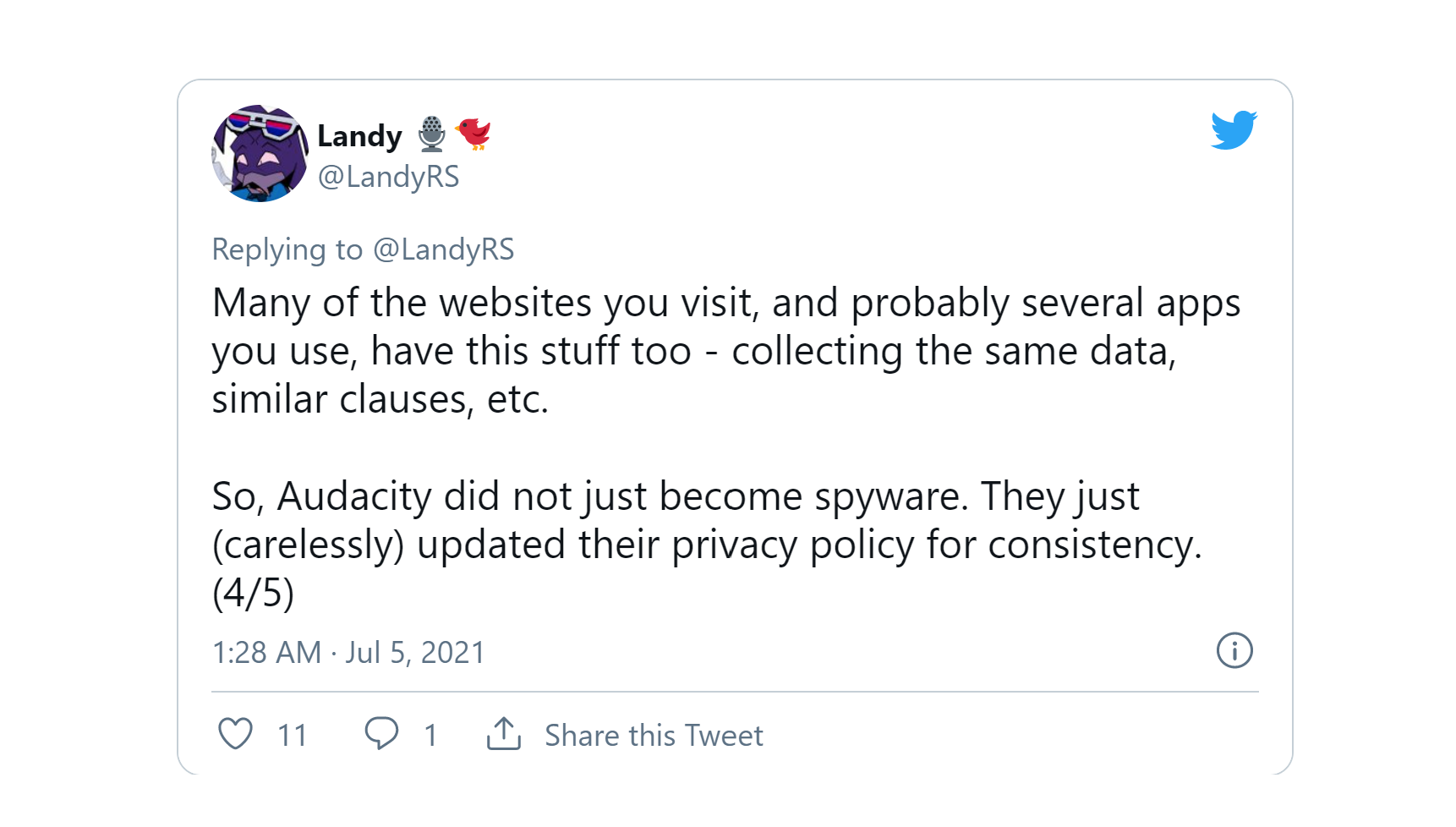
These policy changes are nothing that other programs haven't implemented before, but their unexpected addition to Audacity's open source community has users concerned.
Suggestion: Hackers "infect" gamers and install spyware on their devices!
Released in 2000, Audacity has been downloaded 100 million times and is the go-to program for anyone getting started with audio editing. Few people probably thought it would start collecting user data, and despite Ray's explanation, many remain convinced it's an unnecessary change.
Ray noted that the new privacy policy will only go into effect with version 3.0.3 – the next update to Audacity, and previous versions will still not collect data.
"The current version (3.0.2) does not support data collection of any kind and does not have networking capabilities enabled," according to Ray.
So, if you get Audacity now, you'll be able to use it completely anonymously – provided you never apply an update.
Information source: mashable.com
