

Most people argue that beauty is subjective and depends on the person looking at it. But as AI technology, the truth lies deeper inside.
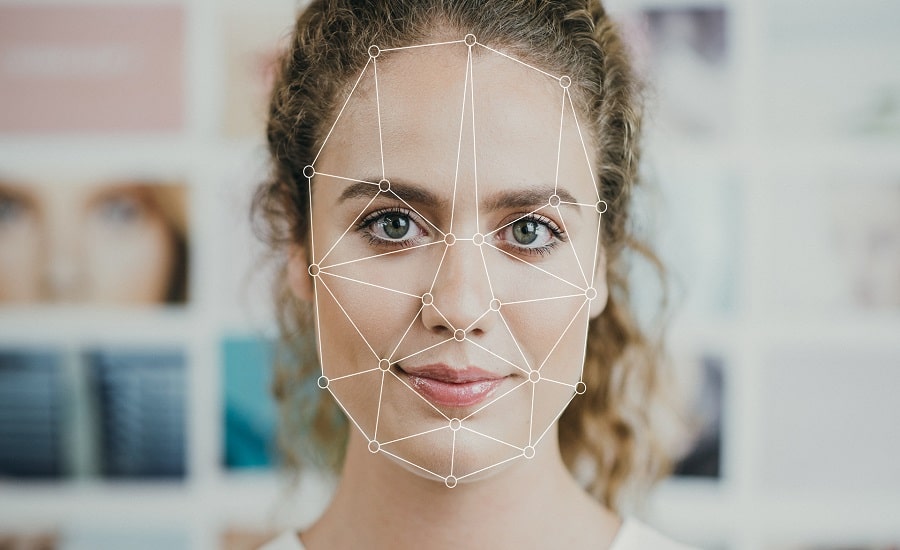
The concept of physical beauty originates in the mind and is defined by what features we find attractive in other people's faces. These preferences represent some of our most private inner thoughts. However, that doesn't mean they can't be monitored and perhaps even predicted.
As found in a new study, researchers used electroencephalography (EEG) measurements to determine what kinds of facial features people found attractive, and then fed the results into an artificial intelligence (AI) program.
The system , called a genetic adversarial neural network (GAN), was able to first learn the types of faces that people found desirable and then build entirely new, specially designed faces to appeal to them.
The experiment, conducted by a team of psychologists and computer scientists at the University of Helsinki in Finland, was like a giant Tinder for the 30 volunteers who participated.
Participants sat in front of a computer that showed them a series of faces, none of which were real people, but realistic artificial portraits created from a dataset of about 200,000 celebrity images.
Unlike regular Tinder use, participants also wore elastic caps fitted with electrodes designed to measure their brain activity as they looked at the faces.

“They didn’t have to do anything but look at the images,” explains neuroscientist Michiel Spapé. “We measured the immediate brain response to the images.”
These individual measurements of neural activity were then evaluated by the GAN, which was able to interpret the brain responses as to how attractive each artificial face was considered by the viewer.
Using this data, the GAN was able to create new faces that were informed by people's EEG attraction identifiers.
In a second experiment, these newly invented faces were then shown to volunteers, who rated them for attractiveness, along with other images of randomly generated faces.
Ultimately, the results validated the test , with participants rating the customized images as attractive 80 percent of the time, while the other faces were chosen only 20 percent of the time.
Although this is a small study, it demonstrates once again how AI technology can unravel mysteries of the human mind, such as which people we find attractive.
“Success in assessing attractiveness is particularly important, as this is such an intense, psychological property of stimuli,” says Spapé. “If this is possible in something as personal and subjective as attractiveness, we may be able to examine other cognitive functions such as perception and decision-making. Potentially, we could orient the device towards detecting stereotypes or implicit bias and better understand individual differences.”
