SQL injection (SQLi) is one of the most common online attack. How can we detect it and how can we protect ourselves from it?
Penetration testing (or “pentesting” for short) consists of simulating attacks on software to determine its weaknesses. It is useful for identifying vulnerabilities before they are discovered and exploited by cybercriminals.

Pentesting tools – also known as penetration testing tools – automate and speed up the process of simulating attacks and identifying vulnerabilities . With that in mind, let’s take a look at the best testing tools for detecting SQL injection.
OWASP ZAP
OWASP Zed Attack (ZAP) proxy is one of the most popular free security tools. It is an open source software that helps you detect vulnerabilities in your web applications. It has many advanced features to meet the requirements of pentesters.
Specifically:
- It includes an automatic scan option for automatic launch testing on a specific website and checks for all types of security vulnerabilities.
- It has a headless mode for developing automation software.
- It has API features to control almost all of its features.
w3af
w3af is a security testing platform designed to help you secure your web. It is a free, open source vulnerability tester that helps you detect and exploit security vulnerabilities in web applications. It has the ability to detect more than 200 vulnerabilities, including SQL injection.
- It supports automation with its own set of scripts (text files with their commands on each line).
- It supports various types of logging - console, text files and even email reports - to enhance the reliability of automation tools' results.
- It supports a fuzzing engine that can insert payloads into almost any part of HTTP requests.
- Supports extension of the tool via email reports (Python scripts).
SQLMAP
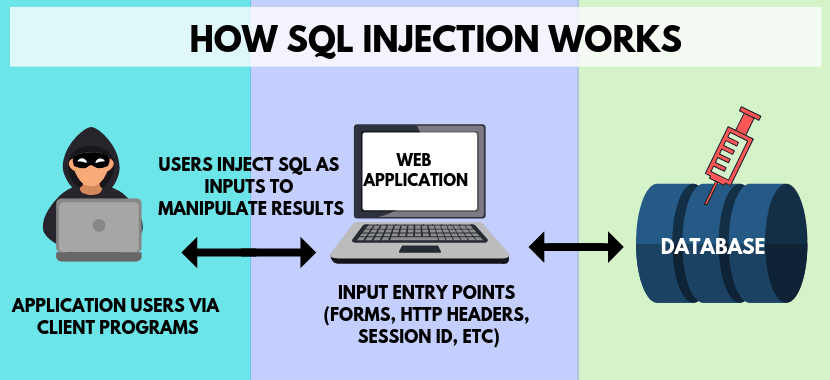
In the field of ethical hacking,SQLMAP is the preeminent tool for finding vulnerabilities based on SQL injection. It is an open source solution, written in python, which automates the process of finding and exploiting SQL vulnerabilities with the ultimate goal of full control of the database and the server on which it is located.
- It supports the most common databases, such as IBM DB2, Microsoft Access, Microsoft SQL Server, MySQL, Oracle, PostgreSQL, and SQLite.
- It supports all major injection techniques, namely Classic SQLi, including its subtypes (error-based SQLi and Union-based SQLi), Blind SQLi, including its subtypes (Blind-based boolean and time-based SQLi), out-of-band SQLi, and SQL injection based on stacked queries.
- Supports password hash type recognition and resolution.
- It supports searching within and cleaning tables according to your settings.
- It supports executing commands in the operating system and receiving their standard outputs if the database supports it.
For more information, you can refer to the corresponding websites of the open source tools.