

CRADLE: It is very difficult for doctors to do a detailed eye examination on infants. Unfortunately, babies tend to move around, so it is impossible.
That's why a new mobile app has taken advantage of the photos parents take of their children and through them looks for signs that are likely to develop into a serious eye disease.
The app is the culmination of one father's quest to find a way to spot the early signs of eye disease and prevent devastating vision loss for his child.
Five years ago, NPR reported the story of Noah Shaw's son, and how he lost an eye to cancer.
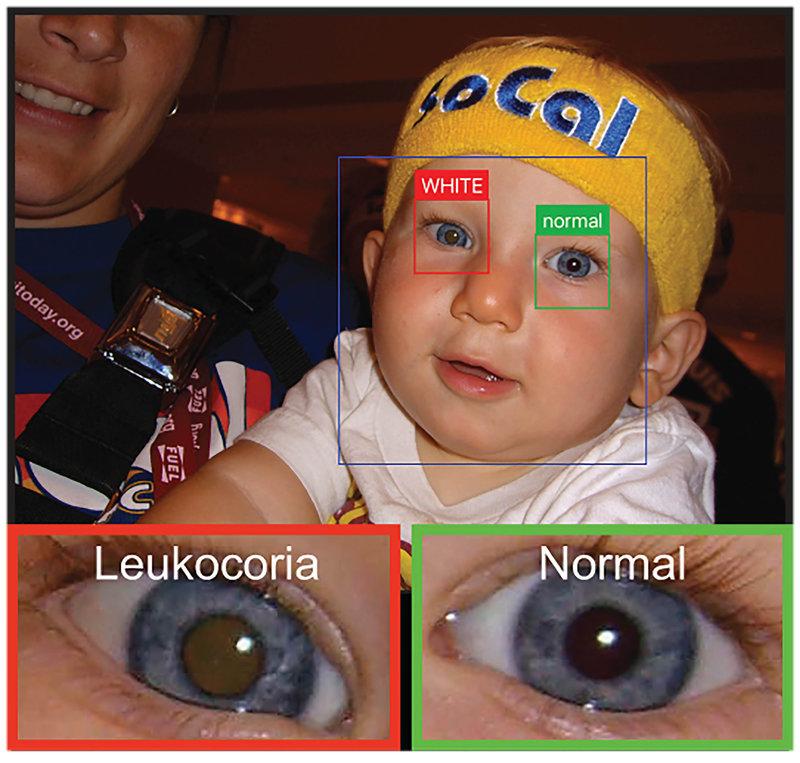
Doctors diagnosed him with retinoblastoma when he was 4 months old. To make the diagnosis, doctors shone a light into Noah's eye, and they got a clear reflection from the back of the eye. This was an indication that there were tumors there.
Noah Shaw's father is a scientist. He wondered if he could see the same pale reflection in flash photos of his son. He had definitely seen the reflection or glow, which doctors call "white of the eye," in a photo taken shortly after Noah was born.
"We had seen a white eye appear in photos that were 12 days old," Shaw said at the time, months before his final diagnosis.
Shaw is a chemist, not an ophthalmologist, nor a computer scientist, but he decided to create software that could scan photos for signs of this disease.
“If I had some software that said, ‘Hey, you should get these signs checked out by a doctor,’ that would have expedited my son’s diagnosis and the tumors would have been a little smaller when we got to them. Maybe there would have been fewer of them,” he says.
Now, this software exists!
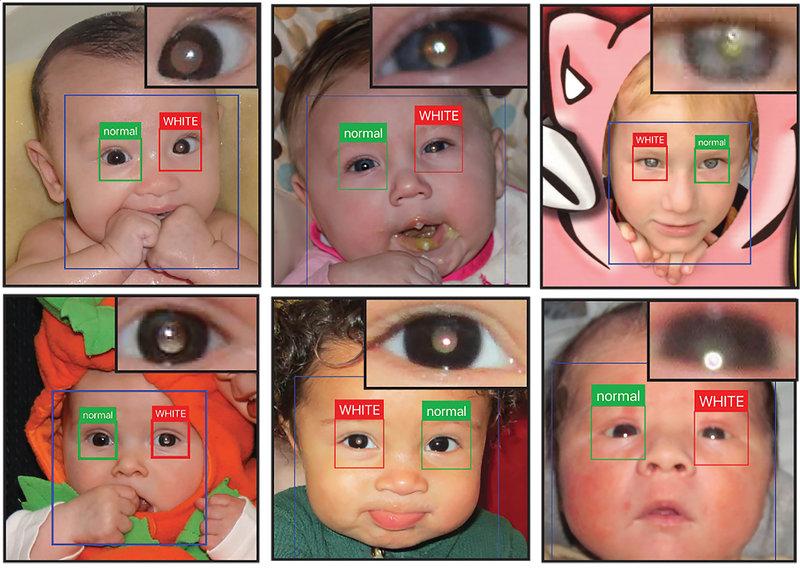
Along with colleagues at Baylor University in Waco, Texas, Shaw created an app called CRADLE. It uses artificial intelligence to find white eyes, which can be a sign of several serious eye conditions, including retinoblastoma, pediatric cataracts, and Coats disease.
To test the app, they analyzed more than 50,000 photos of 40 infants. Half had no eye disease and half had been diagnosed with eye cancer or another eye disease.
“On average, the app detected the white of the eye in photos collected 1.3 years before diagnosis,” says Shaw.
In other words, the CRADLE app could give parents an early warning that something might be wrong with their child. The results appear in the journal Science Advances.
The app isn't perfect. Sometimes it doesn't show the white eyes when there really is a problem, and sometimes it shows that there is a problem when there isn't.
The latter possibility is a drawback. Although so-called “false positives” occur in less than 1% of cases, ophthalmologist Sean Donahue of Vanderbilt University Medical Center says that’s not good enough. Donahue explains that there are about 4 million babies born in the U.S. each year. A 1% false positive would mean tens of thousands of children would be seen by the doctor unnecessarily.
Even so, Donahue is optimistic about the app's results.
“This is exciting new technology and I believe this is how we will move forward in detecting various other diseases in the future,” he says.
Alison Skalet, an eye cancer specialist at Oregon Health & Science University, agrees. “There’s definitely potential here, and it makes sense to leverage the technology we have,” she says. She expects the app to become more accurate over time and its artificial intelligence to become smarter.
Bryan Shaw says that to train the app to better recognize the white of the eye, he needs people who have been diagnosed with leukocoria to send him photos.
“We need more photos, especially of babies in Africa and Asia,” he says. This will make the CRADLE app more relevant globally and hopefully save the sight of more children.
