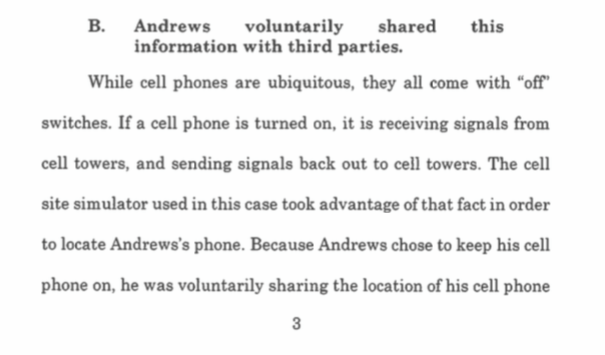
According to the court documents you will see below, if you have your smartphone turned on, you have automatically given your consent to be monitored.
In 2014, Baltimore Police obtained a warrant for the arrest of Kerron Andrews for attempted murder.
To find him, authorities requested permission (PDF) to use his location data and all outgoing calls.
The request, however, made no mention of using Hailstorm (a type of Stingray – a mobile data collection device, also known as a “suitcase”) to collect this data from the suspect’s smartphone.
The police used it anyway.
The use of Stingrays by law enforcement is nothing new, but when a judge learned of the data collection method, he concluded that the police had violated the Fourth Amendment when arresting Andrews and granted the defense's request to exclude the evidence collected by the Stingray.
But here's where the interesting part of the case begins. The state appealed the decision.
It argued that the court erred in its original ruling by claiming that Andrews voluntarily gave the information from his cell phone to the authorities (and other third parties) when he turned on his phone.
We don't know what will happen. If the Maryland appeals court succeeds in overturning the original trial court's decision and says that the evidence gathered using Stingray is legal, all state courts will be able to cite this decision to justify the use of warrantless mass data collection tools.