

Xiaomi is taking another step towards greater technological autonomy by introducing the new Xring O3, a processor designed in-house and intended to strengthen the company's control over the key components of its devices. The strategy comes at a time when smartphone manufacturers are looking for ways to reduce their dependence on external suppliers and differentiate their products.
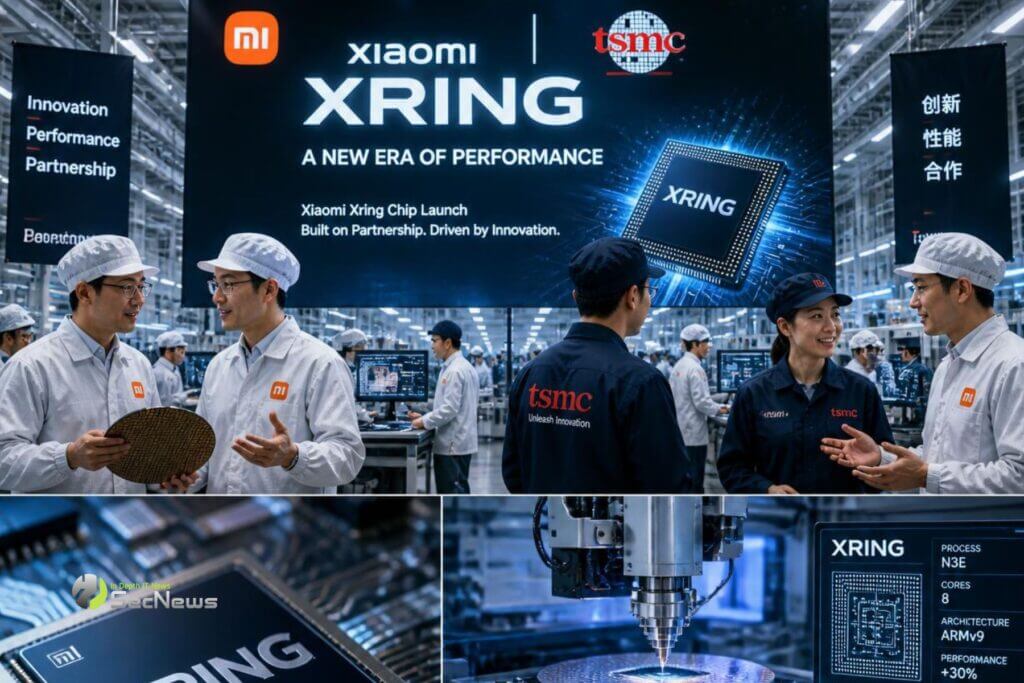
The new chip is the follow-up to the Xring O1, Xiaomi's first major proprietary smartphone processor, which was introduced in 2025. With the O3, the Chinese company is attempting to move closer to the model already adopted by giants such as Apple, Samsung and Huawei, by investing in the development of key technologies in-house.
3 nm processor aimed at premium smartphones
According to sources familiar with the design, the Xring O3 has been commissioned to be manufactured by TSMC and will be manufactured using 3-nanometer. This is a highly advanced manufacturing process that can offer increased performance and better energy efficiency, which are critical for modern premium devices.
See also: Qualcomm: Price increases on chips from September 1st
SoCs are no longer limited to data processing. They integrate the CPU, GPU, AI, image processing and other subsystems , on a single chip . This means that their design directly affects the smartphone experience.
Xiaomi is expected to use the O3 in its next flagship foldable smartphone. Initial estimates suggest shipments of around 200,000 to 300,000 units, suggesting the model could serve as an important test for the new platform.
The battle of foldables in China
Xiaomi's entry into the foldable smartphone with its own processor is particularly significant given the fierce competition in China. Huawei shipped 1.6 million foldables in the second quarter, capturing about 68% of the market, while Honor and Oppo followed with 13.7% and 8.5% respectively.
For Xiaomi, therefore, developing its own chip is not just about technological independence. It can be a tool for creating features specifically tailored to its own ecosystem.
From O1 to a whole family of chips
The company has invested heavily in semiconductor development. Since the restart of the program in 2021, it has allocated more than 20 billion yuan, and has announced a long-term investment plan of at least 50 billion yuan over a decade.
Xring O1 has already been used in smartphones, tablets and smartwatches, with total shipments of devices incorporating it exceeding one million. Approximately 150,000 of these are smartphones.
See also: Samsung's Texas manufacturing facility begins production of Tesla's AI5 chip at 2nm
Xiaomi now appears to be significantly expanding its own chip ecosystem. The Xring O100, according to the same information, will be a 6 nm neural processing unit designed to support the MiMo language model in consumer devices. At the same time, the Xring D100, built at 3 nm, is intended for autonomous driving applications.

Chips as an answer to rising costs
The strategy becomes even more important as the smartphone market is under pressure. Rising memory and component costs are pushing up prices, while global smartphone shipments are expected to decline significantly in 2026.
Xiaomi sold 65 million devices in the first half of 2026, down from 84 million in the same period in 2025. At the same time, the average selling price increased significantly.
In this environment, in-house chip design can offer greater control over product cost, features, and programming, while reducing reliance on companies like Qualcomm and MediaTek.
From smartphones to cars
Xiaomi doesn't see Xring as a limited effort for smartphones. The technology is gradually expanding into artificial intelligence, wearables, and automobiles, creating a broader semiconductor ecosystem.
See also: Apple reportedly working on two 'Extreme' chips
This strategy is also linked to the rapid growth of the electric vehicle . In the second quarter, the division generated revenue of 23.9 billion yuan and recorded 104,199 deliveries.
With the O3 already in mass production and the O100 and D100 planned for next year, Xiaomi is showing that it wants to transform chip development from a complementary activity to a central pillar of its technology strategy.
Source: www.reuters.com
