

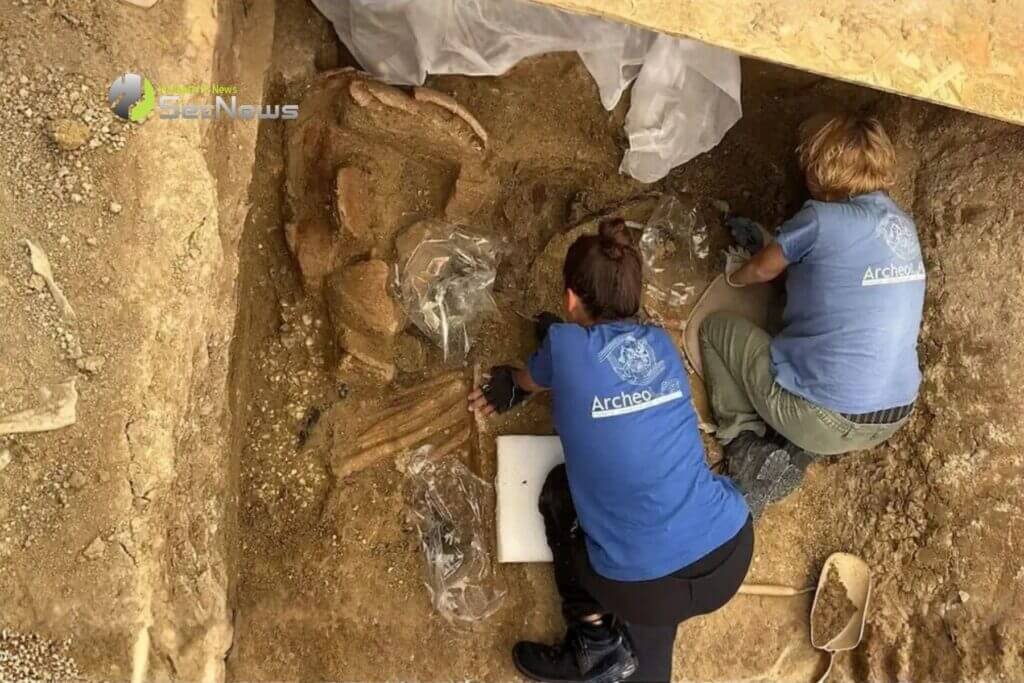
Archaeologists in Italy have unearthed the royal tomb of a pre-Roman “warrior prince,” along with the remains of his chariot and military equipment. The tomb is part of a vast cemetery dating back to the 6th century BC and offers new insights into the burial customs of elite rulers of a mysterious pre-Roman society.
See also: Italy: Students discover a luxurious 1,800-year-old Roman residence
The burial complex was located in the municipality of Sirolo, a small coastal town on the Adriatic coast, in eastern Italy, according to a statement from the local Ephorate of Antiquities.
In the 6th century BC the area was inhabited by the Piceni (or Picentes), an Italian people who bordered the Etruscans to the north. Because the Piceni left little written record, most knowledge of their culture comes from archaeological excavations.
In 2020, a “princely tomb” was discovered in the Pini cemetery, containing an iron-wheeled chariot, rich armor, and a helmet. Today, archaeologists announced the discovery of a second similar tomb.
See also: Medieval shipwreck in Denmark, the largest of its kind
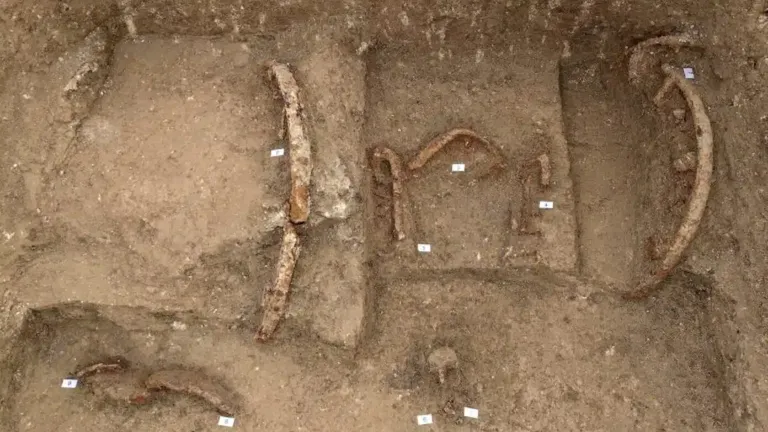
In the center of a large circular enclosure, researchers discovered the burial of a man of high social status, next to which was placed a wooden two-wheeled chariot (currus), which was buried intact with the nobleman about 2,500 years ago. The “warrior-prince” was also buried with a helmet and an axe, while in the tomb were found bronze vessels sealed with ceramic lids, which contained organic residues. Experts estimate that these are traces of a memorial meal or food offerings intended for the afterlife.
Next to the tomb of the "warrior-prince" was found the burial of a woman, who had been buried with fabrics, shoes and numerous pins (fibulae), metal accessories that in antiquity were used to fasten clothing and the funeral shroud. A particularly large pin with an inlaid piece of amber stands out, which had been placed on or near her head and was probably part of the headdress or an elaborate head covering.
This particular burial is located a short distance from the so-called "Tomb of the Queen" in the Pini cemetery, where in 1989 archaeologists had discovered the tomb of a woman from Pike, who had been buried along with two chariots, two mules and a large number of personal belongings.
See also: 2,000-year-old shipwreck may be an Egyptian pleasure boat
Although royal burials have been found in the Sirolo area for several decades, the newly discovered cemetery surprised archaeologists due to its unusual configuration. Unlike most known Picene cemeteries, which were surrounded by a moat as a symbolic boundary between the worlds of the living and the dead, this one was surrounded by a wooden picket fence. Furthermore, it was built on a low hill, which, according to the researchers, probably underlined the monumental character and symbolic importance of the site.
