

The previously dormant supermassive black hole at the center of the galaxy SDSS1335+0728, located about 300 million light-years away, has been observed erupting with the largest and most powerful X-ray emissions ever recorded from such a cosmic giant.
See also: Milky Way's black hole releases mysterious flares
This active phase marks the beginning of the process of consuming matter by the black hole and the occurrence of short-lived phenomena called quantum outbursts (QPEs).
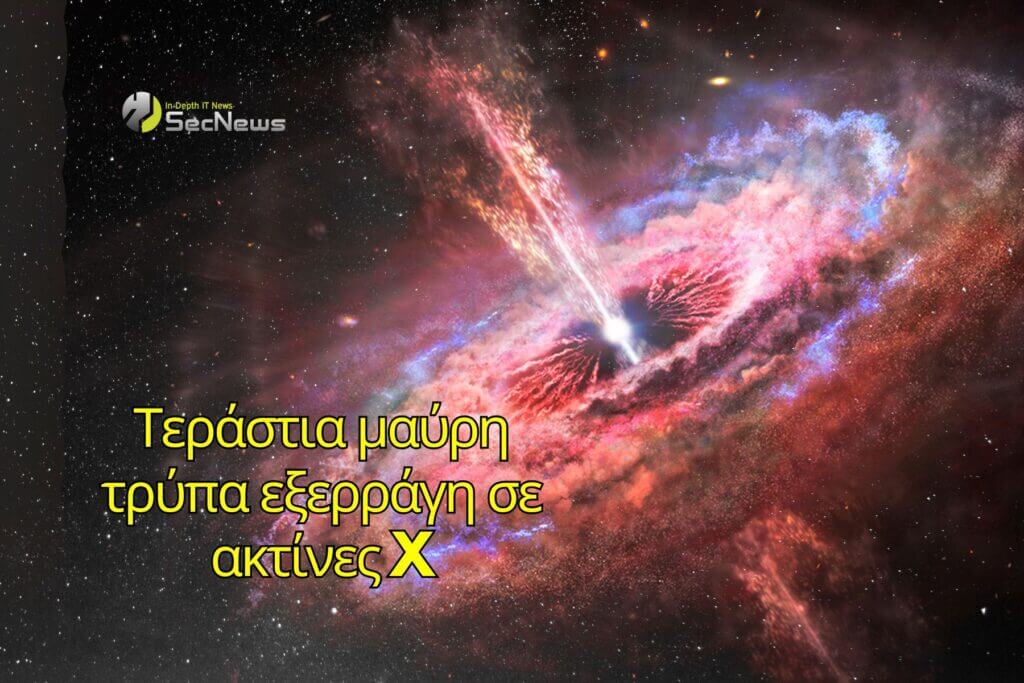
The black hole, which has remained silent for decades, is responsible for a region at the center of its galaxy known as an “active galactic nucleus,” or “AGN.” The team has named it “Ansky.”
Ansky's awakening was first detected in late 2019, alerting astronomers who were monitoring the event with NASA's Swift X-ray space telescope . By February 2024, astronomers had begun to observe the black hole feeding Ansky erupting with flames at relatively regular intervals. This presented a unique opportunity: it became possible to watch a supermassive black hole consume matter and explode in real time.
See also: Mysterious "black hole" in the Pacific Ocean sparks rumors

The team's QPE observations were made with the help of the European Space Agency's (ESA) XMM-Newton space mission, NASA's NICE and Chandra missions , as well as data files from eROSITA .
The team remains puzzled about the cause of Ansky's explosions. QPEs have previously been linked to supermassive black holes that capture stars, tear them apart, and consume the debris. However, this stellar destruction does not appear to be occurring in Ansky's case.
See also: Oldest, largest black hole jet discovered
The team's research was published Friday (March 11) in the journal Nature Astronomy.
Source: space.com
