

Google Play apps: A study was conducted which showed that 55% of apps share user data!
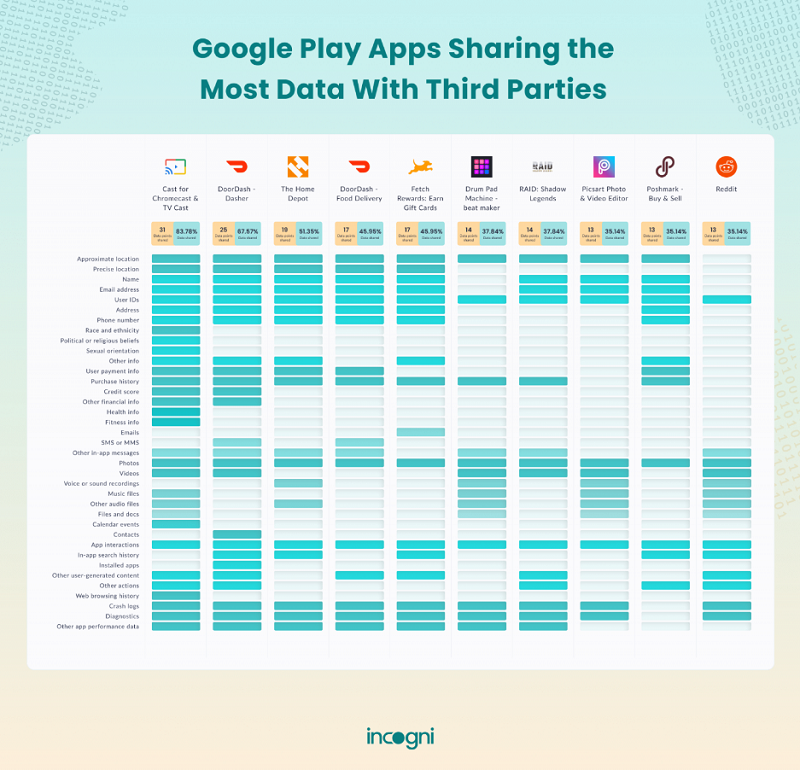
Researchers at Incogni found that 55.2% of apps on Google Play share user data. Among them, free apps share, on average, seven times more data points than their paid counterparts.
See also: Google Play Store: Will provide ratings/reviews based on device

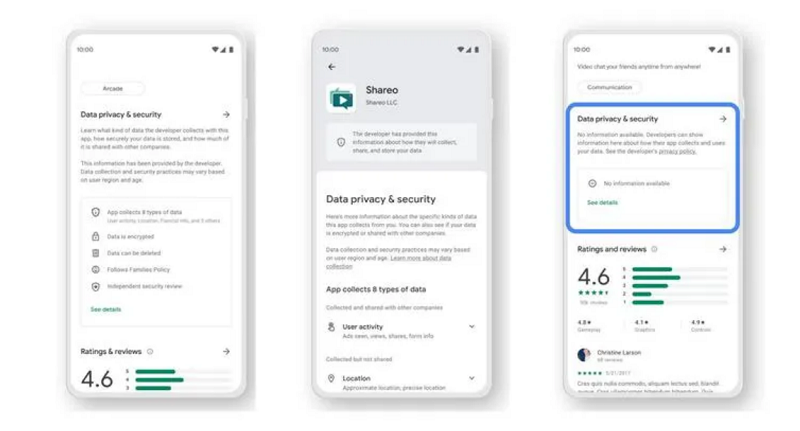
Google first announced the introduction of the new data security section in 2021. Starting July 20, 2022, all developers must disclose how they collect and handle user data for the apps they publish on Google Play, as well as provide details on how they protect that data through security practices like encryption. With that in mind, Incogni took a deep dive into the privacy and security practices of the top 1,000 paid and unpaid apps available on the Google Play Store.
Popular apps performed similarly, sharing 6.15 times more data than less popular apps. The huge difference between paid and unpaid apps’ data sharing practices seems to confirm the common belief that consumers are actually paying for free online services with their data.
See also: New Google Play system update improves security
Incogni researchers examined Google Play’s new data security section, which was released in July 2022, to uncover more information about app developers’ data sharing and security practices. They found that shopping, business, and food and beverage apps share the most data, on average, while social media and business apps collect the most data.
Social media is a powerful tool for human interaction
Some apps, such as Facebook, Messenger , and Instagram, which collect the most personal information, claim to collect minimal data. However, Google's definition of sharing does not include transferring data to a service provider for legal reasons, or anonymizing data.
The survey also looked at how developers handle user data in transit. They found that 4.9 percent of apps don’t encrypt personal data in transit and admit to it. More interestingly, less than half of the apps claim to not provide data encryption in transit, which may suggest that the actual percentage of apps that don’t provide encryption is much higher.
Incogni's findings show that much more data is being "shared" than Google Play users expect.
See also: Google Play Store: Alternative payment systems in more countries
Methodology
Incogni's research was based on an examination of the data security sections of the top 500 free and 500 paid apps on the Google Play Store.
Read the full Incogni report here.
Information source: list23.com
