

Intel has unveiled its new 12th-generation Core processors for laptops. In the announcement, the company claimed that the new Core i9 is not only faster than Apple's M1 Max chip (in the 16-inch MacBook Pro), but is also the "fastest mobile processor" on the market.
See also: Samsung officially unveils the Galaxy S21 FE
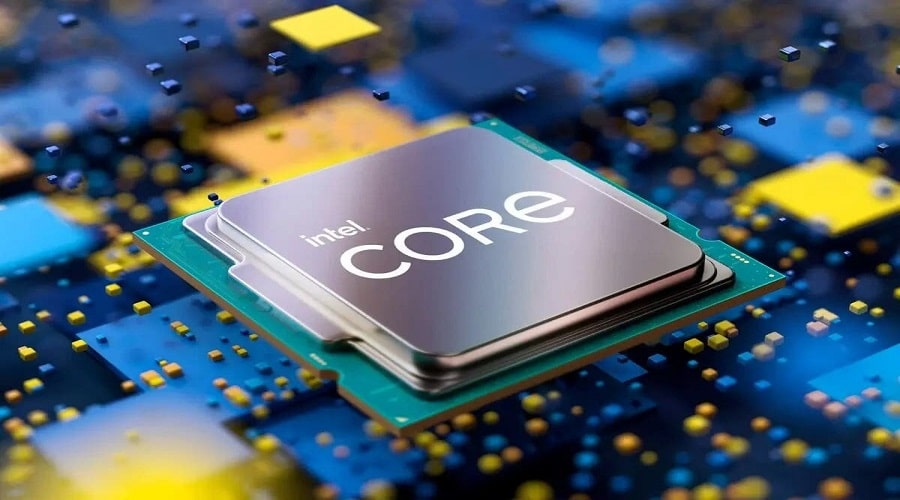
According to Intel, the new Core i9 offers a 14-core CPU (six performance cores and eight efficiency cores), while the 10-core M1 Max chip has eight performance cores and two efficiency cores. Additionally, Intel's high-end chip has a max Turbo Boost frequency of 5.0 GHz.
“Intel announced the world's fastest mobile processor, bringing its performance hybrid architecture to mobile platforms for the first time with the new 12th Gen Intel Core mobile processors, which are up to 40% faster than the previous generation of mobile processors.
See also: Oral-B: Three new iO smart toothbrushes connect to the iPhone
The company directly compares the new Intel Core i9 12900HK to the Apple M1 Max chip, which is the Apple Silicon chip built for the new 14-inch and 16-inch MacBook Pros. Intel confirms that its own processor has “superior performance” based on results obtained from Intel’s Reference Validation Platforms.
Apple's M1 Max chip reaches 3.2 GHz, and as we mentioned above it has 10 cores (of which eight are high-performance cores and two are energy-efficient cores). The 12th-generation Intel Core i9 processor can certainly achieve higher benchmark numbers in some configurations, but that doesn't mean it excels in all areas. For example, Apple offers better energy efficiency with its ARM-based Apple Silicon chips. While the Intel Core i9 consumes up to 115 watts of power, the M1 Max chip's power consumption remains around 60 watts most of the time and barely exceeds 90 watts when operating at full performance.
See also: Apple: The first American company to reach $3 trillion in value
As we've seen with the M1 Macs, lower power consumption prevents issues like overheating and reduced performance, something Intel can't address with the old x86 architecture.
new mobile processors are expected to be available later this year.
Source: 9to5mac
