

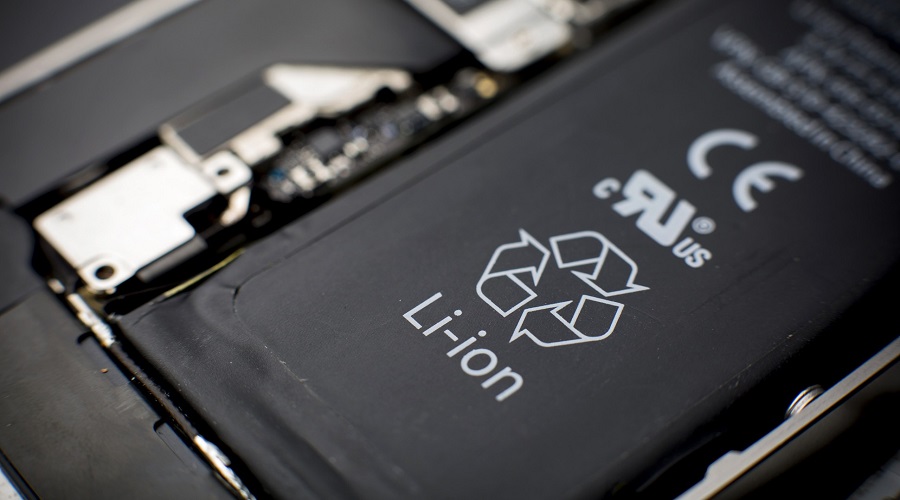
 One doesn't have to look far to find incidents of lithium-ion batteries exploding, resulting in injuries and minor damage. Samsung has become quite famous for its exploding batteries, while manufacturers like Apple have also experienced this problem, as we recently saw an iPad case that almost exploded in a showroom.
Lithium-ion batteries are used in all consumer electronics today, but they can be quite dangerous. So researchers at Oak Ridge National Laboratory and University have proposed a practical and inexpensive solution to prevent such incidents.
Inspired by the strange behavior of a liquid that solidifies upon impact, commonly known as "oobleck," researchers decided to create a lithium-ion battery that hardens upon impact.
Typically, a lithium-ion battery contains two electrodes separated by a thin plastic film that is immersed in a liquid electrolyte. So, if the plastic separator breaks due to impact, the electrodes can “touch” each other. This can lead to the battery shorting, heating and eventually ignition.
The researchers decided to use a liquid electrolyte that would solidify upon impact, stopping the electrodes from colliding and preventing ignition. They used perfectly spherical silicon particles instead of plastic foil.
Adding silicon is cheap and incorporating it into batteries doesn't require major changes to the manufacturing setup. Gabriel Vieth, the project leader, says this method could initially be used to make batteries for drones and later spread to the automotive industry.
His team wants to create larger versions of the battery for military purposes, where soldiers have to carry heavy protective gear and batteries. These batteries could act as armor due to their unique nature and lighten their load by 10 kilograms.
