

In the artificial intelligence or AI that we know to this day, companies liken the human brain to a computer.
However, the brain does not process information, retrieve knowledge, and store memories exactly like a computer does, according to Pascal Kaufmann.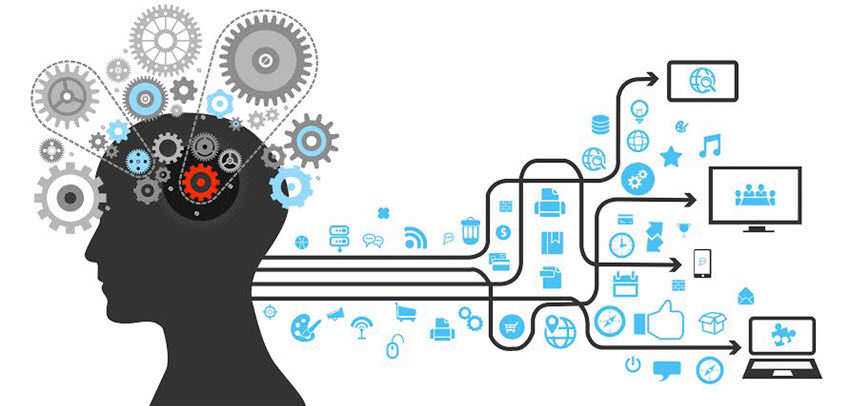
Today's approach
So companies that claim to be using AI to build the “next generation” of their products are unknowingly referring to the intersection of Big Data, data analytics and automation, according to Swiss neuroscientist and co-founder of Starmind Pascal Kaufmann.
“Today, so-called AI is often just the human intelligence of the programmers who develop it, condensed into the source code,” said Kaufmann, who worked on cyborgs for years at DARPA.
“We shouldn’t need 300 million photos of cats to be able to tell if something is a cat, a cow, or a dog.”
Intelligence is not about Big Data, but about small data. The principles that make us recognize a cat the way children do are called intelligence, and it's something that doesn't require millions of photos.
“True AI” is not the ability of a machine to operate strategically and outside the context of a rules-based algorithm, according to Kaufmann, who believes that AI will be able to cheat without being programmed to do so.
Furthermore, the ability to automate human behavior or work is not necessarily a reflection of how smart machines are becoming, Kaufmann told ZDNet.
“Take a pump, for example, instead of carrying water from the river, you can use a pump, but that is not artificial intelligence, but rather the automation of a manual task.”
Artificial Intelligence The Other Side
So while Facebook plans to develop a brain-computer interface and Elon Musk wants to merge the human brain with AI, Kaufmann says the “brain code” will have to be cracked in order for us to move forward in the field. He also said that this can only be achieved through neuroscience research.
Earlier this year, DeepMind founder Demis Hassabis announced something similar in a paper, saying that the fields of AI and neuroscience need to reconnect and that only by understanding natural intelligence can we develop the artificial species.
“Many companies are investing their resources in building faster computers … we need to focus more on the [principles] of the brain, understanding how it works … rather than copying and pasting information,” Kaufmann said.
Kaufmann admitted he doesn't have all the answers, but he finds it "interesting" that high-profile entrepreneurs like Musk and Mark Zuckerberg, who don't yet have AI or neuroscience degrees, have such strong and opposing views on AI.
Artificial Intelligence Controversies and Catastrophology
Musk and Zuckerberg, on the other hand, threw mud at each other in July, during a debate over whether “bad AI” could destroy humanity, especially if it is not properly monitored and regulated. Zuckerberg spoke optimistically about AI and argued that it can contribute to a better quality of life.
Together but with proper education
Meanwhile, Kaufmann believes that systems should be designed in such a way that humans and machines can work together, not against each other.
For example, Kaufmann envisions a future where people wear smart lenses (something like Google Glass) that act as “the third half of the brain” and extract relevant information from the conversations they have.
"The main difference between a human and a machine is the ability to ask questions. Machines are more about suggesting solutions.".
However, Kaufmann admitted that people often fail to ask the right questions because they are taught to remember facts in school. Those who remember the most facts are also those who get the best scores.
He believes that people should be trained to ask the right questions, adding that a right question is 50% of the solution. The right questions will allow people to understand the principles of the brain and develop real AI.
The company claims that the self-learning system it is developing autonomously connects and maps the internal expertise of large groups of people, allowing employees to tap into an organization's knowledge base or "corporate brain" when there are questions.
The new system
Starmind's system integrates with existing communication channels – such as Skype for Business or a corporate browser – eliminating the need to change employee behavior, Kaufmann says.
Questions written in the question window are answered immediately if an expert’s answer is already stored in Starmind, while new questions that do not have answers are automatically directed to the appropriate expert in the organization, based on their skills, availability patterns, and willingness to share expertise. All answers are added to and enhance the corporate knowledge base.
“Our vision is to connect thousands of human brains in an intelligent way, and surpass any machine,” said Kaufmann.
This is very different from asking a question to a search engine. Google is basically a “big data engine” that answers questions that have already been asked, but is unable to answer new questions.
Starmind is currently used in more than 40 countries by organizations such as Accenture, Bayer, Nestlé and Telefonica Deutschland.
Man doesn't need money
When asked how people will make money to survive, Kaufmann mentioned that society does not need to be ruled by money.
"In a lot of science fiction scenarios, there's no money. When you look at animal colonies like the ant, there's no cash."
Furthermore, if humans had constant access to intelligent machines, Kaufmann reported that “the acceleration of human development would be very rapid” and “would create new species.”.
“AI is the ultimate tool for human progress,” he stated categorically.
