

Apple's refreshed MacBook Pros were introduced to somewhat mixed reviews last year due to their specifications. Instead of using the latest Kaby Lake chips, Apple opted for previous-generation Skylake chips.
That's what changed at WWDC 2017, as Apple updated all MacBook and MacBook Pro devices with Kaby Lake chips, adding some other improvements as well.
The addition of the new chips isn't going to dramatically improve the performance of the devices, and there's no reason to upgrade if you bought one of the company's computers last year. But there are a few subtle advantages worth mentioning.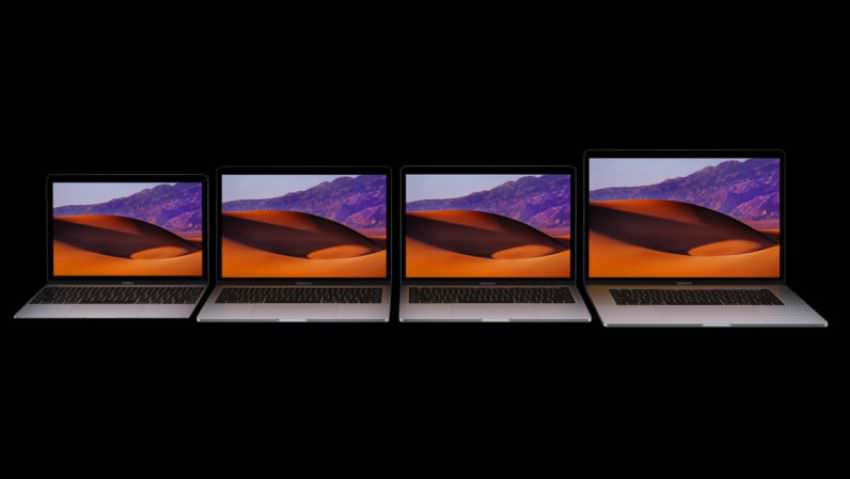
You can read the full spec list if you want here and here, but you should know that the Kaby Lake chip won't offer a huge difference over Skylake. It's somewhere around 10 percent faster, depending on the type of work you're doing, though Kaby Lake will likely offer the biggest improvement over the Y-series chips in the 12-inch MacBook. It'll also offer better integrated graphics and longer battery life, though Apple isn't officially citing any improvements in the latter feature.
A big advantage of Kaby Lake that has minimal differences from Skylake in terms of processing power results is a hardware decoder for 4K video with copyright protection (DRM).
Most 4K shows and movies have additional encryption to prevent piracy and require special hardware to decode. This is why there are few computers that can play Netflix in 4K. Apple supports the feature with its upgraded computers, although you will have to enable the feature before you can play DRM-protected 4K video.
I imagine it's only a matter of time, and although the MacBook Retina isn't 4K, the extra functionality will be greatly appreciated.
Another subtle improvement is that Apple has boosted the SSDs to be “up to 50 percent” faster. That’s 3.2GBps read and 2.2GBps write speeds (tested on 512GB drives). If you do a lot of photo or video editing, you’ll welcome these speeds, which will likely be more noticeable than the processor improvement.
Meanwhile, the 15-inch MacBook Pro now comes with an AMD Radeon Pro 555 in the lowest configuration.
Pricing has remained largely the same, except for the MacBook Pro without the Touch Bar which starts at $1,299 thanks to a new 128GB storage configuration.
