

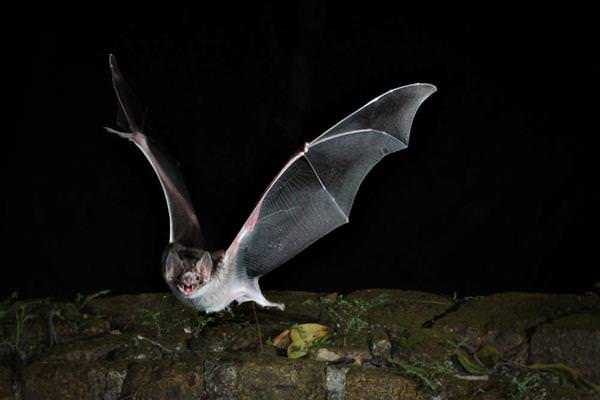
Drones have made spectacular leaps in a short period of time in recent years. They can deliver packages and help with search and rescue. Since it is almost certain that we will live and work with flying robots in the future, scientists are looking for a better and safer way to fly. A flying robot that simulates the flight of a bat may provide the answer.
Bats are not only the only mammals that fly, but they also surpass most flying animals in the feat of mechanical flight. Their soaring, diving, sudden turns, and ability to use bones and thin skin to fly, as opposed to wings, have so impressed observers that scientists have been studying how they fly for years.
Now, three researchers at Caltech University, Alireza Ramezani, Soon-Jo Chung, and Seth Hutchinson, have created their own flying bat. It's an autonomous robot called Bat Bot (B2) that comes remarkably close to the appearance and flight style of a real bat. Their work was published this week in the journal Science Robotics.
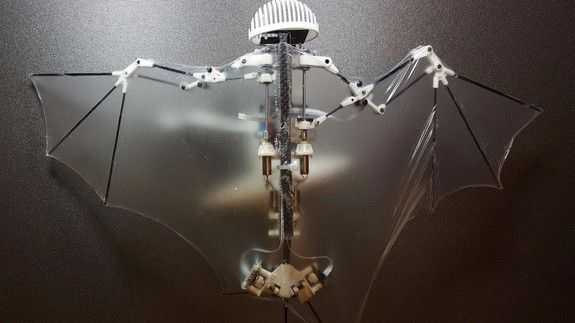
While most robots use rigid wings and propellers, the researchers sought to recreate the unique structure and complex flight of bat wings, creating a 93-gram Bat Bot B2.
It is a fully autonomous robot, with an onboard computer and sensors that help it fly and know its position and the relative positions of its elbows, hips, and wing joints. Instead of having motion actuators at every joint, the team used a limited set of joints, letting the thin (56 micrometers), silicon membrane that extends over the wings and tail control wing configuration and flight.
The result is something that, despite being almost white and translucent, looks a lot like a real bat – especially when it's flying.
The researchers argue that a robot that can fly with soft, flexible wings and can make quick turns in the air would be safer in an environment where humans and robots must coexist. It could also provide new opportunities for search and rescue in difficult environments where quadcopters, which tend to be more dangerous to humans, can fail.
