

The 2020 Olympic Games, which were due to be held in Tokyo, Japan, are close to being postponed until 2021 due to the coronavirus. Dick Pound, a member of the International Olympic Committee (IOC), told the United States on Tuesday that the Games will not start on July 24, but no further details were available.

Furthermore, when asked whether Pound was speaking officially on behalf of the IOC, the organization responded that each member has the right to interpret the organization’s decision as they see fit. The IOC said the committee would consider various scenarios regarding the future of the 2020 Games. This statement essentially proves that the group will conclude discussions within four weeks, and that cancellation is “not on the agenda.”
Although the Olympics have been canceled in the past, due to World War I and World War II, they have never been postponed since due to other circumstances.
Also on Monday, Reuters reported that Japan’s Olympic Committee President Yasuhiro Yamashita said he expects the Olympics to be postponed, echoing recent comments by Japanese Prime Minister Shinzo Abe. US President Donald Trump said he would support whatever decision Abe makes.
Even if the Olympics were to go ahead as planned, many teams have said they are not willing to compete in light of the coronavirus pandemic. In addition, the US Olympic and Paralympic Committee called on the IOC to postpone the Tokyo Games, citing the results of a survey sent to 4,000 Olympians and Paralympians.
USOPC President Susanne Lyons and USOPC CEO Sarah Hirshland said they regretted that there was no solution to the concerns and problems they face. Even if the global health situation changes by the end of the summer, the team stated that the huge disruptions to the educational and training environment, doping controls and qualification process cannot be adequately overcome. Therefore, postponement is the best and most promising solution, given the current situation created by the global coronavirus pandemic.
On March 22, the Canadian Olympic Committee and the Canadian Paralympic Committee announced that their teams would not attend Tokyo and requested that the Games be postponed for one year. The Australian Olympic Committee's executive board also decided not to send any teams, encouraging athletes to prepare for the Olympic Games to be held in the summer of 2021.

And on March 20, the American Swimming Association, the national governing body for competitive swimming, sent a letter to the U.S. Olympic and Paralympic Committee asking the group to postpone the Summer Games until 2021.
The coronavirus pandemic made its presence felt at the 2020 Olympics on March 19, when it was announced that Tokyo 2020 chief Yoshiro Mori, aged 82, had met with Kozo Tashima, the deputy head of the Japanese Olympic Committee, who was later tested positive for coronavirus.
Mori, however, has no symptoms of coronavirus and has not been tested. The men were about 10 meters apart when they met.
The Olympics are a major event not only because of their long history but also because of the number of participants and the billions of dollars spent on their organisation. More than 11,000 athletes from 206 nations are expected to compete in 339 events. At the same time, thousands of people were to work during the games. These included food vendors and hotel staff, as well as instructors and coaches.
NBC was to broadcast the Games in the US, even offering a special Olympic streaming package so that audiences could watch as much of the action as possible, without commercials.
Furthermore, as evidenced by the number of tickets sold last July, thousands of people planned to watch the Games, traveling from every corner of the globe.
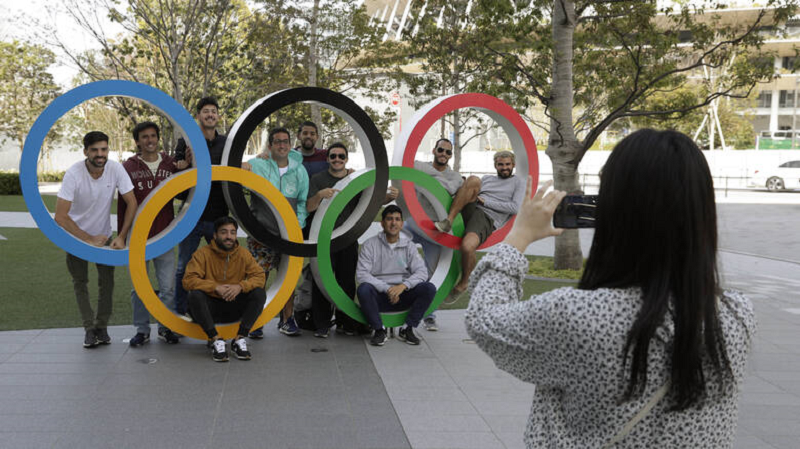
It is worth noting that the 1916 Summer Games were cancelled due to World War I, while both the 1940 and 1944 Winter and Summer Games were cancelled due to World War II, with Japan being the affected country at the time – the 1940 Games had been scheduled for Tokyo and Sapporo.) Other Games have been affected by boycotts. In contrast, in 2016, the Olympics in Rio de Janeiro, Brazil, went ahead as planned despite warnings from scientists about the Zika virus. The next Olympic Games after Tokyo are the 2022 Beijing Winter Games, followed by the 2024 Paris Summer Games and the 2026 Winter Games in Milan and Cortina, Italy.
