

Bitcoin rocketed from $64,000 to $72,800 on August 19 and 20 , 2026 , in one of the most impressive bull runs of the year. The move sparked a flurry of short liquidations of more than $1 billion in one hour, with the 24-hour total exceeding $2.7 billion, according to data from Bloomberg and CoinGlass.

The violent volatility also brings a less publicized issue to the fore: the security of crypto wallets. As the SecNews technical team points out, along with the impressive prices, August 2026 also went down in history for the largest hardware wallet exploitation incident, making the personal data security of every investor more critical than ever.
See also: RedC2 packages on npm install backdoor on Linux
What triggered the $1 billion short squeeze?
The “short squeeze” is the phenomenon in which investors who had bet on a price drop (short position) are forced by the trading systems themselves to buy back the asset at a higher price to cover their loss. This is self-reinforcing: each wave of forced buying pushes the price higher, triggering new liquidations.
According to analysis by Reuters and CoinGlass, the move was driven by three parallel factors: the US Treasury Department’s announcement that it was doubling its purchases of long-term bonds, $487 million in new inflows into Bitcoin ETFs in two sessions, and a massive accumulation of short positions that were waiting for a reaction. Bitcoin had its best day since February, Ethereum rose 17.5% to $2,250, while Solana gained 10.8%.
Why volatility also brings security risk
Extreme volatility environments are often accompanied by an increase in phishing attacks, malicious “trading assistant” apps, and fake tokens appearing on social media. Attackers exploit investors’ eagerness to react quickly to buying or selling opportunities by sending deceptive links purporting to be from well-known exchanges that request a seed phrase reconnection or trade approval.
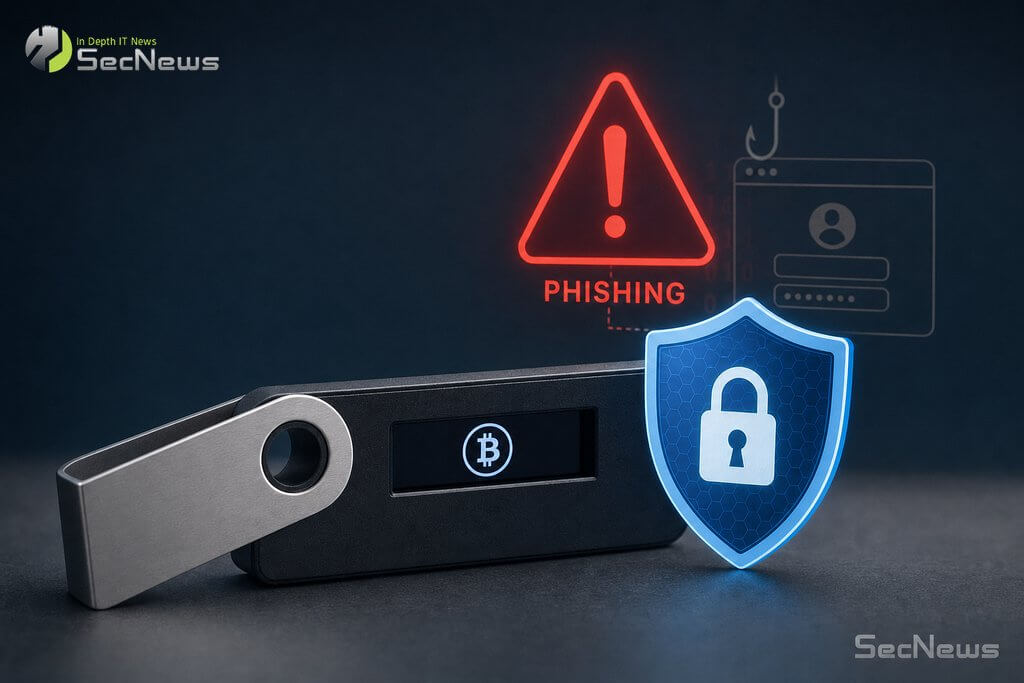
A particularly worrying example concerns the Coldcard hardware wallet: a bug in firmware 4.0.1 from March 2021 caused weak seed generation on Mk2 and Mk3 devices, allowing attackers to retrieve private keys offline and hash corresponding addresses. Losses exceeded $114 million across over 7,000 addresses, marking the largest hardware wallet exploit in history.
How to protect your wallet in volatile environments
The SecNews technical team recommends a series of essential measures that are always applied, but especially on days of large market movements. The first is the separation of funds into separate wallets: a cold wallet (offline hardware) for long-term reserves and a hot wallet (software) for active transactions. Never keep all funds in a speculative position with leverage.
The second measure is to enable two-factor authentication (2FA) with an authenticator app, never with SMS which is vulnerable to SIM swap attacks. The third is to carefully verify each transaction on the hardware wallet screen — the attacker can present an address on the computer screen but the actual transaction sends the funds elsewhere.
See also: Europol: "Hit" on online fraud ring with victims in Greece
The fourth is to create and store an encrypted backup of your seed phrase in at least two physical locations — never in digital form in the cloud, screenshot, or text file. The fifth measure, equally important, is to avoid installing browser extensions that promise “automated trading” or “trading signals,” which often read data from other crypto sites and steal credentials.
Greek image and regulatory framework
In Greece, the regulation of crypto transactions has been fully integrated through MiCA (Markets in Crypto-Assets) . Crypto-asset service providers (CASPs) must be licensed by the Hellenic Capital Markets Commission and adhere to strict user identification and fund protection procedures. Greek investors using international exchanges (Binance, Coinbase, Kraken) must also declare their profits to the AADE.
In case of theft or fraud, the legal avenues are to report to the Cybercrime Enforcement Office (phone 11188) and inform the exchange through official support channels — never via links from emails or Telegram groups. The SecNews editorial team will continue to monitor the connection between volatility and security, as attackers evolve their techniques in parallel with the market's maturation.
🔒 Protect your privacy with Proton VPN
Swiss VPN from the creators of Proton Mail — strict no-logs policy, strong encryption, and built-in NetShield that blocks ads, trackers, & malware.
- ✔ No-logs, based in Switzerland (except 14-Eyes)
- ✔ NetShield: blocks ads, trackers & malicious domains
- ✔ Covers all devices — free version available
The link is an affiliate link — SecNews may receive a commission at no additional cost to you. It does not affect the independence of our article writing.
