

The robot Lightning made history on August 22, 2026, finishing the 100 meters in 9.32 seconds, a performance 0.26 seconds faster than Usain Bolt's world record that he had held since 2009. The robot is called Lightning, was developed by Chinese smartphone company Honor and set the speed record during a test event ahead of the second World Humanoid Robot Games in Beijing.

According to Reuters and the official announcement of the state-run Chinese channel CCTV, maximum speed during the run reached 14.5 meters per second, a value that sets a new standard for the discussion of what humanoid systems can achieve in sports-type tests.
See also: Model Constraint Designs: The Gaps of AI Labs
How the Lightning robot was tested in Beijing
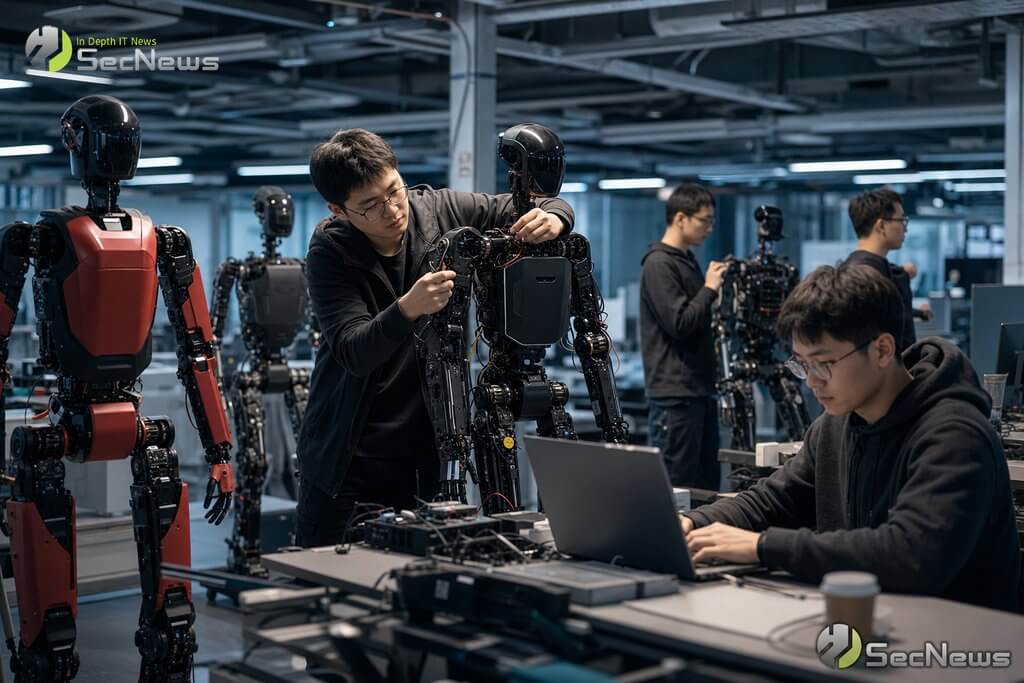
Lightning is a 169cm tall humanoid robot with a leg length of 95cm. In preparation for the World Humanoid Robot Games, Honor engineers lengthened its legs by an additional 10cm, according to a report by ABC News . The test was conducted on a track in Beijing, and the result of 9.32 seconds was officially confirmed by Chinese state television.
This achievement follows Lightning's previous success: in April 2026, the same robot finished the Beijing Half Marathon (21 km) in 50 minutes and 26 seconds, better than the men's world record set by top professional runners for the same distance. The overall picture shows a rapid pace of development in the mobility of humanoid systems.
Why the record isn't entirely comparable to Bolt's
Despite the impressive performance, experts point out a number of caveats. First, Bolt’s record of 9.58 seconds was set in an official World Athletics Championships race in 2009 in Berlin, under the strict conditions of the World Athletics Federation. Lightning’s test was Honor’s internal training, not a certified race. Second, a robot doesn’t have the same biological constraints as an athlete: it can be redesigned, its legs lengthened, and its engines optimized for a specific course.
The SecNews technical team notes that this progress is more valuable as a technological achievement in robotic movement than as a sporting event. The ability of a robot to reach a speed of 14.5 m/s with stable balance and gait control reflects significant developments in sensors, actuators, and real-time control algorithms.
What it means for robotics and Honor
Honor, best known as a smartphone maker, is investing heavily in humanoid robots and artificial intelligence as part of its diversification strategy. Lightning will also compete in the 400-meter and 1,500-meter during the World Humanoid Robot Games in Beijing, which run from August 22 to 26. China's "Robot Olympics" also includes events in long jump, weightlifting, table tennis and other sports.
See also: Smart homes: The transition from Google Assistant to Gemini
China's humanoid robot industry has made rapid progress in the past two years, with companies like Unitree (maker of the famous "Superman"), UBTech and now Honor competing with each other in public demonstrations of mobility and skills. The issue has also taken on geopolitical dimensions, as China sees humanoids as a new technology industry in which it can get ahead of the US and Japan.
Where is the humanoid industry going?
Beyond athletic displays, the real value of a fast, agile humanoid lies in practical applications: warehouse work, helping the elderly, working in hazardous environments, transportation. Lightning's performance shows that mobility technology has reached a level where speed is no longer the limiting factor. The real challenges remain battery life, perception AI, and safe interaction with humans in uncontrolled environments.
Usain Bolt himself has not publicly commented on Lightning's performance. The editorial team of SecNews notes that this record, regardless of technical objections to comparability, marks a symbolic moment for robotics. The next generation of humanoids will be judged not only by their speed, but mainly by their usefulness in everyday life.
