

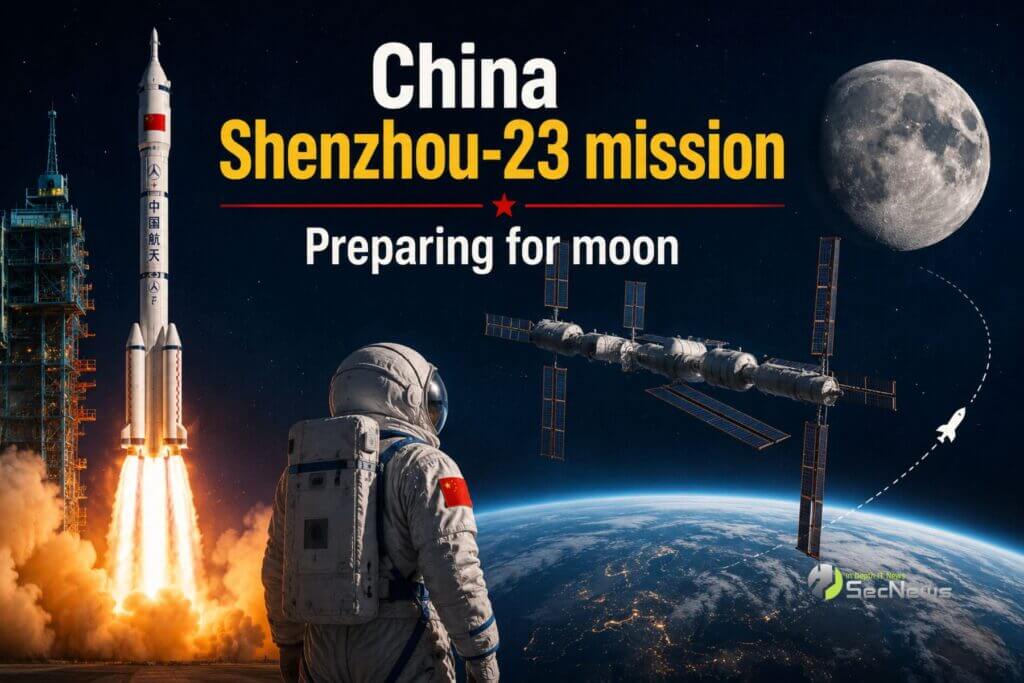
China continues to strengthen its position in the new global space race, taking another major step towards its ambitious goal of a manned mission to the Moon by 2030. The Shenzhou-23 mission was successfully launched from the Jiuquan launch center in northwest China, carrying three astronauts to the Tiangong space station , in a mission considered pivotal for the future of the Chinese space program.
The Long March 2-F took off on Sunday, marking not only a new manned mission, but also a historic first: for the first time, an astronaut from Hong Kong is participating in a Chinese space mission.
Lai Ka-ying , 43 , a former member of the Hong Kong police force, is traveling with space engineer Zhu Yangzhu and former air force pilot Zhang Zhiyuan , who is making his first space flight.
See also: Mars: NASA published the most impressive selfie from Perseverance
The first Chinese mission with a one-year stay in orbit
The most important element of Shenzhou-23 is the ambitious long-term orbital stay experiment. For the first time in the history of the Chinese space program, an astronaut will remain on the Tiangong station for an entire year.
This mission is considered critical for studying the effects of long-term exposure to microgravity conditions, as China prepares not only for missions to the Moon but also for future Mars exploration plans.
Previously, missions to Tiangong lasted about six months. The move to a 12-month stay means that the Chinese space program is now moving to a whole new level of operational complexity.
The Chinese space agency has not yet announced which crew member will ultimately remain in orbit for a year, something that is expected to be announced later in the mission.
The challenges of living in space for a whole year
Long stays in space pose a huge challenge for both the human body and technological life support systems.
Astrophysicist Richard de Grijs from Macquarie University in Australia points out that the most significant difficulties include reduced bone density, muscle atrophy, increased exposure to cosmic radiation , and the psychological effects of isolation.
See also: Giant solar flare ejects coronal mass
The lack of physical gravity gradually affects almost every function of the human body, from blood circulation to sleep quality and cognitive function.

At the same time, mission engineers will have to ensure the flawless operation of critical water recycling, air purification and medical support systems, as in the event of an emergency, returning to Earth is not immediately possible.
These tests are considered essential for any future long-duration manned mission beyond low Earth orbit.
China is accelerating its lunar strategy
The Shenzhou-23 mission is part of China's broader plan to send humans to the Moon before the end of the decade, directly competing with program Artemis NASA's.
Beijing is investing huge sums in the development of new space technologies, and is already preparing the next-generation Mengzhou, which is expected to conduct a test orbital flight in 2026.
The new craft will gradually replace the Shenzhou series and will be the main means of transporting Chinese astronauts to the Moon.
At the same time, China plans to create by 2035 the first phase of the International Lunar Research Station, a permanent base on the Moon that will operate as a center for scientific research and technological testing.
Tiangong becomes a rival to the ISS
China has impressively expanded its space capabilities over the past 30 years, turning the Tiangong program into one of the most important alternatives to the International Space Station.
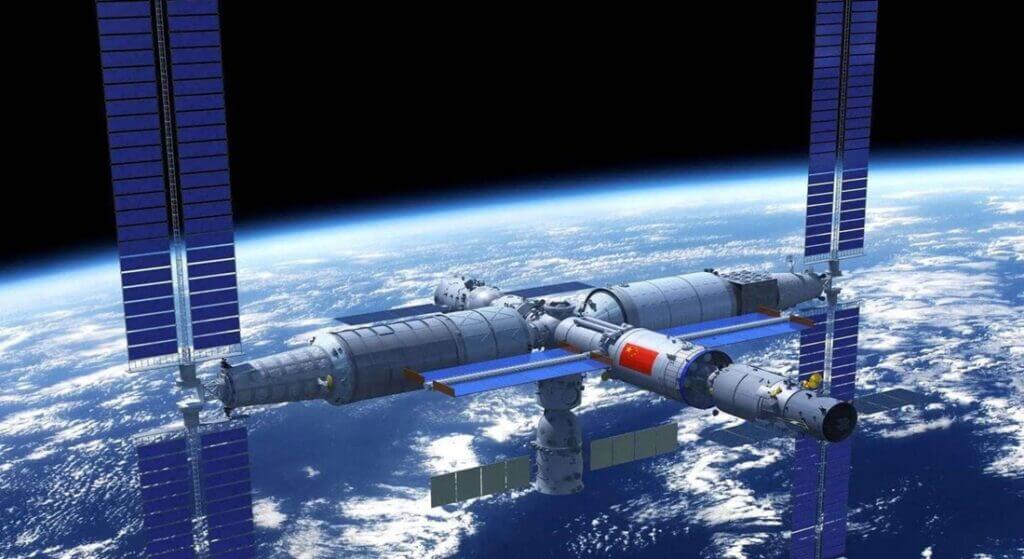
The country was banned from the ISS in 2011 when the United States banned NASA from working with the Chinese space program. Rather than limiting Beijing's ambitions, this decision acted as a catalyst for the development of independent Chinese infrastructure in space.
See also: James Webb "sees" the surface of a distant exoplanet for the first time
Since then, China has achieved historic milestones such as landing Chang'e-4 on the far side of the Moon and sending a rover to Mars in 2021.
The next step seems to be the internationalization of Tiangong, as China plans to host the first foreign astronaut from Pakistan in the coming months.
Shenzhou-23 is not just another space mission. It is a clear statement that China intends to play a leading role in the new era of space exploration.
