

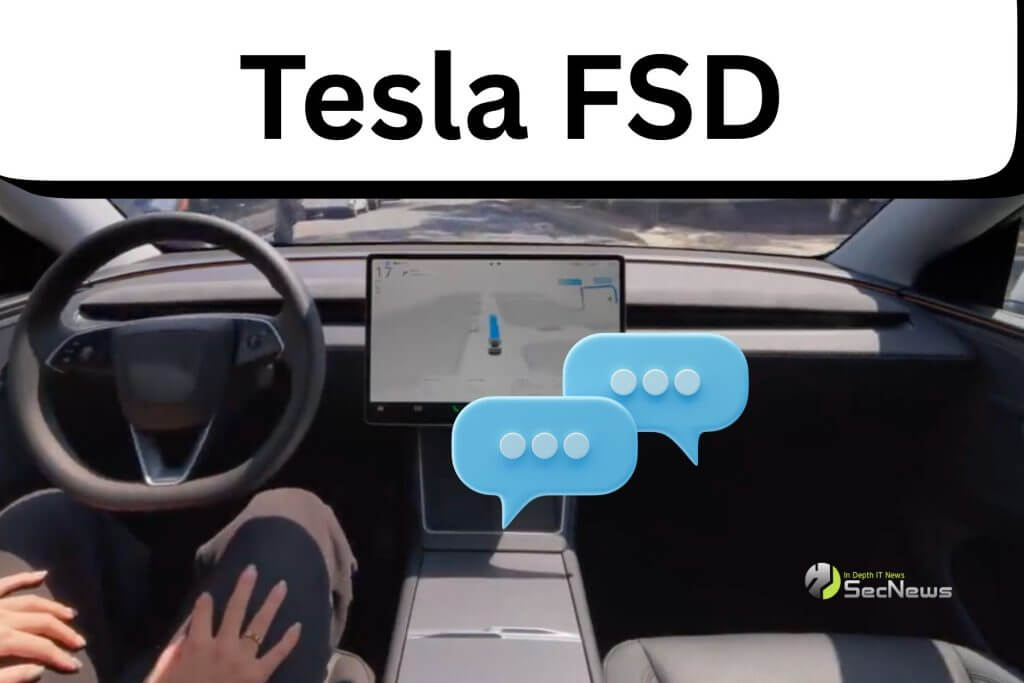
Elon Musk announced that Tesla FSD (Full Self-Driving) will allow electric vehicle owners to “text and drive” in “a month or two.” However, he did not explain how it would circumvent the clear laws that prohibit it.
Just a few months ago, Musk claimed that Tesla would deliver the long-awaited "autonomous driving unsupervised" in consumer vehicles by the end of the year - a promise he has made every year for the past six years (without delivering on it).
See also: Tesla launches 'Multipass' in more markets
Tesla FSD and driving
At Tesla’s shareholder meeting yesterday, Musk updated his timeline, saying that Tesla is now “a few months away” from fully autonomous driving — possibly pushing it back to 2026. He also added that Tesla is “almost” ready to enable “texting while driving” with FSD and expects to enable it within “a month or two.” However, the CEO did not elaborate on how Tesla plans to enable this.
Texting and driving is illegal in most countries, including the US, with significant fines and legal penalties if caught. To “enable” this, Tesla would have to take responsibility for consumer vehicles when FSD is active, which would mean “unsupervised autonomous driving,” or levels 3 to 5 of autonomous driving according to the SAE. There are several legal and regulatory steps Tesla needs to take to make this happen, and so far there is no indication that the automaker has begun this process.
See also: Tesla recalls 10% of Cybertrucks due to faulty adhesive
So far, Tesla has been limited to pilot projects with internal fleets to offer ride-hailing services with in-car supervisors (where regulations allow). Musk said Tesla would “look at the data” before allowing texting and driving. Tesla is notorious for never releasing data on the safety of its self-driving features.
The automaker publishes a quarterly “Autopilot Safety Report.” In it, Tesla publishes the miles traveled between crashes of Tesla vehicles with Autopilot enabled, and compares them to the miles traveled by vehicles with Autopilot disabled. It also compares them to the U.S. average miles between crashes.
There are three major problems with these reports:
The methodology is stated by the driver himself: Tesla only counts crashes that deploy an airbag or restraint system. Minor impacts are excluded, and raw crash numbers or the VMT number are not disclosed.
Road bias: Autopilot is used primarily on limited-access —already the safest roads—while the federal baseline combines all road categories. This means there are more accidents per mile on city roads than on highways.
Driver mix and fleet age: Tesla drivers prefer newer vehicles and are typically higher-income, tech-savvy. These demographics tend to crash less.
See also: Tesla driver avoids plane crash
For the first time today, Tesla appears to have separated Autopilot and FSD miles, which gives us a little more data, but still has many of the same problems mentioned above.
The main issue is that this data does not prove that FSD causes an accident every 4.92 million miles, but that the human plus FSD causes an accident every 4.92 million miles based on Tesla's definition of an accident.
In comparison, we have official data from Robotaxi program in Austin, which is supposedly more advanced than FSD, showing one accident every 62,500 miles. That's also with an in-car safety monitor, which prevents more accidents.
