

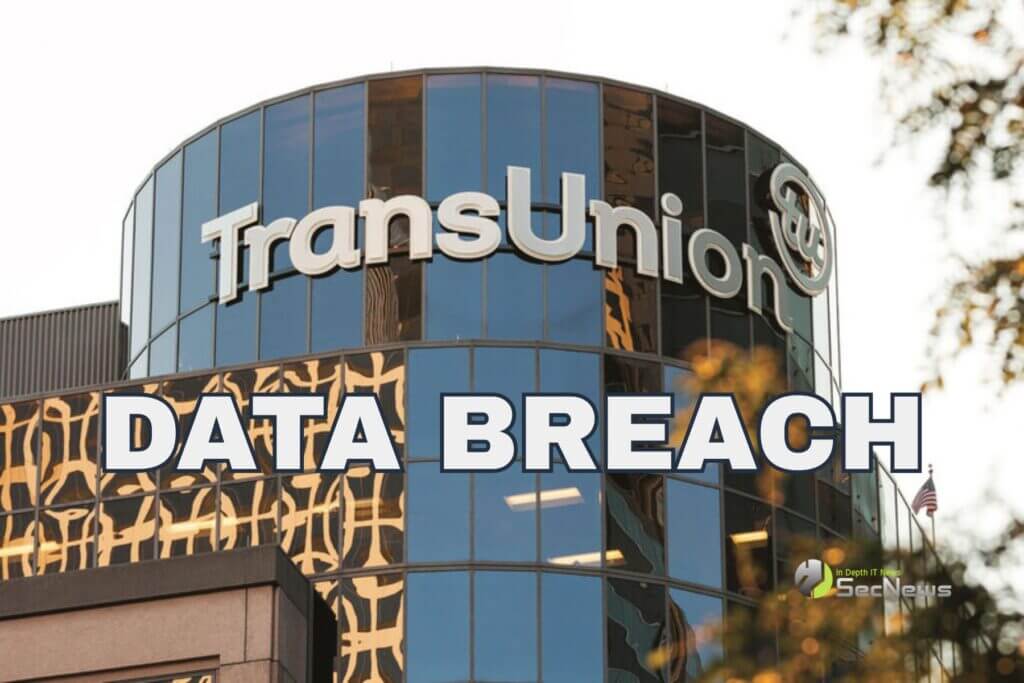
TransUnion , one of the three giants in the credit reporting industry in the United States, has admitted to suffering a major data breach that exposed the personal information of about 4.4 million customers . The incident was revealed in a filing with the Maine attorney general's office and involves unauthorized access to a third-party application that manages data for the company's consumer support services in the US.
TransUnion said it did not appear that any credit information, although it did not provide any evidence to support the claim. The breach notification did not specify exactly what types of data were leaked, leaving open questions about the true extent of the damage.
The importance of TransUnion in the financial ecosystem
TransUnion is responsible for collecting and storing financial data on more than 260 million Americans, and its services are used by banks, insurance companies, lenders and telecommunications providers. This means that even a “limited-scale” breach could have a significant impact, as this data is a critical part of the credit assessment process and consumer behavior.
See also: Healthcare Services Group announces data breach
The information TransUnion stores isn't limited to credit card numbers. It often includes names, addresses, tax numbers, loan histories , and other sensitive information, which can be exploited for identity theft, the creation of fake accounts , or even targeted phishing scams.
A chain of violations
The incident is part of a broader wave of cyberattacks that have hit US giants in recent months. Companies such as Google, Allianz Life, Cisco and Workday have already admitted to breaches related to data leaks in databases hosted in the Salesforce cloud. Google attributed the responsibility to the ShinyHunters, a well-known extortion collective operating internationally and specializing in leaking sensitive data for ransom.

It is not yet clear whether the TransUnion breach is linked to the same group or a different threat actor. So far, there is no indication of any formal ransom demands, which leaves open the possibility that the attack is part of an espionage campaign or a targeted effort to collect data for future use.
Impact on consumers
The consequences of such a breach are not always immediate. Stolen data can surface months later on dark web marketplaces, where it is sold to third parties who use it for fraud or attacks. For consumers, this means monitoring bank accounts and credit reports is critical.
See also: Nissan: Confirms hacker claims of data breach
Although TransUnion has not yet published details about the measures it will offer its customers (e.g. free credit history monitoring services), it is expected to face intense pressure from both regulators and public opinion to provide substantial support to those affected.
The problem of third-party providers
One of the most worrying aspects of the case is that the breach originated from a third-party application. This highlights the problem of chain security: even if an organization has strong internal protections, its reliance on external partners can create vulnerable links. Cybercriminals are well aware of this path and systematically exploit it.
Companies, especially in the financial sector, are urged to strengthen control over their partners by implementing security standards, audits and continuous monitoring. Without this proactive strategy, the security chain remains vulnerable.

The big picture
The TransUnion incident reinforces the sense that we live in an era where data breaches are no longer the exception but the rule. The combination of widespread use of cloud infrastructure, the complexity of supply chains and the action of organized cybercrime groups has created an environment where even the most powerful organizations are exposed.
See also: Salesforce Data Theft via Compromised AI Tool
🔒 Protect your privacy with Proton VPN
Swiss VPN from the creators of Proton Mail — strict no-logs policy, strong encryption, and built-in NetShield that blocks ads, trackers, & malware.
- ✔ No-logs, based in Switzerland (except 14-Eyes)
- ✔ NetShield: blocks ads, trackers & malicious domains
- ✔ Covers all devices — free version available
The link is an affiliate link — SecNews may receive a commission at no additional cost to you. It does not affect the independence of our article writing.
For businesses, this means that cybersecurity must be seen as a business priority , not a technical cost. Early detection, staff training, red team exercises, and investment in anomaly detection technologies are now essential practices.
For consumers, the TransUnion case is yet another reminder that personal information is valuable and vulnerable. Everyone should develop a personal digital security “shield”by regularly checking their accounts and activating measures like transaction alerts and strong passwords.
