

Asahi Group Holdings, Japan's largest brewer and one of the world's leading breweries, announced that it has partially restarted production at all six of its breweries in the country, after a serious cyberattack that paralyzed its information systems and caused significant disruptions to its supply chain.
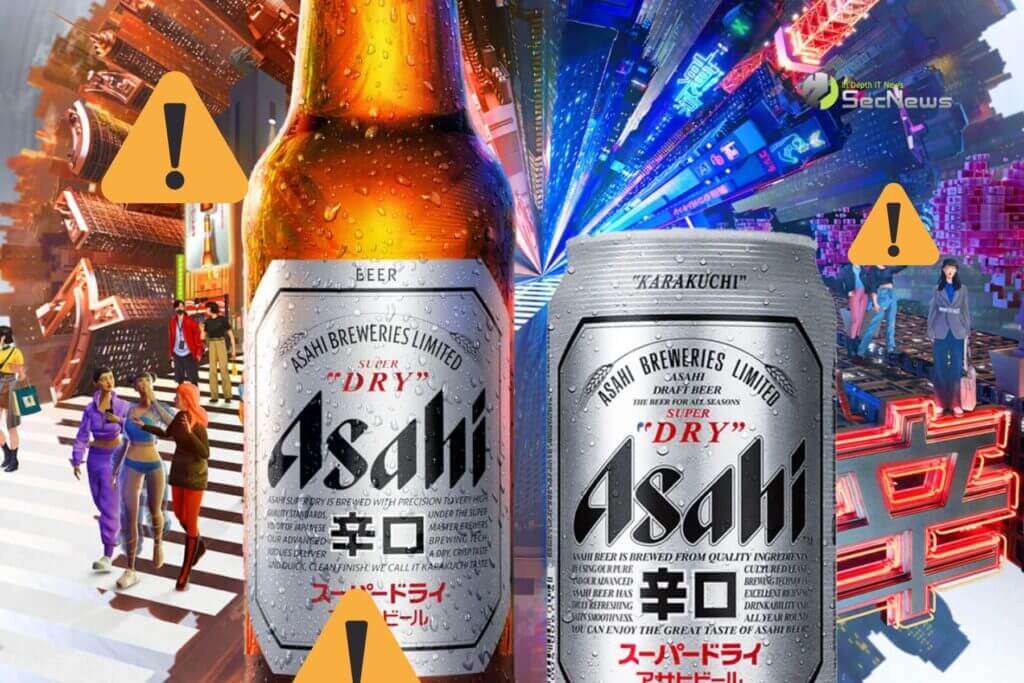
The attack, which occurred in late September, forced the Japanese giant to temporarily shut down all of its breweries and factories, affecting both production and distribution. As a result, major retailers such as 7-Eleven and FamilyMart warned of beer shortagesas Asahi's ordering and shipping systems were down.
Partial restoration of production
Asahi announced that it has now managed to gradually restart its factories, starting with those that produce Asahi Super Dry, its most popular product. At the same time, it is proceeding with the partial reopening of units that produce food and soft drinks, although the company admitted that functionality is still far from normal levels.
"The factories are operating, but not yet fully. We prioritize the stability and security of our systems," a company spokesperson said.
See also: ParkMobile pays $1 for 2021 data breach
Asahi added that seven food factories have already resumed operations, but production lines there remain limited. Five more soft drink factories are expected to gradually reopen in the coming weeks as shipments begin to normalize.
Production wasn't directly affected — but distribution collapsed
According to the company, the production systems themselves were not compromised, but the attack severely affected the ordering, shipping and inventory management, making the smooth operation of the group impossible.
"We were forced to temporarily halt production not because of a problem at the factories, but because we were unable to receive, process or ship orders," the company clarified.

Asahi is now working with cybersecurity experts from Japan and abroad to fully restore its networks and strengthen its defenses against future attacks. However, it has not yet given a specific recovery timeline.
The consequences of a cyberattack on critical infrastructure
The Asahi incident adds to a growing series of cyberattacks targeting industrial giants, demonstrating how vulnerable the industrial sector has become to digital threats.
Earlier this year, Jaguar Land Rover was hit by a similar ransomware attack that disrupted its production line for weeks. Attacks of this type — which often combine data theft and ransom extortion— have become increasingly common, targeting critical industries such as energy, food and transportation.
See also: CometJacking: One Click Turns Comet AI into a Data Thief
Asahi has not disclosed the nature of the attack or whether a ransom was demanded, but analysts believe it was a targeted ransomware attack, given the scope and duration of the outage.
The economic and commercial impact
Although Asahi operates internationally—owning brands such as Peroni, Pilsner Urquell and Grolsch, as well as Fuller’s in the UK—only its Japanese operations, which account for around 50% of total sales, were affected by the incident.
🔒 Protect your privacy with Proton VPN
Swiss VPN from the creators of Proton Mail — strict no-logs policy, strong encryption, and built-in NetShield that blocks ads, trackers, & malware.
- ✔ No-logs, based in Switzerland (except 14-Eyes)
- ✔ NetShield: blocks ads, trackers & malicious domains
- ✔ Covers all devices — free version available
The link is an affiliate link — SecNews may receive a commission at no additional cost to you. It does not affect the independence of our article writing.
The production disruption has caused temporary shortages on supermarket shelves and pushed up prices in some markets. Analysts estimate the economic damage could be large, although the full extent of the losses will be seen in subsequent business cycles.
New warning for cybersecurity in the food industry
This incident serves as a major warning sign for the entire food and beverage industry, which is increasingly dependent on digital networks, automation and IoT infrastructure.
Connecting production lines, warehouses and logistics systems on common platforms increases efficiency, but also creates security gaps that cybercriminals can exploit.
See also: Discord: Data leak via third-party provider
“Food companies are now as digitalized as banks, but investment in cybersecurity often lags behind,” says Kazuhiro Sato, an analyst at Tokyo Cyber Defense. “Asahi just shows how painful this gap can become.”

The future after the crisis
Asahi, which is trying to restore its image and the trust of its partners, is expected to invest significantly in new security systems, likely adopting AI-based threat detection technologies and segmentations in corporate networks.
At the same time, the company plans to review its disaster recovery and business continuity policies to ensure that a similar crisis does not lead to a complete shutdown again.
The cyberattack on Asahi is not just a security incident — it is a wake-up call for the global industrial sector, which must now treat cybersecurity not as an IT obligation, but as a matter of survival.
