

Scientists trained a robot dog, known as ANYmal, to play badminton against a human opponent.
See also: China: Robot dogs on an exploration mission in Antarctica
Combining whole-body movements with visual perception, the robot learned to adjust its motion to reach the shuttlecock and return it successfully over the net, thanks to artificial intelligence (AI).
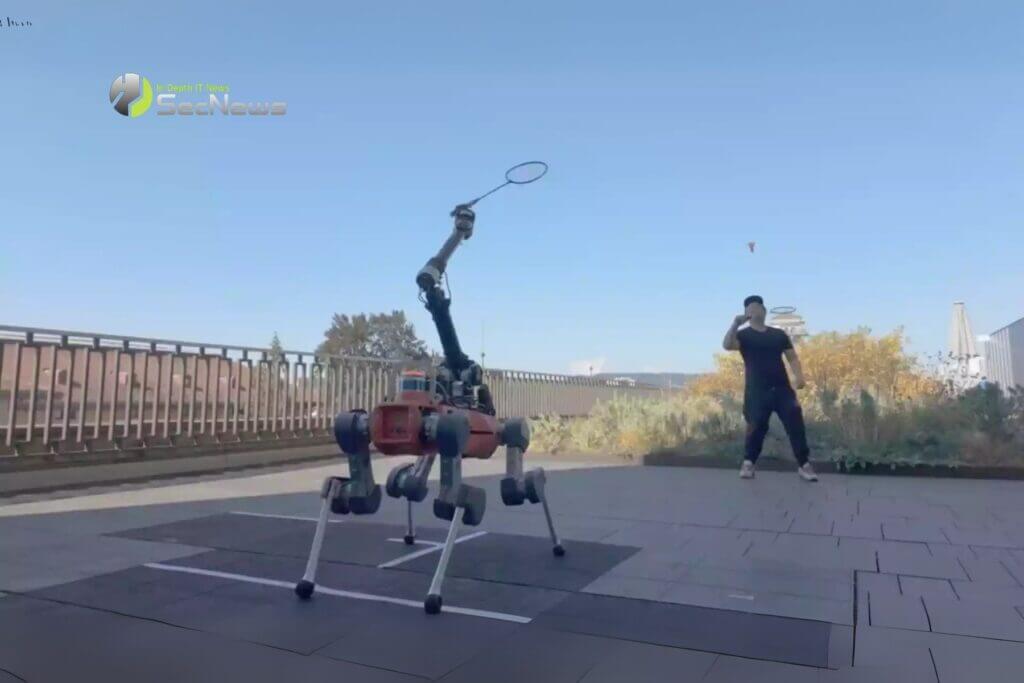
This shows that four-legged robots can be built as opponents in “complex and dynamic athletic scenarios,” the researchers wrote in a study published May 28 in the journal Science Robotics.
ANYmal is a quadruped robot that looks like a dog, weighing 50 kilograms and standing about 0.5 meters tall. With four legs, ANYmal and similar quadruped robots can travel over demanding terrain and climb over obstacles.
Researchers have previously added arms to these dog-like machines and taught them how to fetch specific objects or open doors by grabbing the handle. However, the coordination of limb control and visual perception in a dynamic environment remains a challenge in robotics.
In this study, Yuntao Ma and his team adapted a dynamic arm holding a badminton racket at a 45-degree angle to the standard ANYmal robot.
See also: RT-G: How a robot ball helps China's police?
With the addition of the arm, the robot was 1.6 m tall and had 18 joints: three in each of the four legs and six in the arm. The researchers designed a complex integrated system that controlled the movements of the hands and feet.
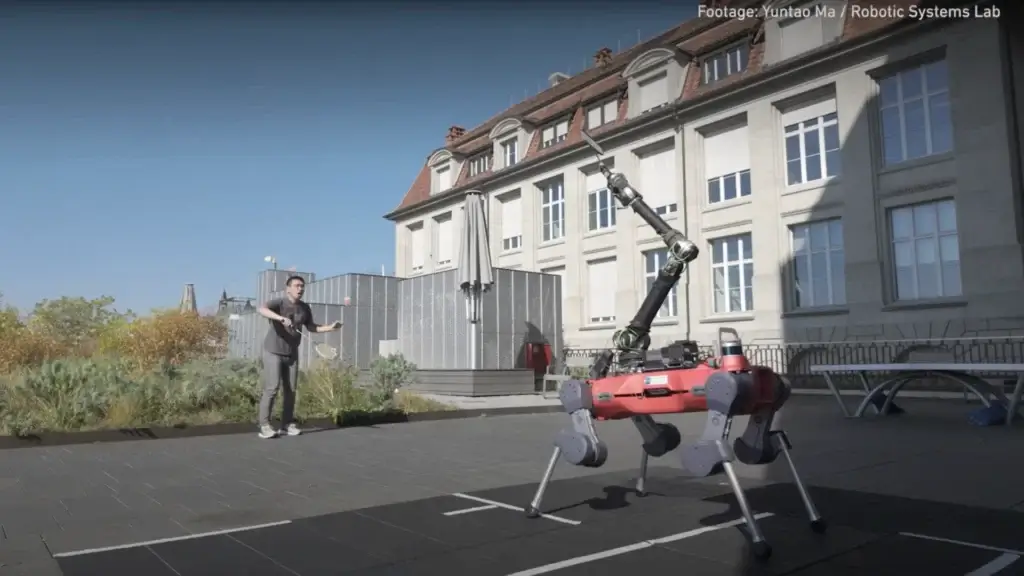
The team also added a stereoscopic camera, which had two lenses stacked one on top of the other, exactly to the right of the center on the front part of the robot's body. Its two lenses allowed it to process visual information about incoming shuttlecocks in real time and to calculate where they were heading.
Subsequently, the robot was taught how to play badminton through reinforcement learning. With this type of machine learning, the robot explored its environment and used trial and error to learn to detect and track the shuttlecock, navigate toward it, and swing the racket.
To achieve this, the researchers initially created a simulated environment consisting of a badminton court, with the virtual counterpart of the robot standing in the center. Virtual shuttlecocks were served from near the center of the opponent's half of the court, and the robot was instructed to track its position and estimate its flight trajectory.
Subsequently, the researchers created a rigorous training program to teach ANYmal how to hit shuttlecocks, with a virtual coach rewarding the robot for a variety of features, such as the position of the racket, the angle of the racket head, and the speed of the throw. It is important that the rewards for the swing were time‑based to provide incentives for precise and timely hits.
See also: X-ble Shoulder: The new wearable robot from Hyundai and Kia
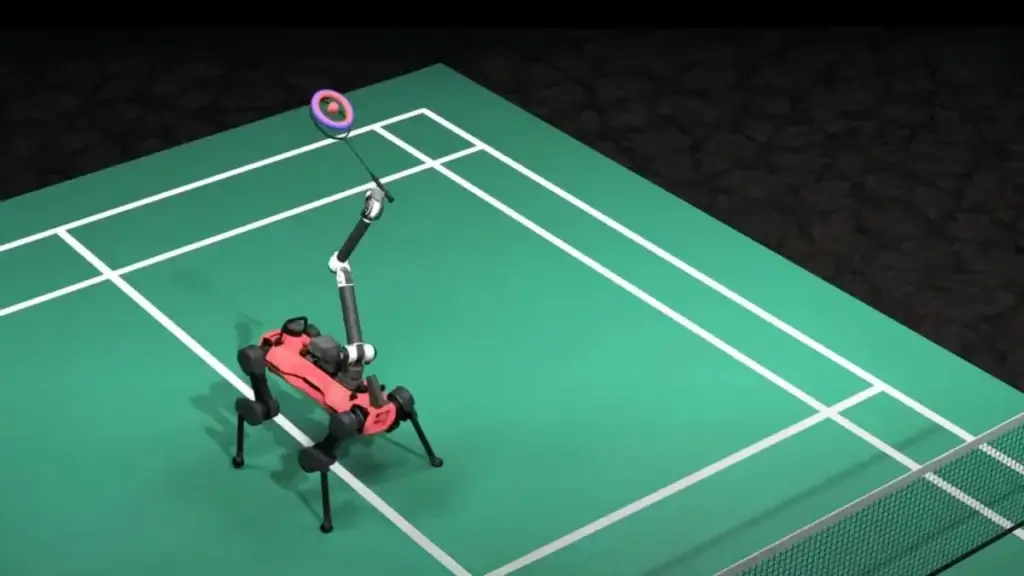
The shuttlecock could land anywhere on the field, so the robot was also rewarded if it moved efficiently on the field and did not accelerate unnecessarily. The goal of ANYmal was to maximize the amount of its reward in all tests.
Ma believes that this research will ultimately have applications beyond sports. For example, it could support the removal of debris during rescue attempts from disasters, as the robot will be able to balance dynamic visual perception with agile movement.
