

A year after its announcement, it's unclear when Amazon's Astro robot will be ready for purchase.
Amazon 's hardware event today included reveals of the Kindle Scribe, the Eero that expands mesh networks with the Echo, updated Echo Dot and Studio speakers, and an Echo dashboard accessory. Like last year, there was also talk of the Amazon Astro robot that can roll around homes equipped with a digital smile, camera, and microphones. This time, Amazon showed off the new and planned features for Astro. However, a year after its initial announcement, Astro remains an experimental product by invitation only.
Astro is a 17.3-by-9.8-inchwith Alexa, a smart display, microphones, speakers, night-vision LEDs, a periscope camera, a cup holder, and visual simultaneous localization and mapping (V-SLAM) to navigate people’s homes and unexpected obstacles, like a dropped object. You have to request an invitation to pay $1,000 for the robot. An Amazon spokesperson told Ars Technica that invitations are currently being sent out “relatively regularly.”
See also: Amazon to hold annual hardware event on September 28
Amazon appears to be accepting invite requests while it develops new features ahead of the expected mass availability. Amazon's event today didn't provide any updates on Astro's general availability. When Ars Technica asked Amazon about when general availability would happen, an Amazon spokesperson wouldn't be more specific than "as soon as possible."
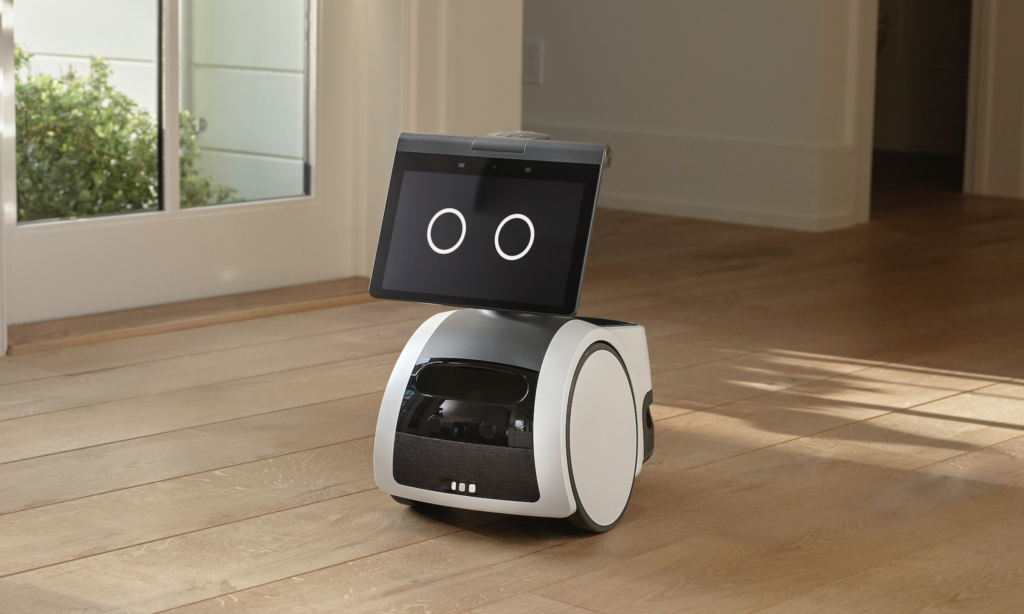
The new pet detection feature looks like it could make it easier to get away from a beloved animal. The Astro can supposedly send you a short video of your pet if it encounters it while patrolling your home. The feature also allows you to appear on the Astro, in case your pet misses you while you're away or needs a familiar voice.
Amazon announced the ability to train Astro to learn about the windows or doors in your home, so it can alert you via image and text if they’re open or closed when they shouldn’t be. If something’s wrong, Astro can alert you, even if you’re not home, by sending you an image and text. You can also ask Astro to check a specific window or door that you’ve taught it to.
The feature works with dual-modality AI, including Astro looking at the object and you describing it to Astro. Astro gives you the option to tell it if things weren't going well so it can improve.
The next step is better object recognition, starting with furniture and pet food bowls, said Ken Washington, Amazon's vice president of Devices and Services.
However, while many consumers are still unable to buy and test Astro, Amazon will continue to experiment with the robot in a new market: small and medium-sized businesses.
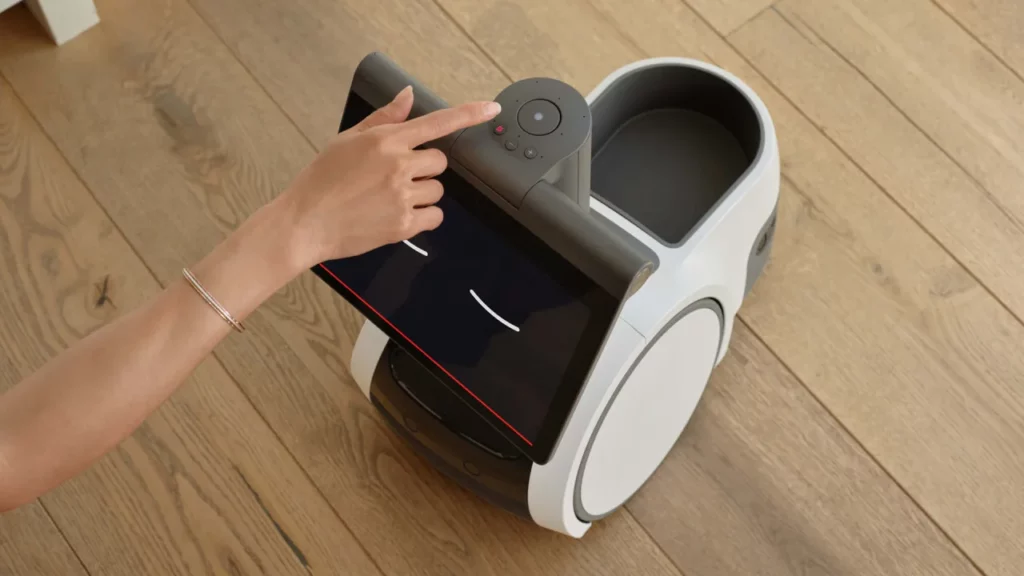
Amazon hopes Astro will address the physical security concerns of small and medium-sized businesses and those on tight budgets. Amazon showed that Astro works with Amazon’s Ring security cameras . If Ring uses its Virtual Security Guard feature — which also appears to have limited availability, according to its website — Astro will travel to the location of an intrusion. It can then communicate with “professional monitoring agents,” via video and two-way voice communication.
Amazon of business customers “in the coming months.” However, if it’s successful, we could see this feature being attractive to more cautious home customers as well.
See also: Amazon announces new event: Prime Early Access Sale
Once launched, Astro has the potential to be one of the most readily available consumer robots, backed by a tech giant and an ecosystem of compatible products. But based on reviews of Astro this year, there's a lot of work to be done before we can expect such a successful product launch.
TechCrunch in May, for example, noted a lack of committed direction from Amazon for the product and struggled to find a need for the exact technology. CNET agreed that Astro wasn’t “a compelling use case” as it was an experimental Day 1 Edition product. And with its reliance on Amazon services , like Alexa subscriptions and Ring’s Protection Pro , The Verge downgraded the home robot to “an Echo Show on wheels.”
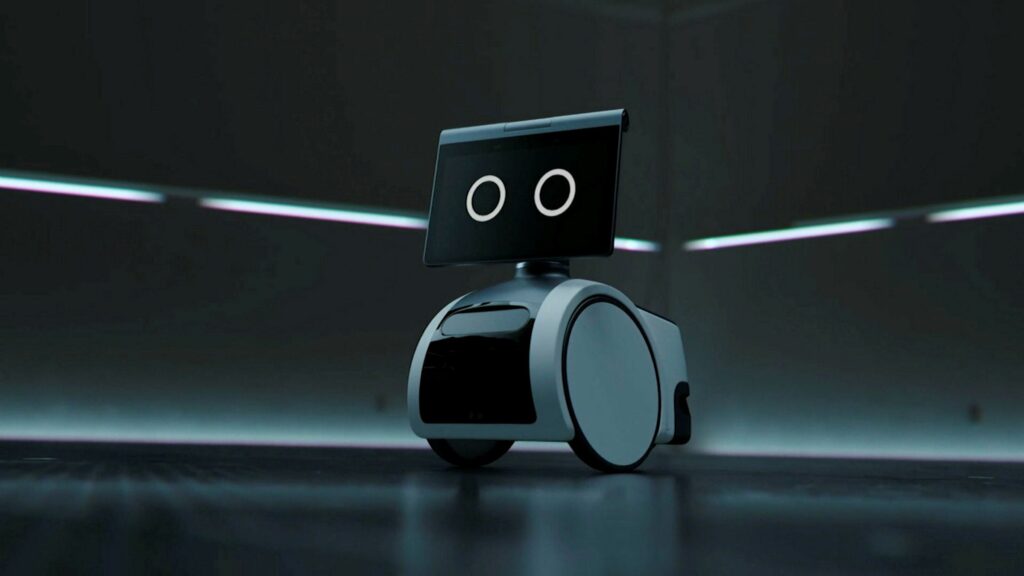
So it makes sense that Amazon is still working on tweaking the robot to not only look as useful as possible, but also as necessary as possible, given its high price tag and the limited precedent for robots like this, especially in homes . It’s not just about Astro, after all. Amazon hopes to build more than just a home robot for consumers, Washington told GeekWire in June.
It's also no surprise that Astro's strategy is to proceed with greater caution for businesses, as many emerging technologies, such as mixed reality devices and smart glasses, have done to maintain relevance.
To encourage the development of even more Astro, Amazon is sharing the software development kit it used to create the aforementioned pet-detecting feature with three schools known for developing robotics, the Georgia Institute of Technology, the University of Maryland, and the University of Michigan.
For now, it looks like the next Astro news will be about further software development rather than a full public release. And for a robot that’s expected to cost $1,500 when it sees general availability, that’s probably for the best.
Source: arstechnica.com
