

Is it true that hackers are trying to breach your e-banking while you are in quarantine? Manolis Sfakianakis, the man who set up the Cybercrime Investigation Department and the CSI institute from scratch, continues to be on the side of citizens, informing them about online security, the dangers of the internet and how each of us can - with easy steps - protect ourselves from the cunning of the internet. In a period of global lockdown, with cases of online fraud increasing more and more, Mr. Sfakianakis advises us to be even more careful and to follow the basic rules of protecting our online life with reverence so as not to find ourselves exposed to hackers.
According to information (broadcast) from tilegrafimanews.gr, Mr. Manolis Sfakianakis emphasizes:
"Cybercrime" is now taking on terrifying proportions in Greece, as "hackers" are exploiting the fact that Greeks are "digitally illiterate", given that our country is in 26th place out of a total of 27 EU countries in the correct use of the Internet and are doing "golden jobs".
While online transactions through e-banking and beyond are increasing due to the coronavirus and the prevailing trend - need, there are thousands of "traps" set up both on the internet and on mobile phones.
The biggest "trick" that is shocking and requires an immediate solution and protection strategy, concerns the seizure of money from bank accounts of both companies and individuals.
There are many confirmed cases and relevant lawsuits have already been filed. According to the information available in recent days, there have been 4 major cases of money laundering, in one of which the "recipient" of the money is an NGO, which within 2 days "withdrawn" 980,000 in Thessaloniki.
"Malicious software" is catching "fire" and enabling the cunning to steal all the personal information of account holders ("sly" e-mails to businesses have already reached a dizzying pace) and then, with the "tricks" used (these are known to experts), they "lead" them to bleed bank accounts, as "unsuspecting" companies and citizens fall into the "trap" of opening the link-traps.
The need to protect and inform the world - internet and e-banking users - according to the specialized organizations that are sounding the alarm, requires the immediate provision of grants to inform citizens and businesses so that they can avoid the traps of the Internet.
The implementation of the GDPR requires the public to be informed about digital data and the dangers of the internet, but few businesses have implemented the regulation's "directive" and the Independent Authority tasked with monitoring the implementation of the regulation does not have the necessary staff to carry out the necessary checks.
"Deal news" addressed the president of the International Institute (CSI Institute) for cybersecurity and "guru" of the field, with countless successes of international scope, Manolis Sfakianakis, who reveals what is really happening, how cybercriminals are exploiting, especially now with the pandemic, the "opportunity" and gives his advice on what we should pay attention to:
"Anyone who transfers money via e-banking and their mobile phone, through which they receive the one-time codes to execute their banking orders, is suddenly deactivated and is constantly offline while their company's network is operating normally, should immediately contact their mobile phone company and the banking institution in which they hold bank accounts. I would like to point out in particular that the banking institutions and the telephone companies through which all banking transactions are carried out to have a financial transaction have secured their computer systems to an absolute extent and the above remark concerns the Internet sly ones, who exploit loopholes and the ignorance of Internet users."

In what ways are cybercriminals exploiting the coronavirus epidemic?
"Initially, it seems that cybercriminals are exploiting the coronavirus pandemic to steal personal data and extort money. In particular, according to the latest records of our Institute, our fellow citizens should pay special attention to avoid possible infiltration of their computers with all that this entails in attacks via electronic "phishing" (phishing attack)!
In this part we should pay special attention:
a) Incoming emails that claim to contain important updates regarding the coronavirus (COVID-19) pandemic or that they are from Banking Institutions, because they may carry malware and…
b) our movements on social networks, where these days thousands of informative and humorous publications are circulating, where various malicious internet users, through these posts, direct their victims to websites that contain malicious software which then becomes part of our computer system with all that this entails.
You should know that for those who receive messages from Banking Institutions asking you to take action, that under no circumstances should this be done because when the banks want something, they will call you at the branch or contact you by phone.".
What cases should we be especially careful about in these days of the epidemic when we relax on our couch?
"Because during our relaxation, people need communication of any type these days, we should pay particular attention to the (online dating) services that are advertised on almost all websites, and we are not against this.".
On these websites, in addition to other acquaintances that take place according to the online rules of the websites, various unattractive ladies, usually foreigners but also a few Greeks, who try through a brief erotic acquaintance to provoke erotic feelings and to complete their online acquaintance - relationship through long-distance sexual acts (CYBER SEX). Their aim is to extract large sums of money through the well-known international fraud of sexual extortion (sextortion).
Specifically, through the method of sextortion, cybercriminals hiding behind the unattractive ladies try to convince the victim to have sexual intercourse with them remotely with the aim of recording the video and subsequently blackmailing them.
The result is the blackmail of the victim to pay large sums of money in order not to share the material in question with their online friends. During the period of the sexual communication in question, they have artificially gained access to all the contacts of the victims to whom they send the video in question in case they refuse to pay for it.
There is a lot of traffic in online stores due to the quarantine. What should online store users be aware of?
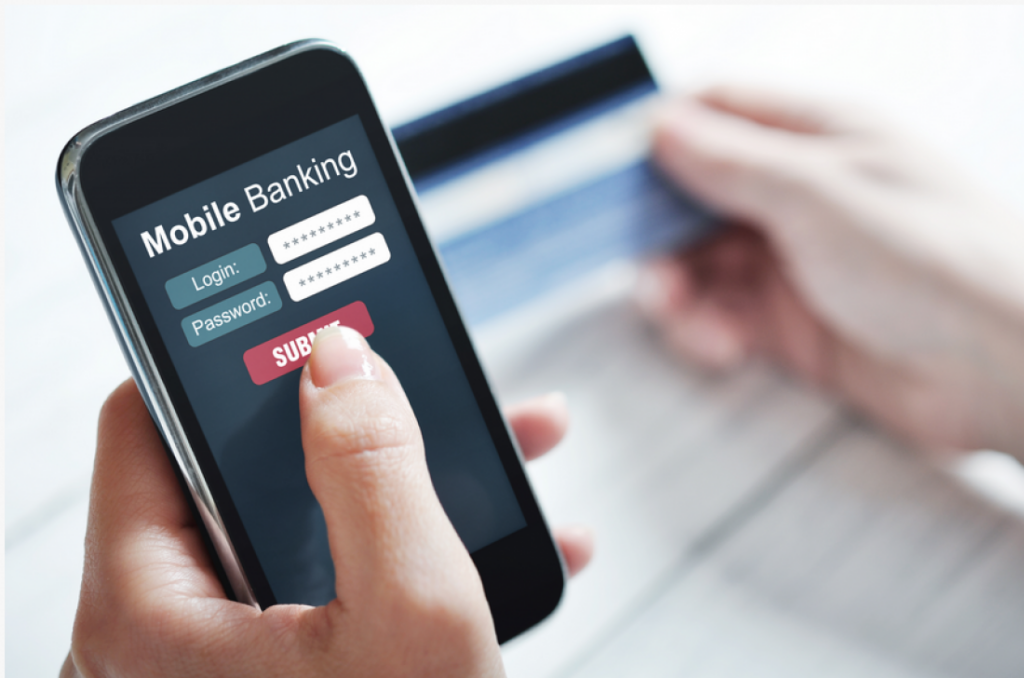
"We recommend for our online purchases the use of either prepaid credit cards using the exact amount of the online purchase or the use of credit cards through an electronic payment gateway that secures and insures our online purchase.".
"COMMUNICATE 24 HOURS AGO"
In his epilogue, Manolis Sfakianakis informs citizens that "if they deem it appropriate, they can contact me directly for internet-related consulting services through my networks through which I speak online almost 24 hours a day, 365 days a year!".
The "channels" of communication with the teacher's "guru" are:
– YOU TUBE: SFK CYBER TECHNOLOGIES
– FACEBOOK GROUP SFK CYBER TECHNOLOGIES
– LINKEDIN Manos Sfakianakis
Anyone interested in contacting the Institute (CSI Institute) can do so via the website www.csii.gr, the email info@csii.gr, the social networks facebook/csii.-Instagram/csii and the telephone hotline 2111821818. Citizens can and should also contact the Directorate for the Prosecution of Electronic Crime in order to report illegal activities carried out via the Internet, by calling 111 88.
PPOS TOYS XPHSTES TO DIADICTYOY
CSI Institute's 10 tips
Scammers operating on the Internet are coming up with incredible ways to deceive citizens and businesses and secure their personal information, to "hack" bank cards and accounts, either to steal money, or even to extort money by demanding ransom, whenever they are given the opportunity to do so. Of course, some scammers are completely stupid (not all) and it seems that they have automated the "process" so much that they send groups of obviously false messages indiscriminately, like the one in our photo.
In this particular case, a company e-mail addresses the recipient as "Dear Member of Parliament", supposedly "informs" him that "your card is being declined" and "we are updating our security system, for this reason we have locked your account until you upgrade your security. Your account has been temporarily locked.
To unlock it, you must verify your details.” Woe to anyone who “falls” for this false “claim”… The International Cybersecurity Institute (CSI Institute), on the occasion of excessive internet use due to the coronavirus, gives 10 valuable tips to citizens, to:
1) Do not open e-mails from unknown senders.
2) Do not open any attachments in emails from unknown senders.
3) Do not visit unsafe websites.
4) Do not respond to such emails requesting personal or financial information.
5) Never send personal information (ID, passport, tax registration number, etc.) or personal financial data (bank account numbers, personal codes, credit card numbers, ATM card information, credit card verification codes, etc.) via a shared email address (webmail).
6) Never communicate with the extortionists for any reason, but with the competent Police Authorities.
7) They immediately change any security code (password) they think is compromised.
8) Evaluate their computer's security settings.
9) They regularly update the software on their computer's security systems.
10) They do not click on websites (links) of dubious origin, whether they have been sent via e-mail, social networking, or in any other way.
WITHIN 4 HOURS
"We have specialized over 450,000 of our fellow citizens"
The CSI Institute is a reference point for the protection and information of citizens regarding their safety on the Internet. Since the first day of its establishment, its goal has been to actively stand by Greek citizens, through the organization of seminars, workshops and conferences throughout Greece, which has been achieved and is evident both through its actions and through the impact it has in the world.
"In total, it has specialized in its purpose more than 450,000 of our fellow citizens: Parents, students and businessmen over the last 4 years, which it has been active in various educational days, excursions and in person, visits to schools, cultural centers, municipal halls, etc. inside and outside our country.
At our Institute there is a think tank consisting of criminologists and psychologists headed by PhD Candidate in Criminology Ms. Kelly Ioannou, which you can follow almost daily with publications on our social networks and on our website www.csii.gr and on facebook/csii," Manolis Sfakianakis tells "DEAL" when we ask him about the main purpose of establishing the International Cybersecurity Institute.
The CSI Institute immediately found the response it deserves and, with the support of institutional actors in our country, initially promotes education throughout the country and abroad and plans the direct interactive education of our children in remote areas, creating within 2020 a Digital School in which it will deliver programming code and robotics courses for free, with the aim of highlighting new talents.
At the same time, it is re-creating the Digital Academy for Parents, which teaches parents how to navigate the Internet safely, but also how to be by their children's side, guide them and admonish them through counseling that will be carried out by Psychologists and Criminologists. The goal of the non-pedoscopic CSII Institute is to create branches in every prefecture of Greece, covering the entire territory and to be actively at the side of every Greek, even in remote areas.
CHILDREN'S TRAINING PROFESSION
The Institute participates in the new program for upgrading digital skills through distance learning, which is addressed to 182,000 freelancers and scientists. Several scientists who receive free specializations and training from the CSI Institute, both themselves and their families, come and declare their participation in the said program through the Institute. Those who declare through the CSI Institute will be able to consult its leaders with any questions they may have after their training.
"We are by their side at all times and not only during training. At the same time, the CSI Institute for people trapped due to quarantine continues, through teletraining, various trainings for Internet users who follow it with topics that will be announced in the coming days," says Mr. Sfakianakis.
