

Those who followed the WannaCry ransomware outbreak about a year ago will remember the young man from the UK who stopped the threat when he discovered a kill switch. The young man was known at the time as @MalwareTechBlog,and he bought a domain that WannaCry was using to stop the attacks.
The ransomware tried to connect to a specific domain that had a very strange name. If the connection was successful, the attacks stopped, while if not (which inevitably happened before the specific domain name was purchased), the ransomware attacks continued.
In short: buying and activating the domain that was in the malware code acted as a kind of kill-switch, turning @MalwareTechBlog into an internet hero.
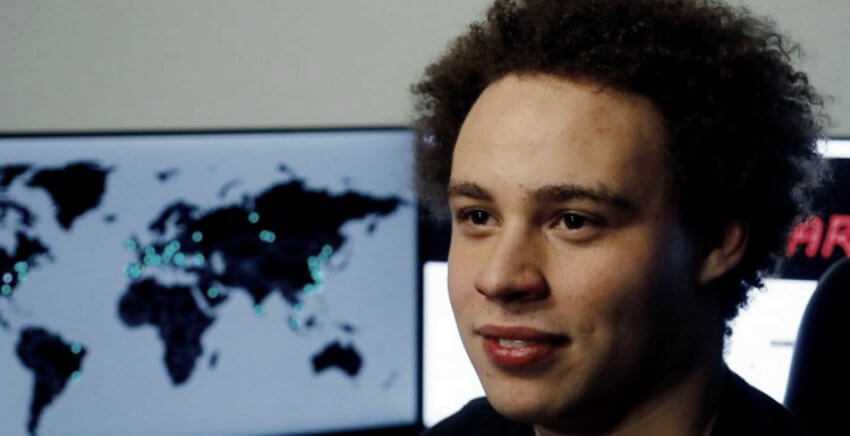
Initially, @MalwareTechBlog remained in the spotlight until he went to Las Vegas in August 2017 to attend DEF CON. That’s when his real identity was revealed: Marcus Hutchins.
But Hutchins was “already known to law enforcement” and was arrested at Las Vegas airport shortly before his scheduled return to the UK, accused of creating and distributing a banking malware known as Kronos.
Hutchins pleaded not guilty and was released on bail. Of course, he had to stay in the US, but he was allowed to continue working for his American employer until the trial took place.
Unfortunately, his adventures don’t stop there. For MARCUS HUTCHINS, aka “Malwaretech”, aka “irp@jabber.se”, there are ten new charges alleging that:
He promoted, assisted and encouraged the dissemination of advertisements through electronic mechanisms and more generally through electronic media, knowing that the design of these mechanisms offers covert monitoring of electronic communications.
US investigators claim that Hutchins is linked to another malicious tool called UPAS Kit. The malware is reportedly advertised as a “modular HTTP bot” and can be used to steal data.
According to authorities, UPAS Kit recorded personal information such as PINs, credit card numbers, social security numbers and more.
In addition, the FBI is charging Hutchins with perjury when he was arrested last year. Apparently, Hutchins admitted to writing the code that was inside the Kronos malware, but he did not admit to building the malware. He claims that he realized that his code was being used by the scammers in 2016 when he analyzed the Kronos malware.
The FBI says that the defendant did not tell them the truth:
in fact, as Hutchins knew at the time, because since November 2014, he has made numerous statements […] in which he acknowledged his role in the development of Kronos.
It should be noted that the charges relate to Hutchins' activities that took place before he turned 18. 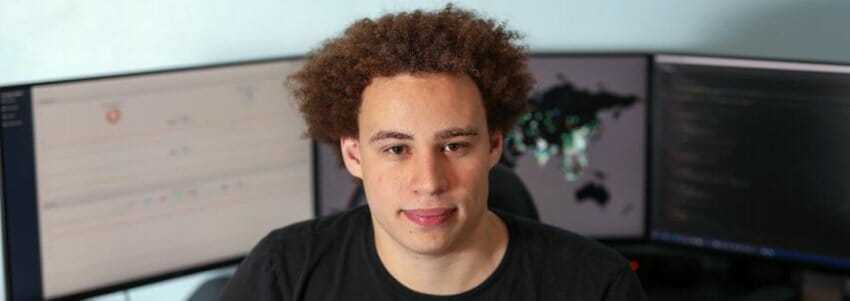
Is Hutchins a hero or a crook? Could he be both? We will probably find out when the proceedings in the American courts are completed.
What has the story of WannaCry and Hutchins taught you? In case you are someone who is tempted to flirt with the dark side and cybercrime, we urge you not to do so!
You will find many open source projects and programming communities, where your help will be welcome and instead of finding yourself in a court of law, you will increase your experience and build your resume.
_______________________
